by Sr. Nicole Grochowina | 27 Jan 2017 | 2017 | 60th Treaties of Rome, Experiences, reflections and interviews, News
60 YEARS SINCE THE „TREATIES OF ROME” 24th – 25th March 2017
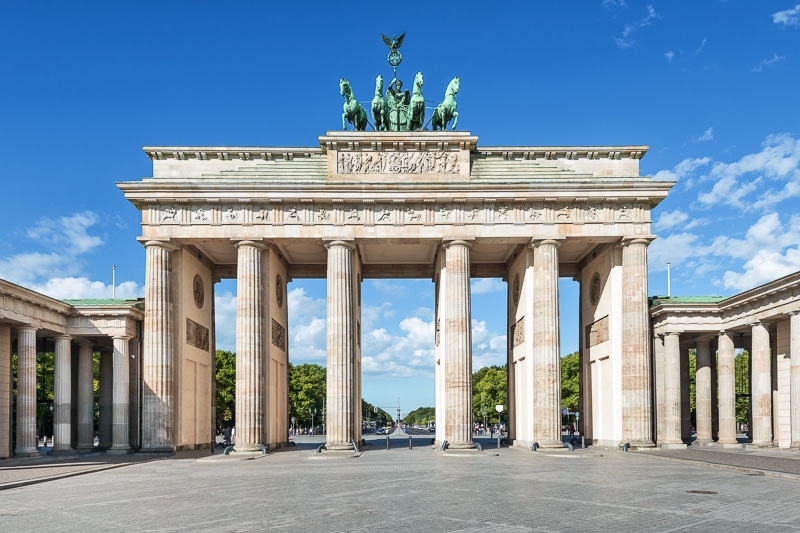
On 25th March 1957 six European countries – Germany, France, Italy and the Benelux countries – decided to establish an “Economic Community” which as stated in the introduction to the agreement, was to be built on a foundation of peace, reconciliation and collaboration. The signatories were motivated by a common will to lay the grounds for an ever-closer collaboration between European countries. They were determined to safeguard economic and social development in each individual country through joint action, remove barriers of division and consolidate peace and freedom on the continent.
At the same time, other European states were invited to “join forces”.
The ultimate significance of the “Economic European Community” went well beyond a search for economic advancement. Already in the early 1950s the French Minister for Foreign Affairs Robert Schuman (1886-1963) made clear that sustainable peace in Europe could only be guaranteed through joint control over resources such as the coal and steel required in warfare.
In addition, Germany was accepted as an equal partner in the nascent community, just 12 years after the war ended.
This was a decisive step towards reconciliation on the continent in which France and Germany had a determining role.
Since 1992 the European Union has become a guarantor of political cohesion on the continent. This would have not been possible without the agreements leading to the “Economic European Community” – the “Treaties of Rome”.
Whilst the Treaties dealt in detail with issues such as import, export, customs regulation, tribunals, economic policies, free circulation of goods and establishment of commissions, it can be considered primarily as the act through which a united Europe was born.
In this, of key importance, is firstly the fact that the signatories were former enemies and secondly that the intention behind its stipulation, clearly set out in the Preamble, was that the Union should aim to eliminate barriers, safeguard peace and freedom, promote development, thereby improving conditions of life for Europeans.

Written by Sr. PD Dr. Nicole Grochowina of Christusbruderschaft Community in Selbitz (Germany). Since 2012 Sr. Grochowina has been lecturing in modern history at University of Erlangen/Nuremberg (Germany). She is a member of the Steering Committee of Together for Europe and of the Committee of experts on ecumenism of the Evangelical Church of Bavaria.
by Maria Bruna Romito | 27 Jan 2017 | 2017 | 60th Treaties of Rome, Experiences, reflections and interviews, News
TREATIES OF ROME AND THE EUROPEAN UNION
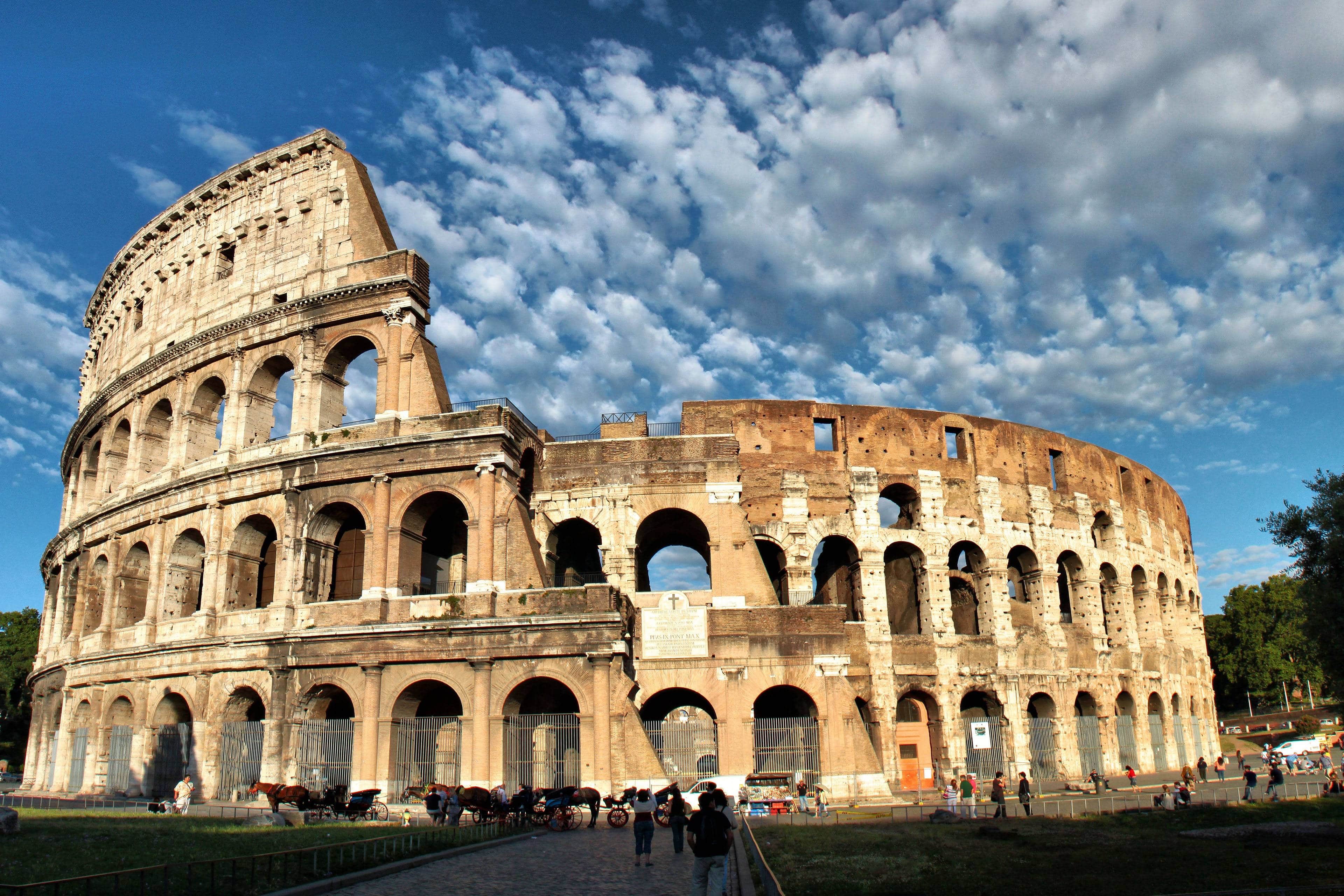
On 25th March 1957, the Treaties of Rome were signed. They are considered the inaugural act of the great European family of countries. The first treaty established the European Economic Community (EEC), whilst the second set up Euratom, aimed at joined research for the peaceful use of nuclear energy.
The EEC Treaty brought together the signatories France, Germany, Italy, Belgium, Luxemburg and the Netherlands in a Community with the objective, as stated by Art. 2, of establishing a Common market and promoting the development of optimal economic conditions for exchange and production within the Community.
There was also a political objective, to contribute towards building a new political identity for Europe, directed towards broader unification. As stated by the signatories in the preamble to the Treaty: «determined to establish the foundations of an ever-closer union among the European peoples».
The Treaties of Rome were preceded by the so-called Treaty of Paris of 1951, through which the European Community of Steel and Coal (ECSC) was established. Through shared control over these industries the aim was to avoid any potential one-sided rearming of any one member state.
The attempts to promote greater unity within the European union on political and economic fronts stemmed from the desire after the second World War to integrate European states in such a way as to render impossible another armed conflict.
«For future peace, the creation of a dynamic Europe is indispensable. (…) We must therefore abandon the forms of the past and enter the path of transformation (…). Europe has never existed. It is not the addition of sovereign nations met together in councils that makes an entity of them. We must genuinely create Europe» (Jean Monnet, Memorandum, 3th May 1950).
«World peace cannot be safeguarded without the making of creative efforts proportionate to the dangers which threaten it. The contribution which an organised and living Europe can bring to civilization is indispensable to the maintenance of peaceful relations. (…) Europe will not be made all at once, or according to a single plan. It will be built through concrete achievements which first create a de facto solidarity» (Robert Schuman, 9th May 1950).
«Let us build peace within and without, and in order to achieve this, let us show discipline, order, good will and hard work. Let us seek better ways to share the goods of the earth and overcome difficulties. These are part of life, but can be won, if people are ready to make sacrifices, conscious that in order to succeed a complete faith in the Divine Providence is required» (Alcide De Gasperi, 20th April 1950).
The vicissitudes of Europe, from extraordinary thrusts to sudden halts brought about in the following years the ratification of further treaties (https://europa.eu/european-union/law/treaties_en) and the establishment of institutions among which, the European Parliament, the European Commission and the Council of Europe.
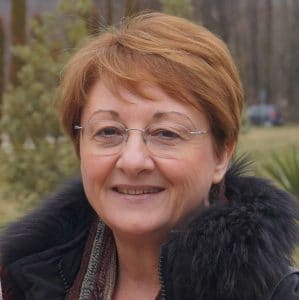
Written by Maria Bruna Romito, Focolare Movement. Maria Bruna holds a degree in history. From 1989 to 2000 she lived in Hungary, where she taught Italian and history at the Catholic University of Budapest. She currently lives in Rome and works at the Pontifical Council for Culture.
by Koni Brand | 10 May 2016 | 2016 Munich, Experiences, reflections and interviews, News
Europe… Light and shadow… and a lot to offer.
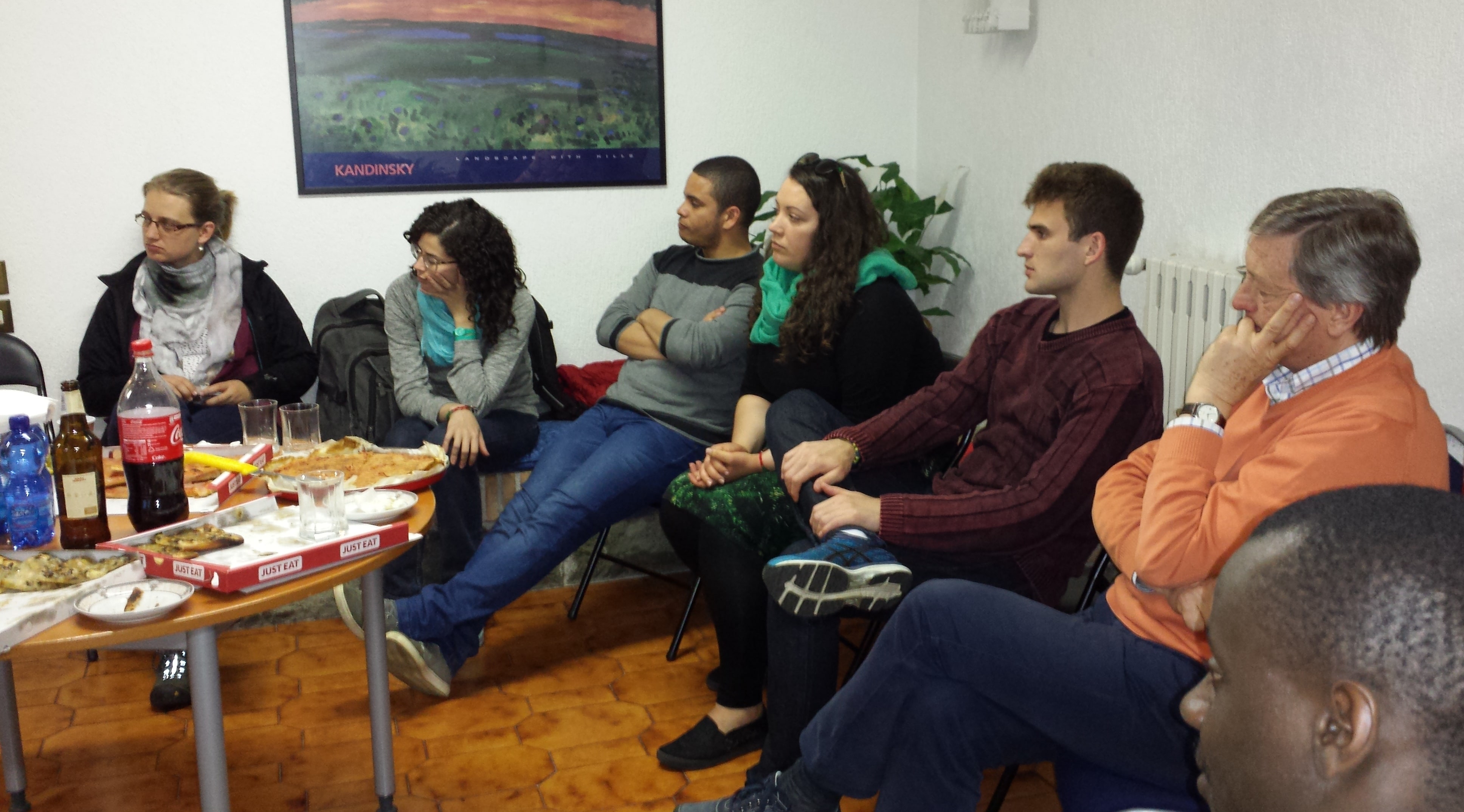
An evening with a group of young people from all over the world in the headquarters of the International Secretariat of Together for Europe
At the end of April, eight university students some newly graduated, came to spend an evening with us, the Secretariat Team. They arrived with great anticipation and openness as well as with a sense of determination and an awareness that any serious discussion on Europe today requires a level of commitment. The evening started with sampling of a variety of tasty national specialities (Hungary, Slovak Republic, Brazil, Kenya, Nigeria, the Philippines) which had been prepared by the students and brought with some Italian pizza. The students surprised and enriched us with their views on Europe, in which neither light nor shadow were missing. They showed a great interest in the upcoming Event in Munich “Encounter. Reconciliation. Future.” They were also enthusiastic about any opportunity to help and enable Europe’s rich tradition and culture to be put to full use, and become source of inspiration both in their respective countries and for the whole of humanity.
Looking over the draft programme for Munich, they asked to listen to some of the music which will be featured by different groups that will perform in the city square on 2nd of July 2016. One of the songs that stood out as particularly significant for them was entitled “Wir sind eins“ (“We are one“) > https://www.youtube.com/watch?v=Y4zX98_Sr4s
In the days leading up to Munich our young friends will support the Event in different ways. They have promised to let their friends and acquaintances know about it and spread the invitation through the Social Media channels that they use.
Whilst in July some of them will be in their home countries, others – Marcos, Marie and Szabina – are planning to come to Munich to join us in actively building Europe of today.
Team of the International Secretariat of Together for Europe
by Koni Brand | 26 Jan 2016 | Experiences, reflections and interviews, News
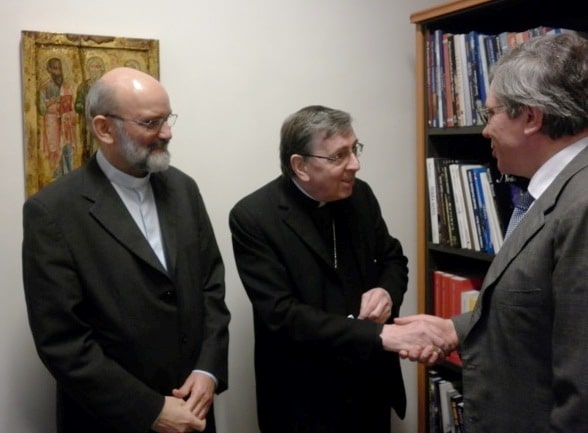
At the beginning of January a number of representatives of Together for Europe visited Card. Koch in Rome. Leaders from the Pontifical Council for Promoting Christian Unity were also present at the meeting.
The open atmosphere which presided over the dialogue was attested to by Gerhard Pross (YMCA Esslingen), Diego Goller (Focolare Movement), Cesare Zucconi (Sant’Egidio), Fr. Heinrich Walter (Schoenstatt), Thomas Römer (YMCA Munich) and Heike Vesper (Focolare Movement) who were also touched by Card. Koch’s openness and availability. During the meeting the Cardinal expressed his hope for a greater level of involvement from the Orthodox Church in the preparatory process for the upcoming event in Munich in June/July 2016. With the intention to contribute to the event and to facilitate the majority of other speakers based in Germany, the Cardinal has made himself available to travel to Germany for a preliminary meeting.
A personal visit to Card. Kasper concluded the day of meetings in Rome. It was also very open and constructive. Gerhard Pross commented: “Over the last 15 years Card. Kasper accompanied and followed us like no other. He has declared his availability to speak at the Congress. The fact that he also involved us in some issues which occupy him at present appears to be a clear sign of the relationship of trust which has grown over the years”.