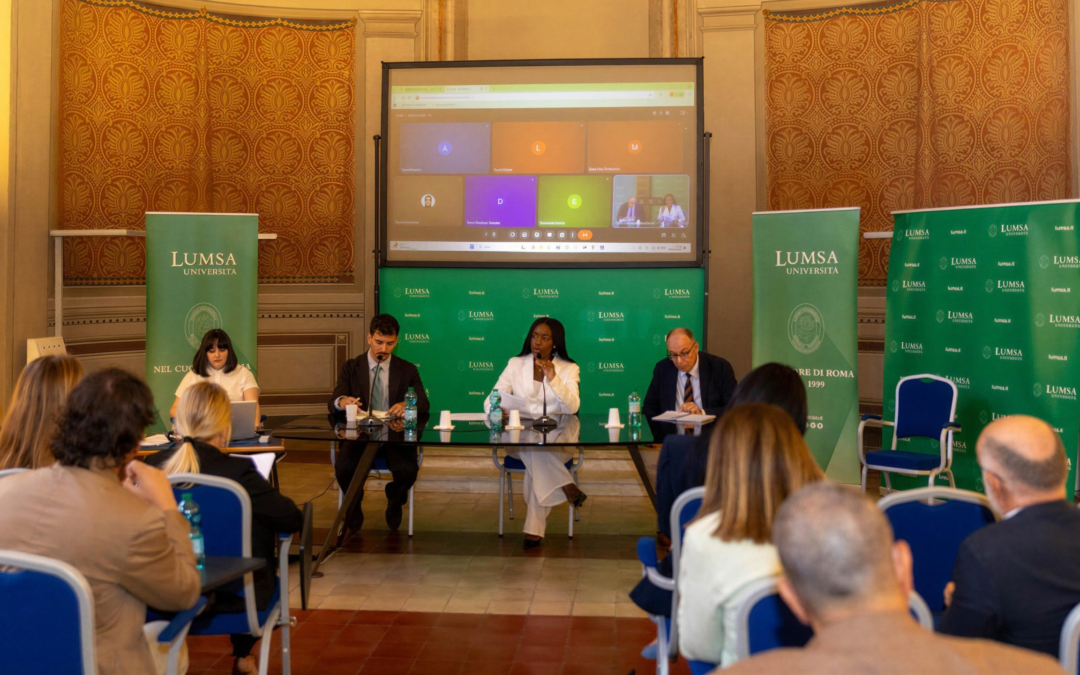
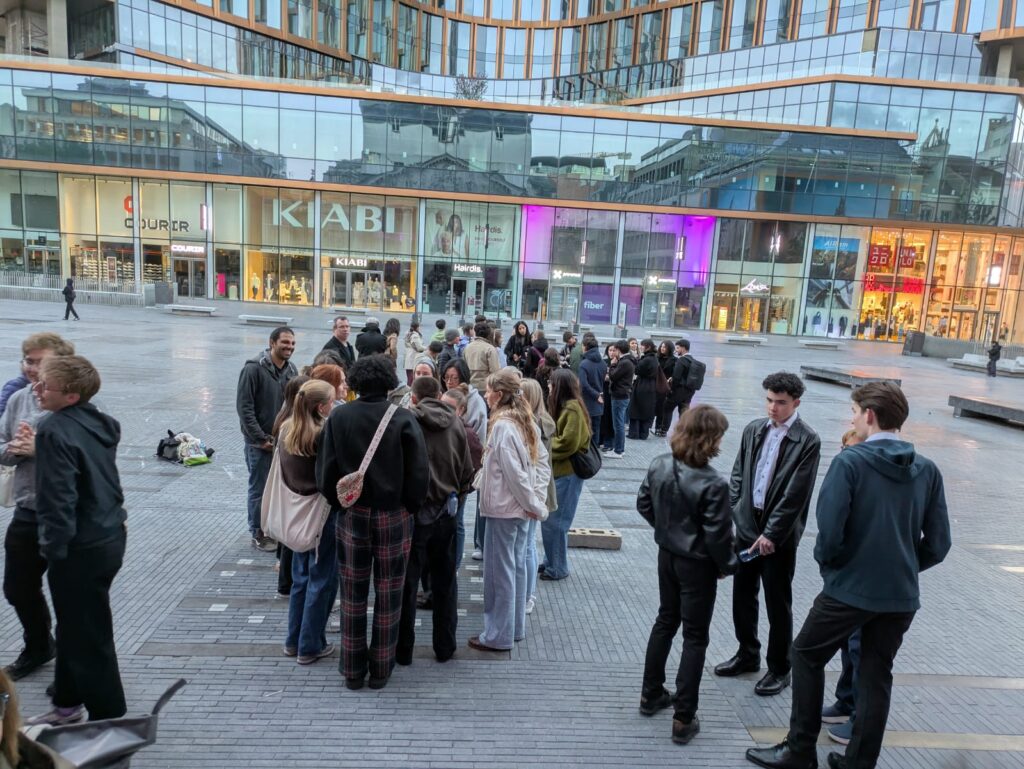
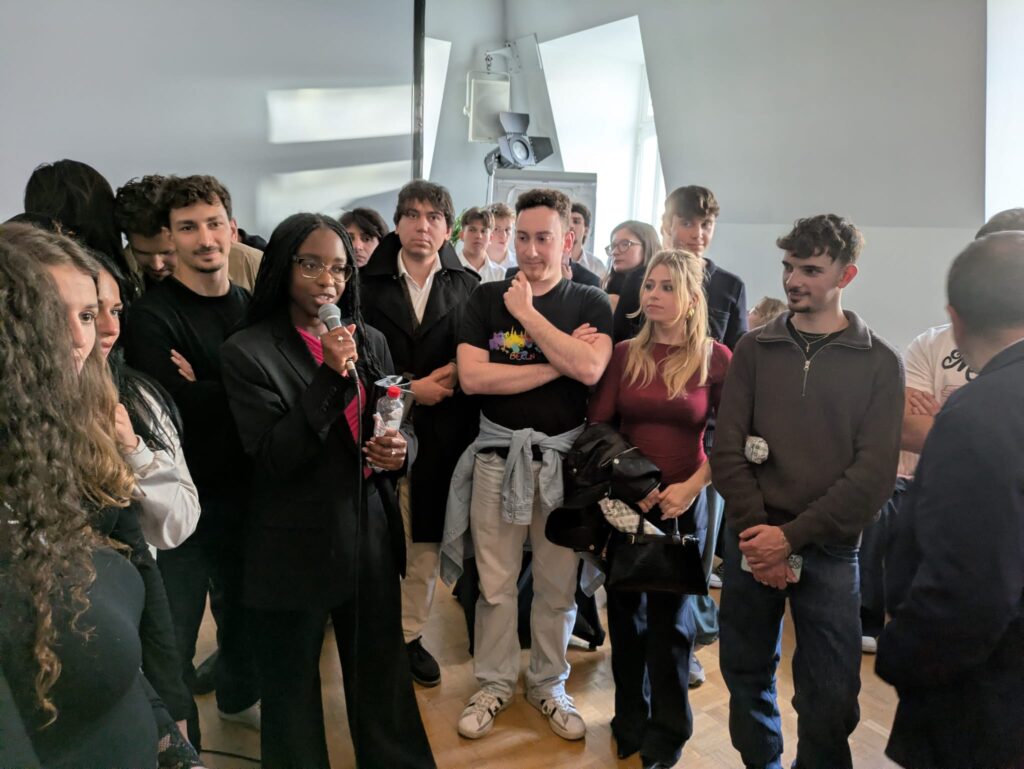
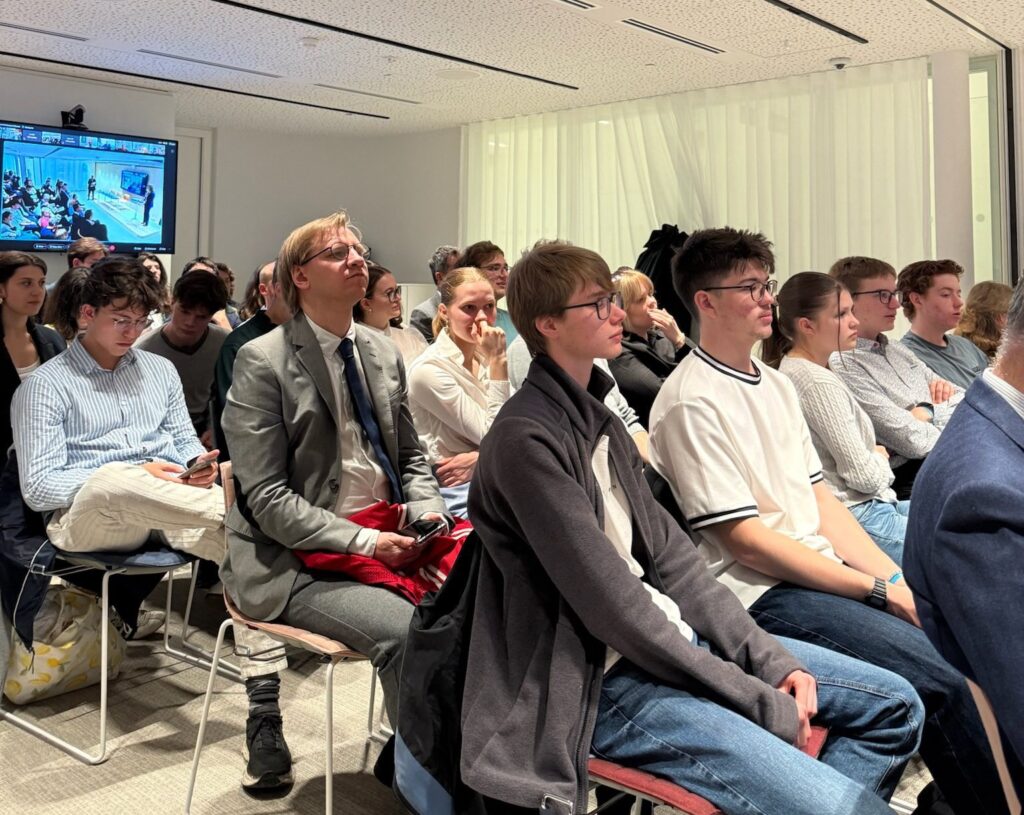
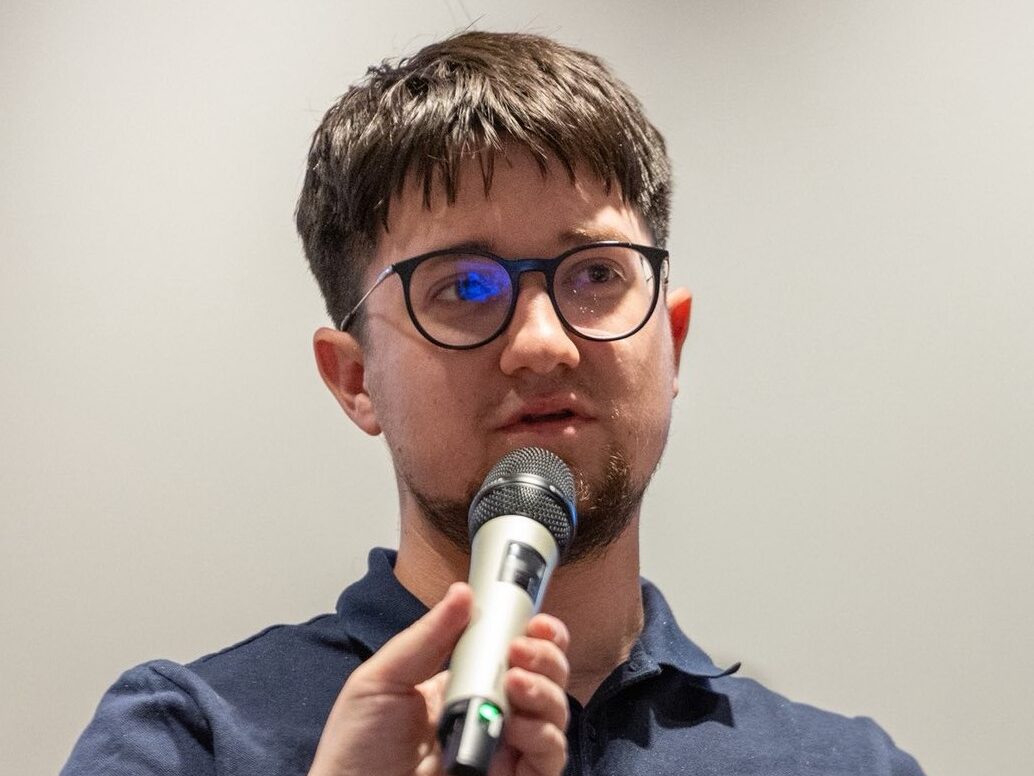
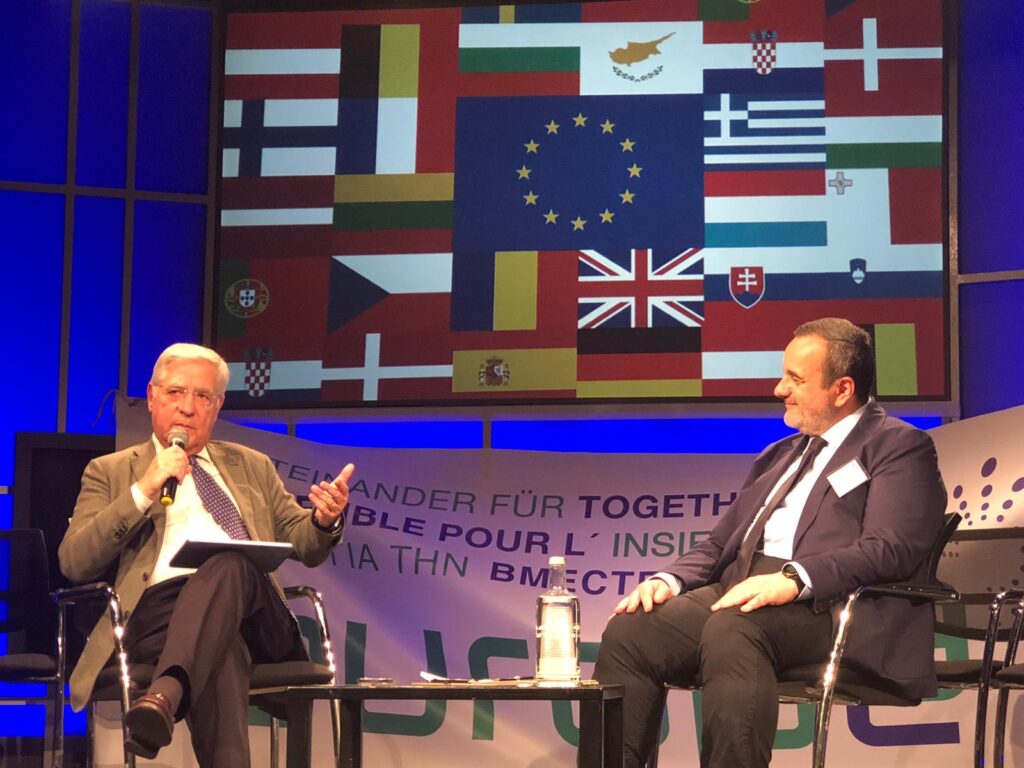
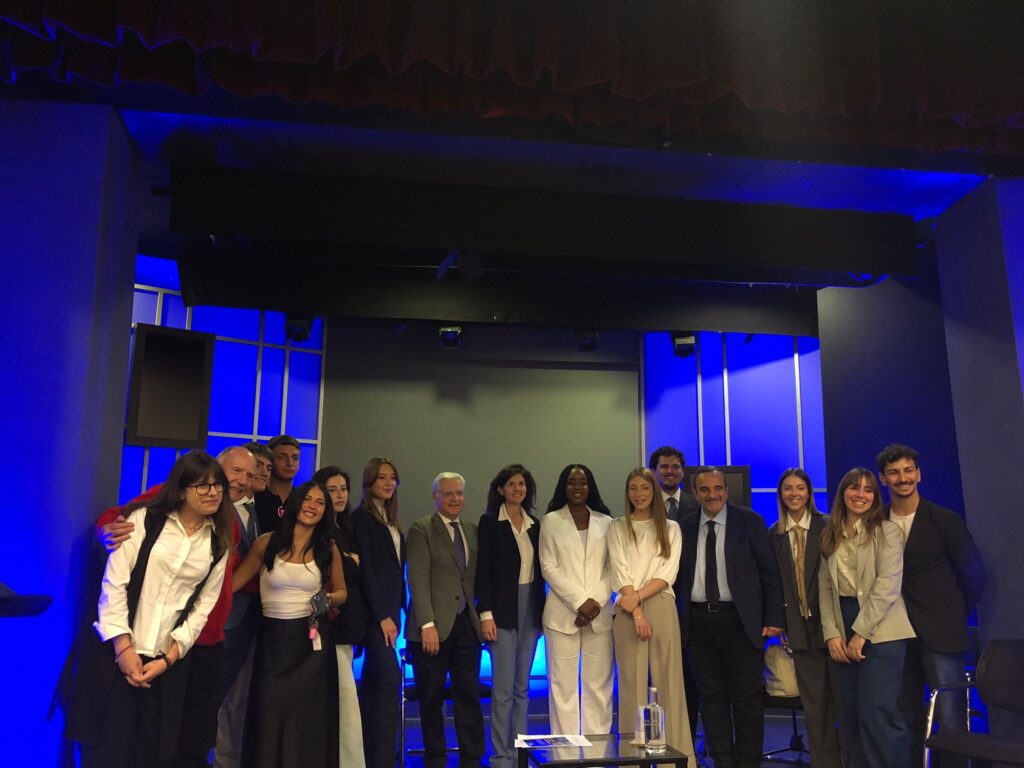
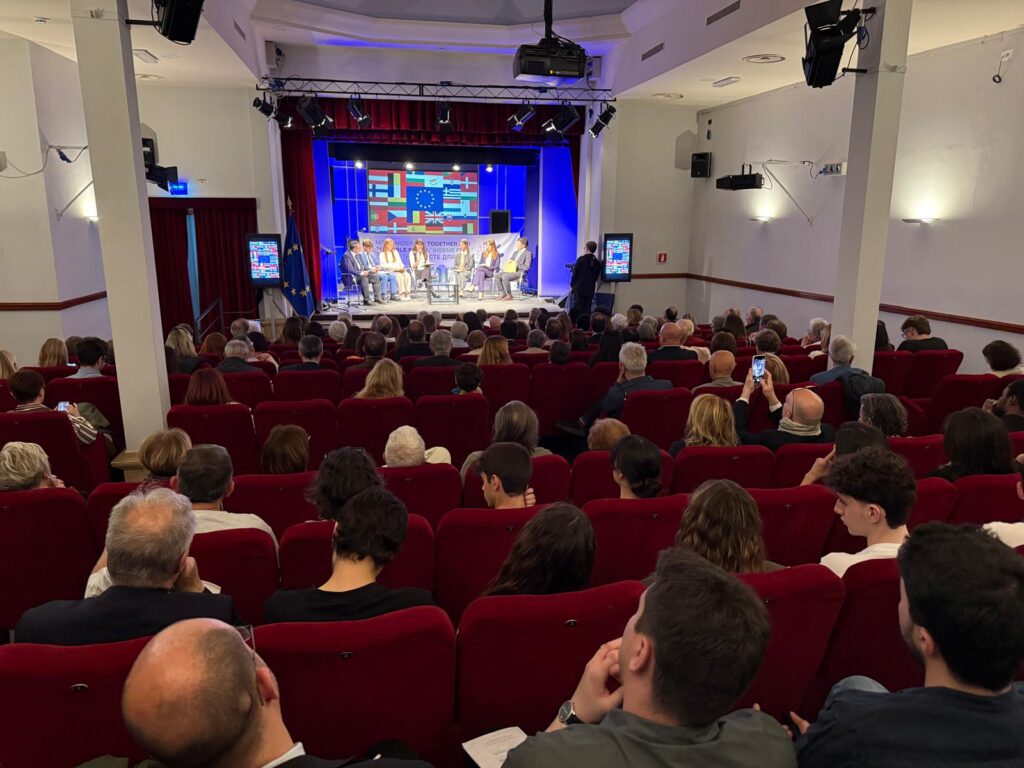
The Ut Omnes* group took part in the event ‘SOTEU 2026 – Europe: Our Choice’ at the Libera Università Maria Santissima Assunta (LUMSA) in Rome. The meeting, introduced by Professor Alberto Lo Presti, followed the broadcast of the speech by the President of the European Commission.
In her lengthy speech, she began by addressing the issue of the military defence of borders, opening with a quote from Charles Dickens: ‘It was the best of times, it was the worst of times’. This dichotomy captures the essence of today’s Europe: a Union that is strong in its achievements and potential, yet vulnerable in the face of external threats.
Distinguished guests
The SOTEU featured four symbolic figures: Canadian Prime Minister Mark Carney; the family of Danish pilot Rune Kyndal, who died whilst fighting wildfires in Europe; Sasha Paskal, a very young Ukrainian gymnast maimed by a Russian missile and a symbol of resilience; and the founders of a tech start-up, Rafa from Poland and Pekka from Finland, who are leading experts on artificial intelligence.
The President surprised the audience by making a historic proposal for Canada to become the first ‘associate member’ of the European Union, an initiative that draws on the ecumenical values of collaboration championed by Ut Omnes and the Together for Europe network. Another key issue was the safety of children online, with reference to the 14-year-old Belgian girl Oléa, a victim of cyberbullying. To tackle such tragedies, the EU Kids Act was announced – a package of laws designed to protect children online.
The members of Ut Omnes then opened the debate. Italian MEP Marco Tarquinio (S&D), who was unable to attend as he was in Strasbourg, sent a video message focusing on immigration and borders. On the subject of solidarity, Ut Omnes quoted St Paul (‘If anyone does not want to work, let them not eat either’), to emphasise everyone’s duty to contribute to society.
Homeland of Homelands
The debate highlighted how external forces are attempting to divide the Union by fuelling nationalism, which weakens peoples rather than protecting them. Europe is described as a ‘homeland of homelands’, a symbol that is both strong and fragile. Defending the Union and the sense of freedom is a global challenge that concerns every citizen, regardless of age or gender
From an (adapted) text by Livio Tetamo Zamparini, a young member of the Ut Omnes group
*Ut Omnes is a group of young people who are committed to European unity and who work within the Together for Europe network
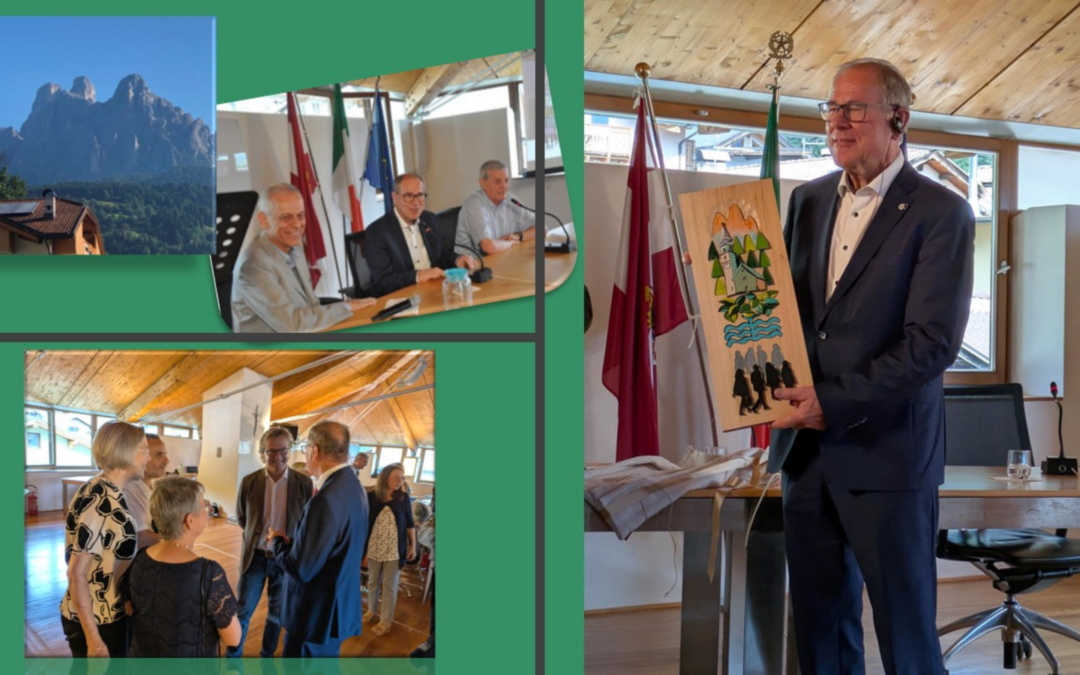
Tonadico is also known as the ‘City of the Pact’, because it was there, on 16 July 1949, that the Focolare Movement took shape. Chiara Lubich and Igino Giordani made a spiritual pact, one in which they resolved to live mutual love to the point of entrusting the future of the newly born Movement to Jesus in their midst (Mt 18:20). From that pact sprang many initiatives that have spread throughout the world, one of them being Together for Europe.
Together for Europe
It was through meeting other leading figures from European Christian communities and associations that, in 1999, Chiara Lubich was inspired to launch Together for Europe. Among these leaders was Gerhard Pross (YMCA, Esslingen, Germany), who was the moderator of the TfE network in the years that followed.
The Award
On 16 July, during the ‘Tonadico – City of the Pact’ event, Gerhard Pross was presented with an award by the same name for his invaluable and tireless work in giving witness – together with others – to unity amongst Christians in the service of the common good. The atmosphere of the event was festive, enriched by several intellectual and artistic contributions. It included an interview with Gerard, during which he looked back on some key stages of his spiritual journey and on the significant milestones of TfE.
“I am praying that we can extend the spirit of dialogue we experienced in Brussels to the whole world.” With these words, Luca, from Romania, speaks of that “something special, something great” which touched the hearts of those who took part in the Together for Europe events in Brussels from 11 to 13 May 2026.
We are compiling and making available various materials from the eventful days in Brussels, of which the morning at the European Parliament was just a part.
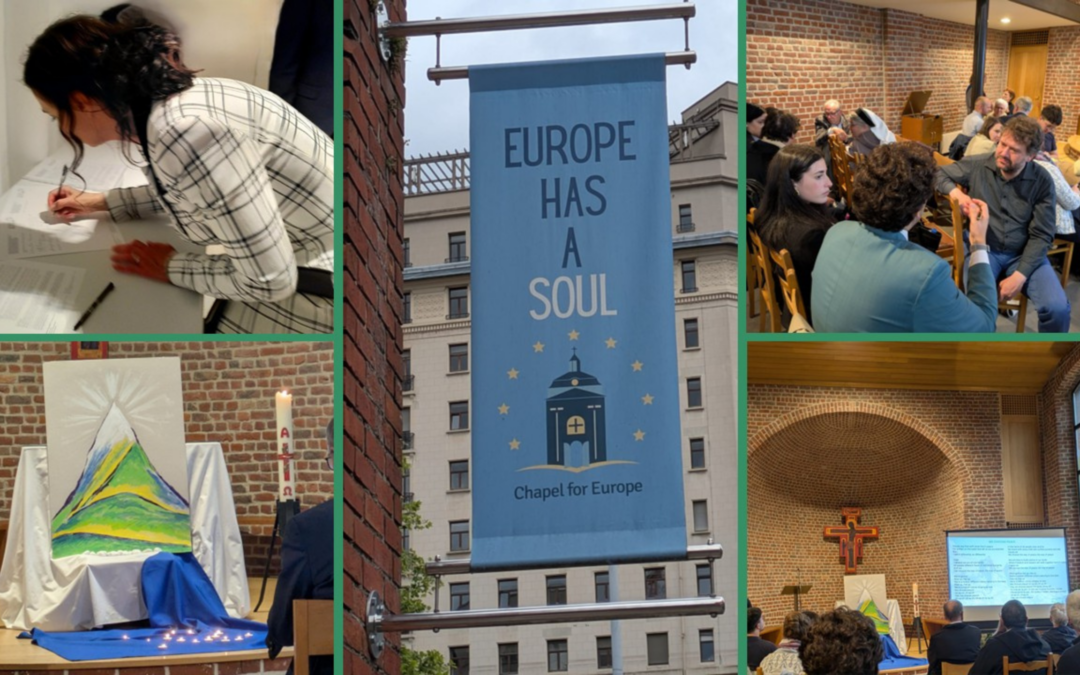
The day before, there was a packed afternoon programme of workshops, concluding with an ecumenical service at the Chapel of Europe, outside which the words “Europe has a Soul” are proclaimed.
The service was coordinated by the local Together for Europe group and opened with the song “We Choose Peace”. These were days in which peace was actively chosen and built.
As people were saying their goodbyes, some were repeating the phrase, “The Europe of tomorrow has already started to take shape. And it has the face of these young people.”
Young people from Together for Europe are livening up Brussels with their enthusiasm
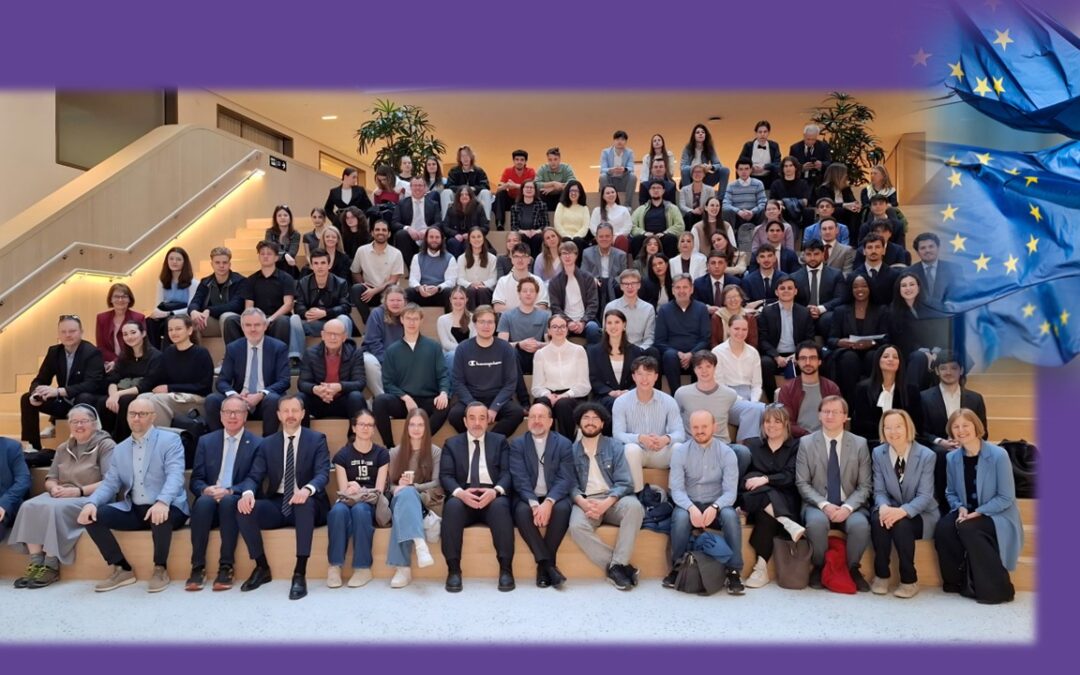
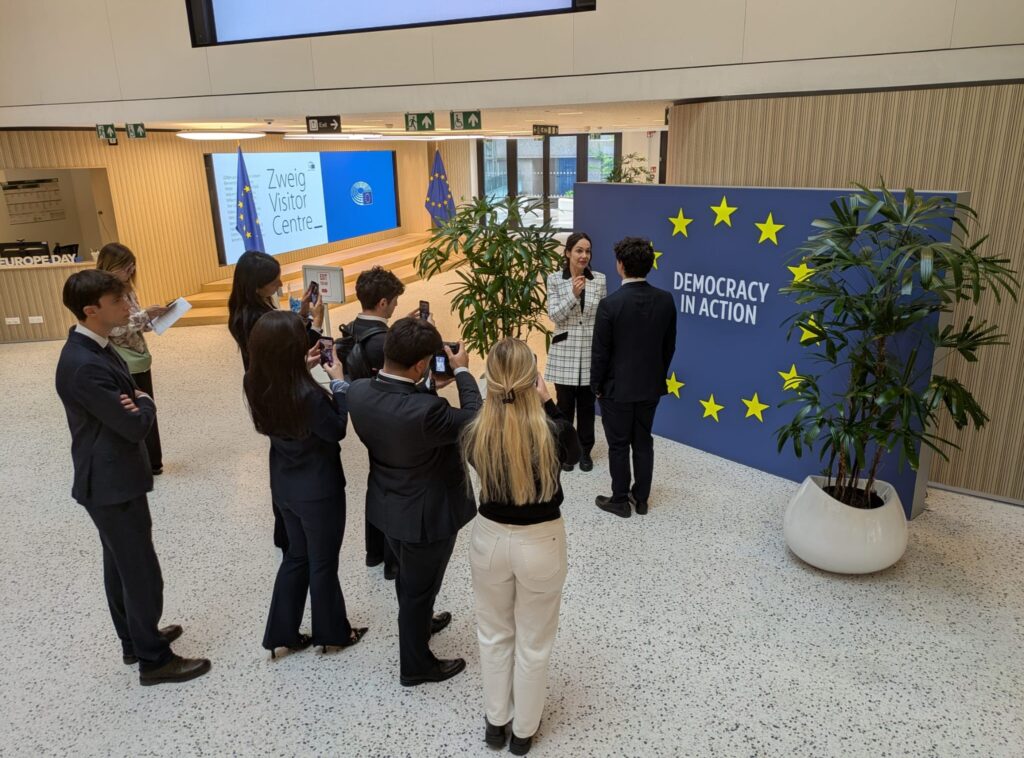
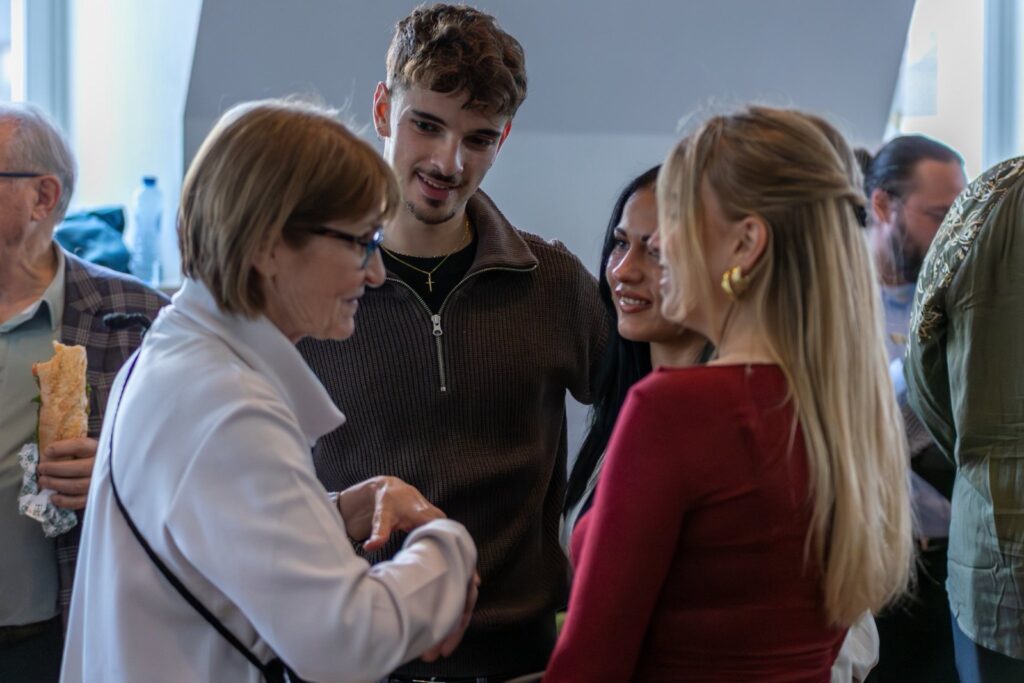
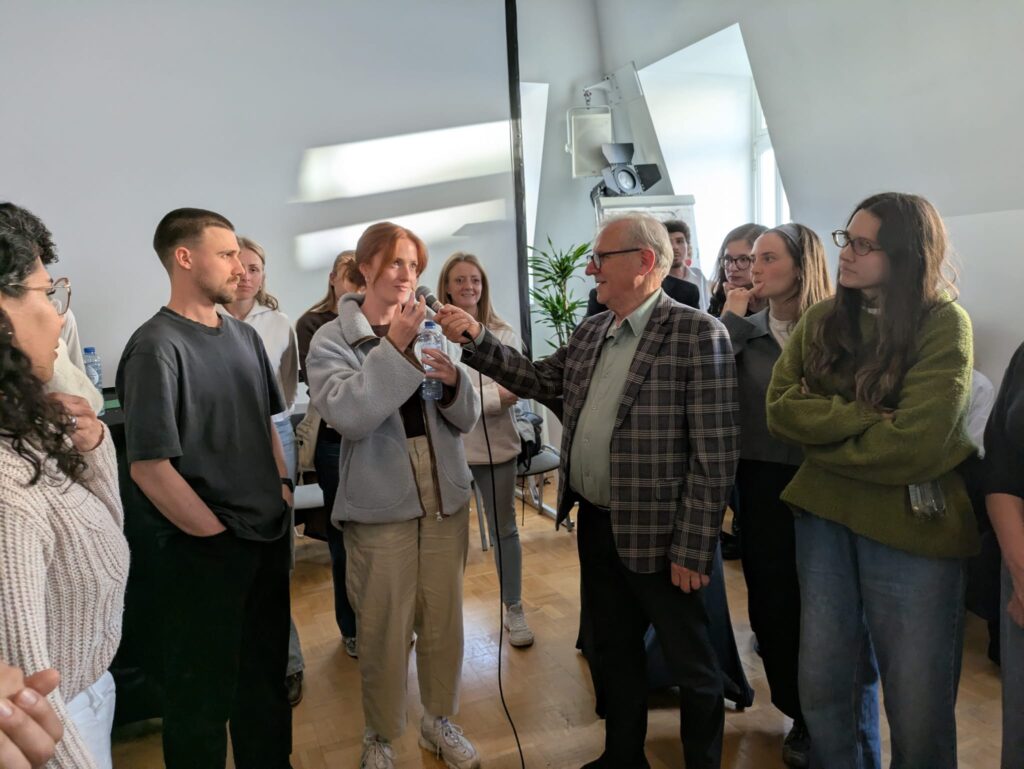
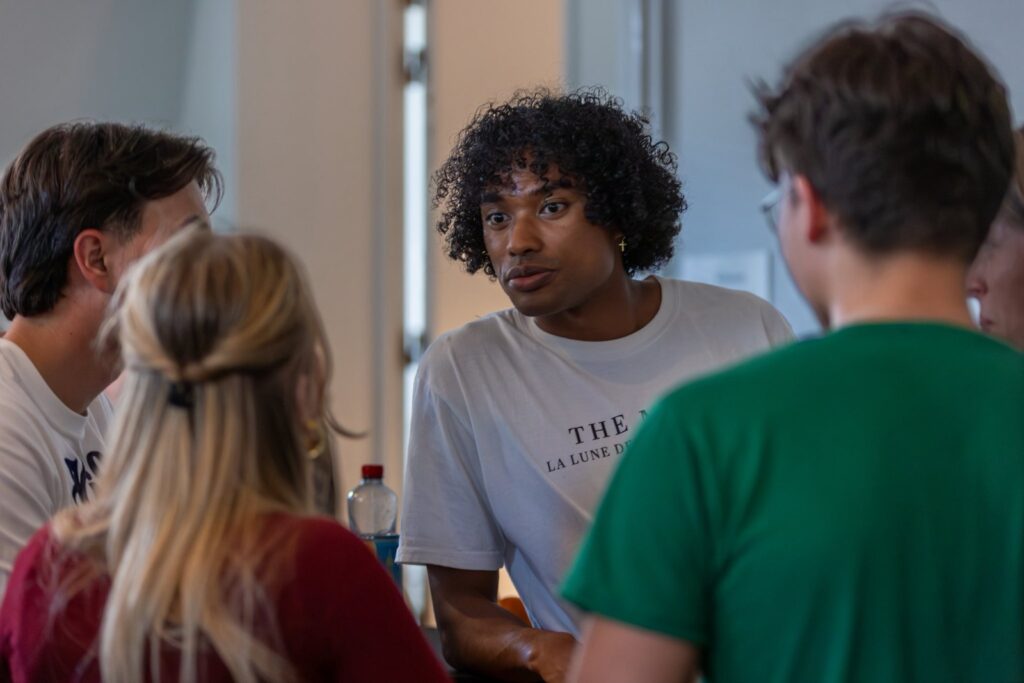
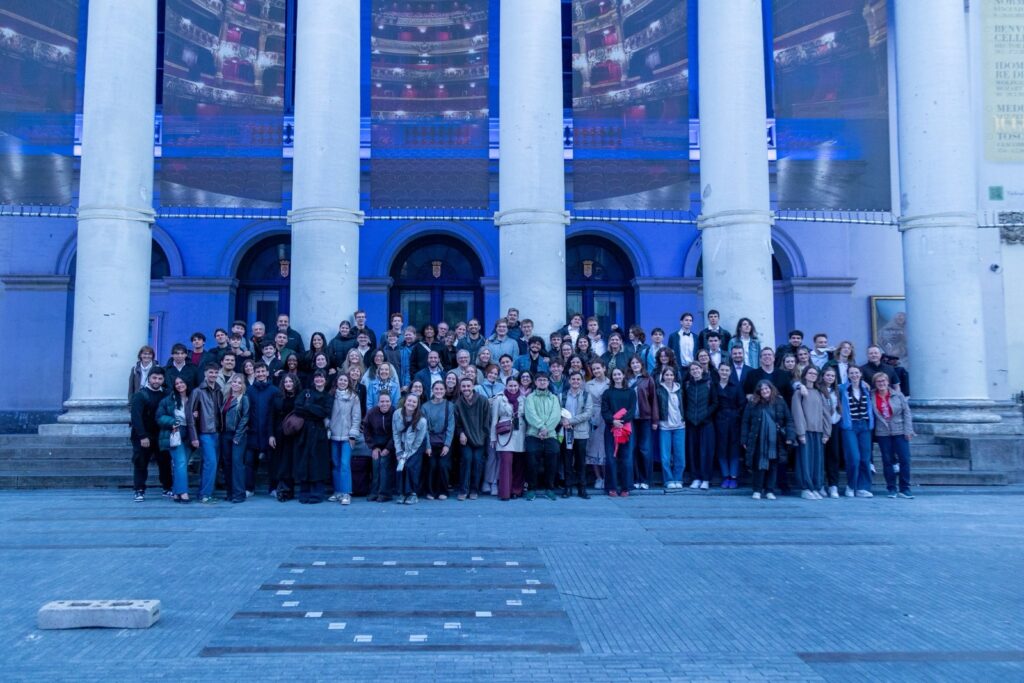
The European Quarter in Brussels is a maze of offices, headquarters and agencies operating within the European Union, whose acronyms sometimes sound like tongue-twisters. Serious-looking, professional officials and executives wander along its streets. As you walk through them, you hear different languages being spoken and encounter unusual customs. Yet, this variety does not give the impression of confusion, because the whole scene is underpinned by a great sense of composure. This sleepy routine was briefly disrupted between 11 and 13 May, when a group of around 100 enthusiastic young people made their way through the institutions of the European Union, bringing with them commitment and passion. They weren’t on a school trip, far from it! They were the young people of Together for Europe, well-prepared and inspired, who see Europe not as a goal to be achieved, but as their secure starting point from which to look out onto the whole world.
Dialogue in times of crisis
Joining them were a number of MEPs and other public figures: Andrea Wechsler, Antonella Sberna, Leoluca Orlando, Eduard Heger, Jeff Fountain, Giuseppe Lupo, Miriam Lexmann, Gerhard Pross, Nicole Grochowina… These are illustrious names: should we mention the countries they came from? Perhaps there is no need: they were Europeans. Adding that they were Italians, Slovaks, Germans, Dutch, Austrians… does little to help us understand the reasons that led all these people to meet with the young people. These reasons stem from the current crisis, in which there seems to be no room for unity among peoples and nations. No one can even guarantee peace anymore.
Unity rather than divisions and conflicts
Against this backdrop, Together for Europe has sought to demonstrate that unity is not merely an option, but rather the very fabric of the historical evolution of the European peoples. And if today this fabric seems buried beneath the rubble of ongoing conflicts, Together for Europe has set itself the task of bringing it back to light, offering its own experience of collaboration among Christians as a way to rebuild the European edifice on the foundations of unity. All together: members of different Churches, citizens of different countries and, above all, people of different generations. Young people, adults and the elderly inhabit this heart-wrenching present, and only by coming together can they resolve its contradictions.
Intergenerational Pact for a Global and United Europe
The challenge, therefore, is also intergenerational. This is why the young people from Together for Europe wanted to present the MEPs and other dignitaries present with an Intergenerational Pact >>, setting out a mutual commitment to work towards a Europe that is a beacon of peace and solidarity. Where did the 100 young participants come from? In addition to Europeans (and here too, it matters little whether they were Austrian, Belgian, Finnish, Italian, Dutch, Romanian, Scottish, Slovak, Swedish, German or Hungarian…), there were Brazilians, Canadians, Chinese, Colombians, South Africans, Mexicans and Americans… For Europe does not exist in isolation, since its vocation is to extend its reach globally, offering its set of values forged in Christianity, lived out in ecumenical dialogue, and amplified by the inspiring projects of the young people of Together for Europe.
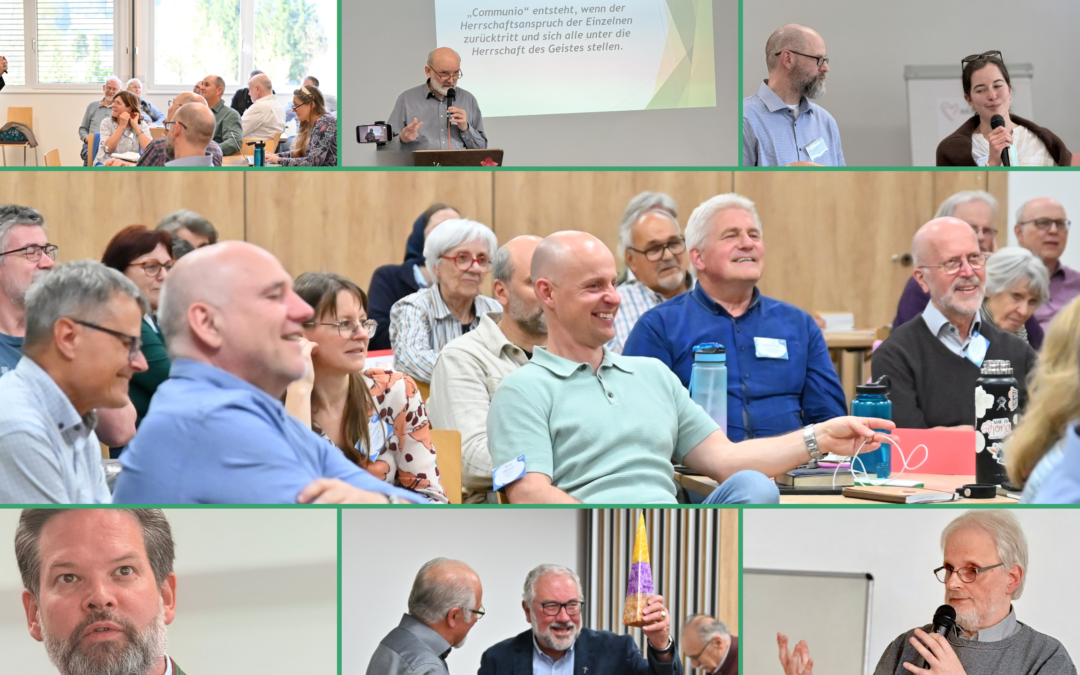
On 16 and 17 April 2026 in Spital am Pyhrn (Austria), Together for Europe was invited to help shape the agenda for the ‘Round Table’. Even during the first round of discussions, in which we shared with one another the spiritual focal points and talents present in our communities, we saw the richness they contain and how this becomes a source of fruitfulness for society.
When Fr Heinrich Walter of the Schönstatt Movement spoke about his experience with Together for Europe, of which he has been a member since the very beginning, there was a palpable sense of joy among the 60 or so participants.
Following a brief but very intense evening of prayer, the celebrations marking Johannes Fichtenbauer’s 70th birthday highlighted his varied, steadfast and fruitful work for Christian unity.
With the Easter message “Peace be with you” from Bishop Hermann Glettler of Innsbruck, the diocesan bishop responsible for the “Round Table” at the Austrian Bishops’ Conference, we began the second day in high spirits.
A number of examples of the activities carried out by Together for Europe in Austria (Carinthia, Styria, Tyrol, Vienna) and Slovakia contributed to a fruitful exchange of experiences.
Herbert Lauenroth, of the Focolare Movement, spoke about the key aspects of unity among Christian communities, including: God gathers his people together. He has torn down the walls. We are on a journey towards freedom and communion. This sometimes requires taking the risk of leaping like a trapeze artist, trusting that there is someone ready to catch me. And furthermore: I should not stop at the image I have formed of the other.
The young adults’ testimonies highlighted just how much they value freedom and diversity in Europe, and how aware they are that we must do something about this
It was interesting to note the reference to www.echtsein.live, which provides a platform in German for dialogue between Christians and people who hold different worldviews.
Finally, it was a pleasure to welcome Lukas Mandl, Member of the European Parliament, who was receptive to the feedback during the closing round-table discussion and emphasised that the EU’s motto is also ‘Unity in diversity’.
The “Round Table” also received a message of greeting from the Steering Committee of Together for Europe, which was meeting in Vienna at almost the same time.
“It was a truly wonderful experience to witness this diversity and yet this sense of solidarity” – this was one of the comments made during the round-table discussion.
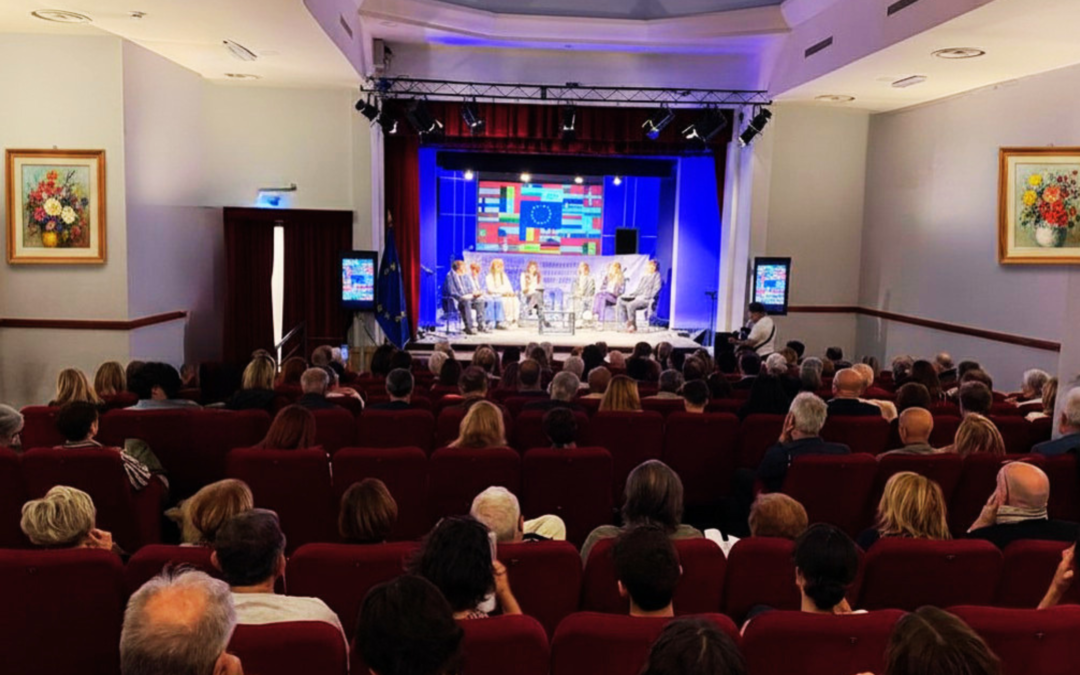
by reflecting on the identity of the European Union and the practical meaning of developing European citizenship. This is the proposal put forward by the ecumenical network Together for Europe, which on Saturday 9 May organised the event ‘A Light for Europe in a Global Twilight’ at the Teatro Rossini, the very venue from which Don Luigi Sturzo launched his ‘Appeal to the Free and Strong’ in 1919. The participants included young people and representatives from the academic and political worlds, called upon to reflect together on the founding values of the EU in the current global context. A “twilight” characterised by conflicts and crises
Leading the discussion…
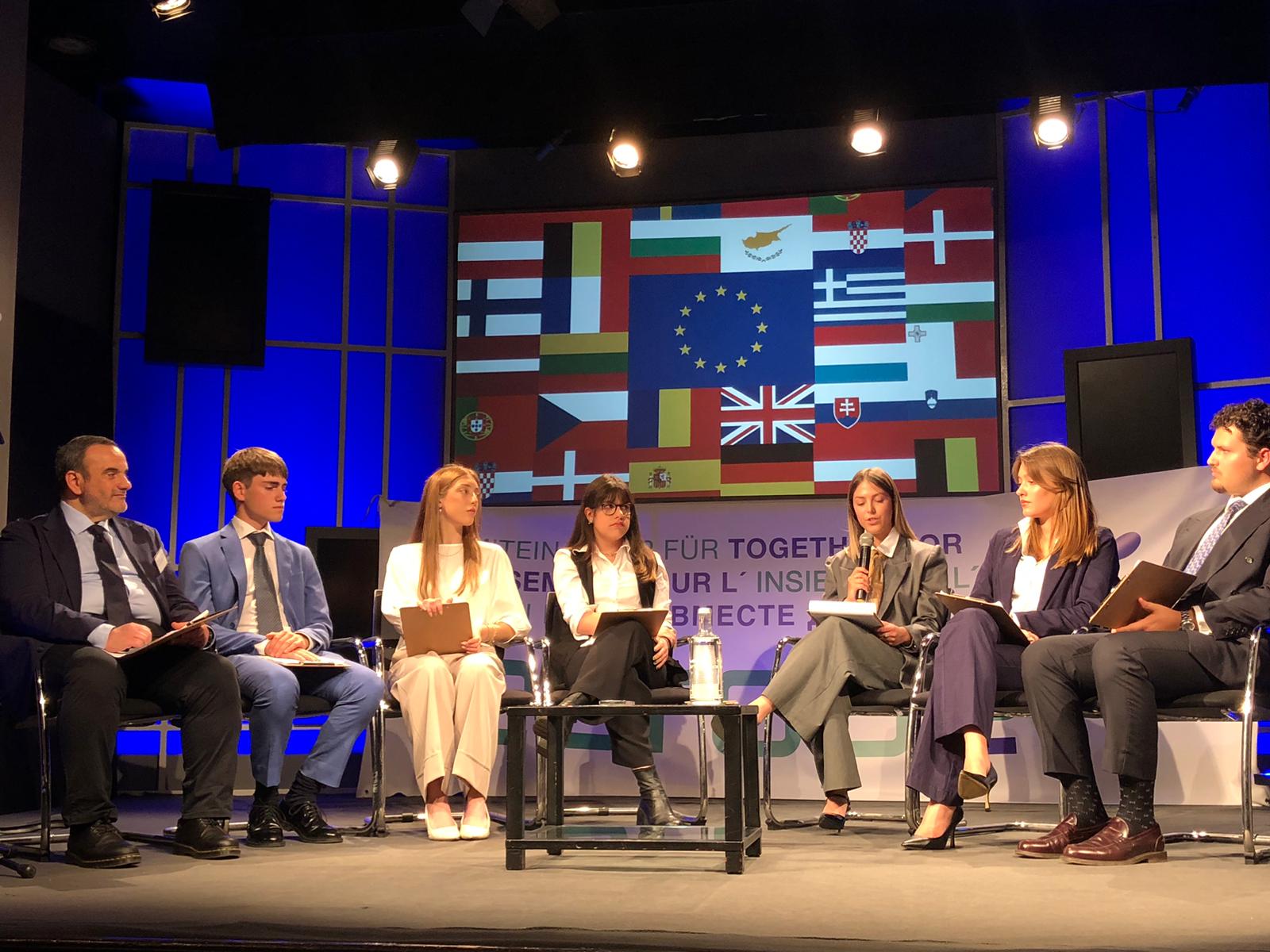
Amid live musical interludes, six young people from the group Ut Omnes – founded by a group of students from LUMSA University and now expanded to include students from other universities – who will be at the European Parliament in the coming days to meet with MEPs and sign an “Intergenerational Pact”. At the heart of the debate was the issue of European citizenship, not limited solely to the institutional dimension. After all, as the young Mattia Federici emphasised in his speech, over the past few decades the EU has built ‘an extraordinary legacy’ in economic, legal and institutional terms, without, however, managing to fully instil in its citizens a genuine sense of shared belonging. European citizenship, he observed, ‘exists only in the treaties and in voting rights’
Hence the proposal to…
revitalising the European project through a new narrative, by investing in civic education and greater citizen participation in decision-making processes. But this, as Alessandra Arcidiacono – another of the young people taking part in the debate – pointed out, is not enough: ‘Citizenship is made up of laws, cultures, languages and traditions, but it is the spirit that must hold it all together’. A spirit already present in the younger generations: “Young people are already living Europe even before they can define it,” she observed. “For them, Europe is not a destination but a starting point.”
Offering a geopolitical interpretation of the current historical moment…
It was Pasquale Ferrara, ambassador and former political director at the Ministry of Foreign Affairs, who urged those present to rediscover Europe’s original vocation as a space for dialogue and coexistence. Starting with a critique of any ‘closed’ conception of European identity, arguing that citizenship cannot be based solely on blood or descent, and citing the jurist Luigi Ferrajoli and his idea of a Constitution for the Earth, Ferrara emphasised the need for European citizenship to be situated within a broader perspective of universal citizenship. This is an achievable goal if we move beyond the image of ‘roots’ to embrace that of a ‘river’: an identity that changes, grows and transforms without losing continuity. A metaphor which, for the diplomat, aptly describes the nature of Europe, called upon to hold together its many diverse elements. After all, Europe ‘has taught the world that conflicts can be managed through the rule of law and political dialogue’. That is why, in a scenario marked by the resurgence of military force, the Old Continent should distinguish itself as a ‘gentle force’, capable of governing without succumbing to the logic of violence.
The long afternoon has come to an end…
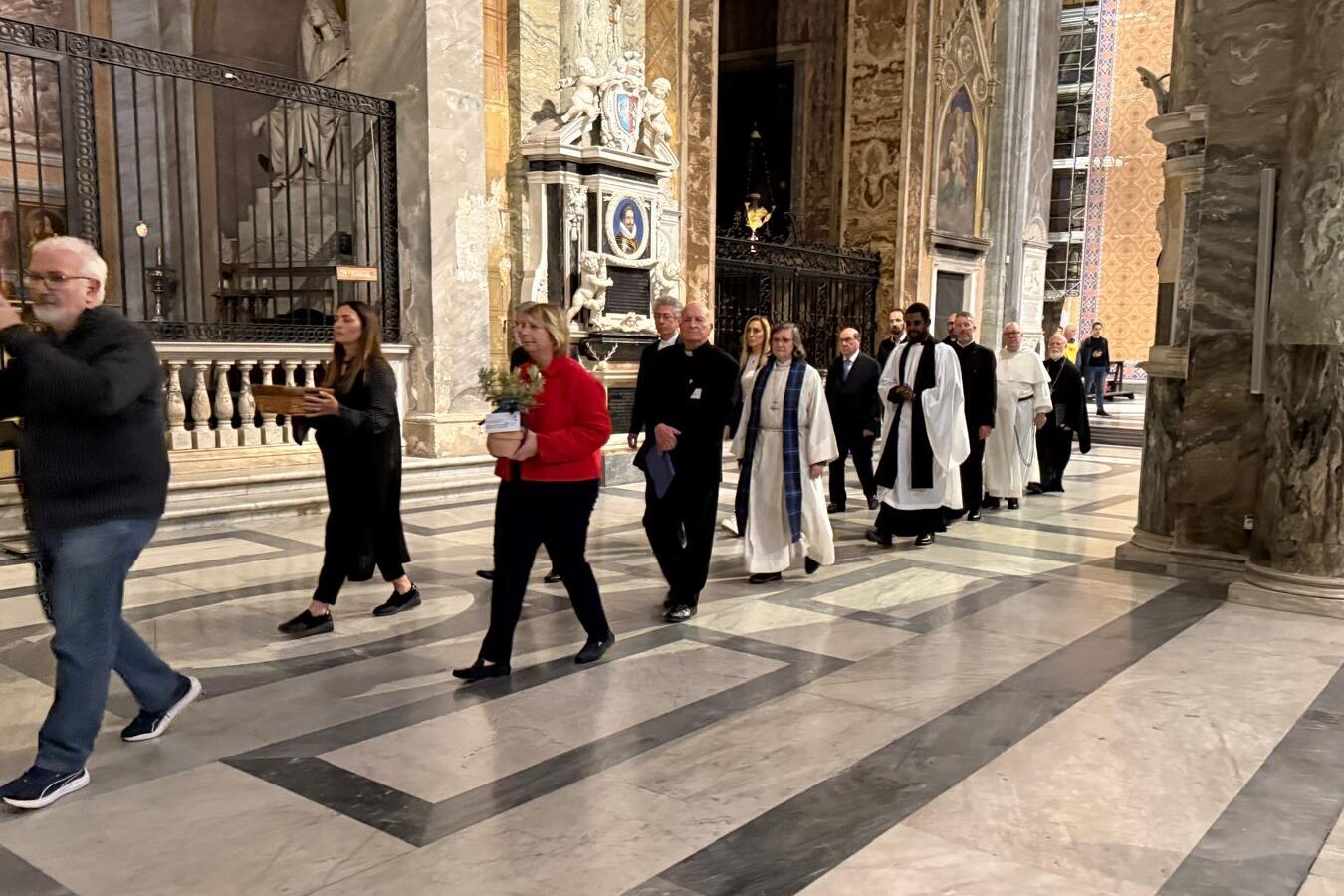
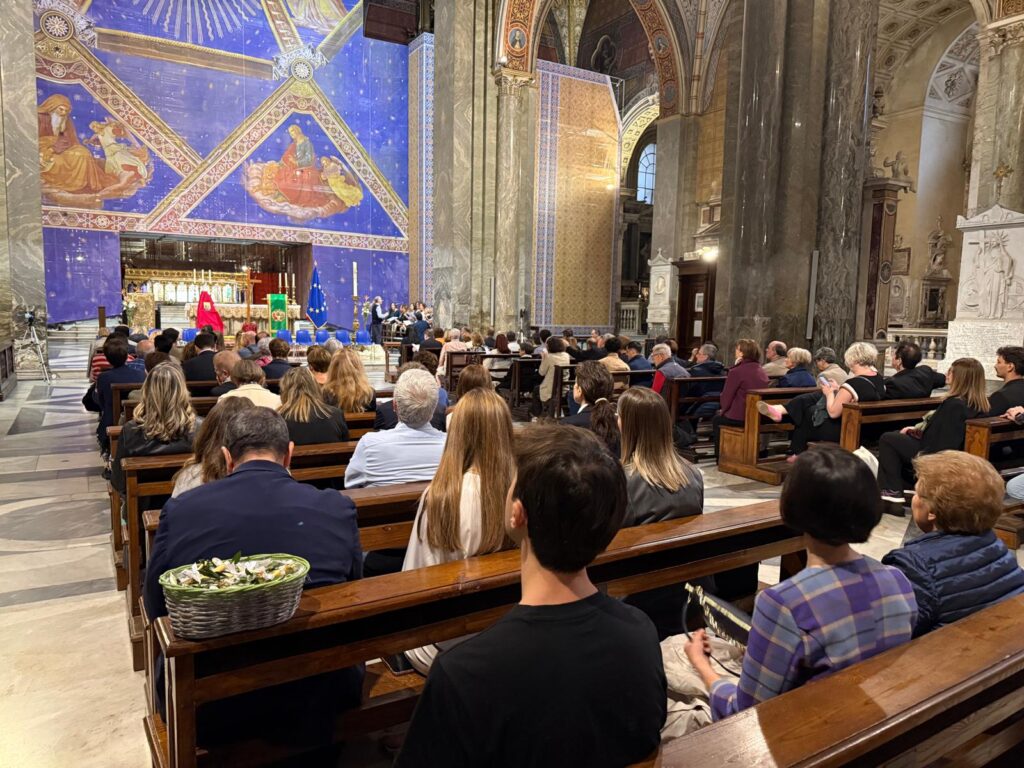
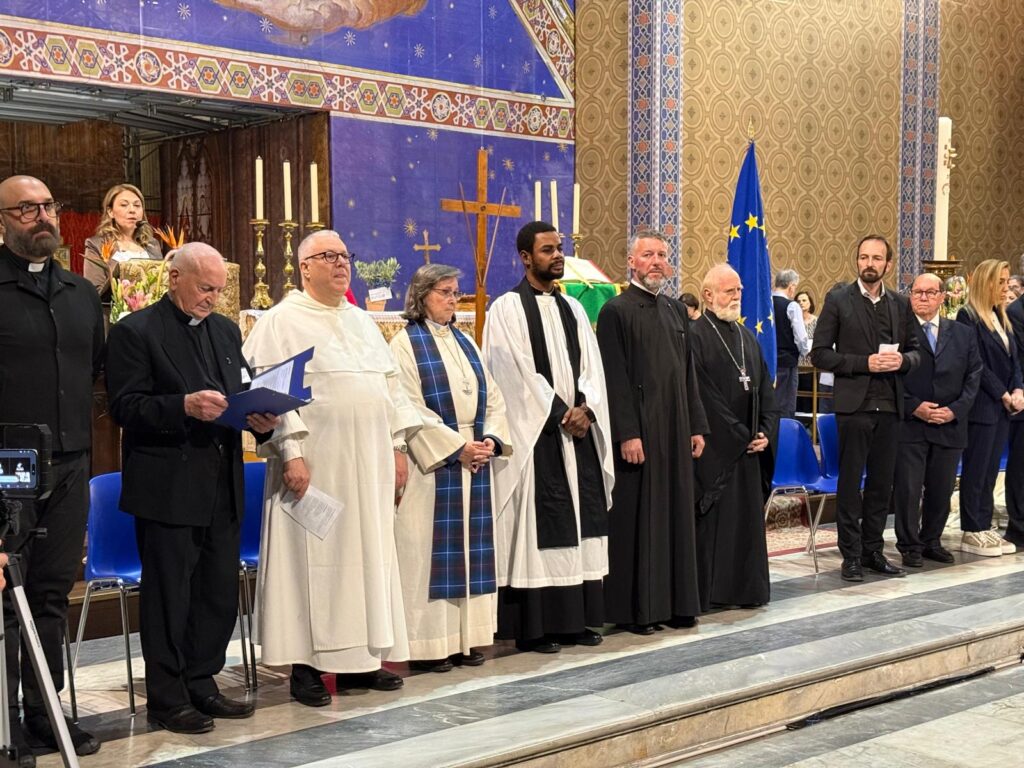
with an ecumenical prayer service in the Basilica of Santa Maria sopra Minerva, which began with opening remarks by Mons. Marco Gnavi, head of the Office for Ecumenism, Interreligious Dialogue and New Religious Movements of the Diocese of Rome, and featured prayers for peace led by Lutherans, Anglicans, Presbyterians, Evangelicals, Methodists, Orthodox and Catholic Christians.
Youth Group Ut Omnes_TfE Rome 9 May 2026_Photo: D. GollerPasquale Ferrara and Alberto Lo Presti_TfE Rome 9 May 2026_Photo D.GollerEurope Day_TfE Rome 9 May 2026_Photo D. GollerConference room TfE Event Rome 9 May 2026_Photo G. CiottoliEcumenical prayer_TfE Rome 9 May 2026_Photo: G. CiottoliEcumenical prayer_TfE Rome 9 May 2026_Photo: G. CiottoliEcumenical prayer_TfE Rome 9 May 2026_Photo: G. Ciottoli