
9 November 1989: an unforgettable date in recent history marking the fall of the Berlin Wall. In the evening of that same day I was too transfixed in my chair in front of the TV to notice an unexpected event the import of which my own young generation at the time could not possibly grasp.
I had studied (and held a degree in) modern history. I studied all about the Cold War and the building of the Berlin Wall, which in those November days was being reversed to rubble. A few months later we were to learn from the press the stories of the peoples of Czechoslovakia, Hungary, Poland and Romania who, by means of more or less peaceful revolutions, were freeing themselves from seven decades of Soviet burden.
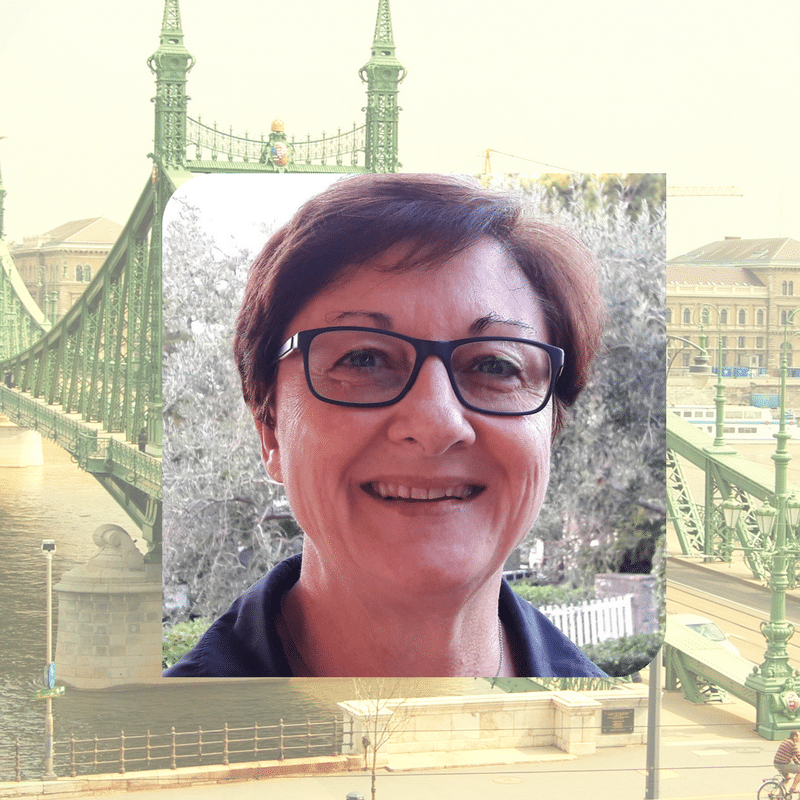
I could never have dreamt on that November day, that the stories and images from the media would have become incarnated for me, in real people whom I was about to meet, as only a short month later I descended in Keleti Railway Station in Budapest, brought by train from Rome crossing Slovenia and Croatia. I was offered the post of Italian language and history teacher in a secondary school in the Hungarian capital. A small group of people with big smiles and a bunch of flowers welcomed me in the smoky atmosphere of the station. This was my first encounter with a country in Eastern Europe: the cordial encounter with these normal people who soon became a family to me, in distinct contrast to the atmosphere of sadness and distrust that still prevailed, with unambiguous signs of ‘control’ (groups of Soviet soldiers discharged onto footpaths by imposing military trucks). This despite the fact that a Hungarian Republic had been proclaimed in October 1989. It would take more than two years for the last soldier donning the red Soviet star to leave the country for good.
The first months of ‘freedom’ were a transition phase both politically and socially: whilst the democratic government was making its first steps and had to cope with many unknowns (and strikes!), a variety of products, some from abroad slowly filtered into the shops. Daily life was still complicated, at least for me, coming from the West. I was used to a certain style of cooking, but it was impossible to find the same ingredients on the market. One day in 1990, the taxi and the public transport drivers blocked all bridges over the Danube in protest against the increase in the price of petrol. In a flash there were endless queues outside shops selling bread and soon all shops were empty. «it’s like in ‘56» – people would say, meaning: there was nothing left to eat. People were unable to reconcile these conditions with a belief that the worst had already passed never to return.
Only when I began to teach did I fully appreciate the different social history in which I was now living, where all historical references were seen from the perspective of Moscow and revolved around the concept of class struggle. I found myself having to explain to my ingenuous students, things which until then I had taken for granted. Among the most obvious was an episode just prior to Christmas in 1990. In order to practice Italian conversation, we spoke about Italian Christmas traditions. I described enthusiastically images of the Nativity and the crib present in those days in every Italian family. After I spoke for about half an hour, a girl with dark hair put up her hand at the back of the class and asked: «Professor, but who is this Jesus?».
by Maria Bruna Romito
0 Comments