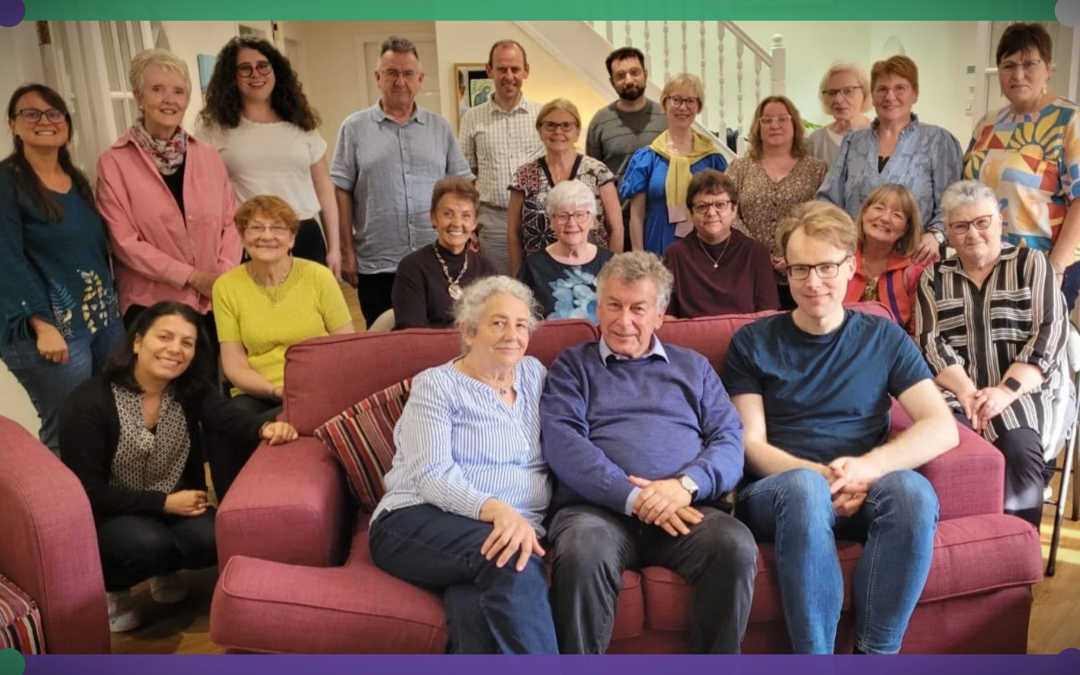
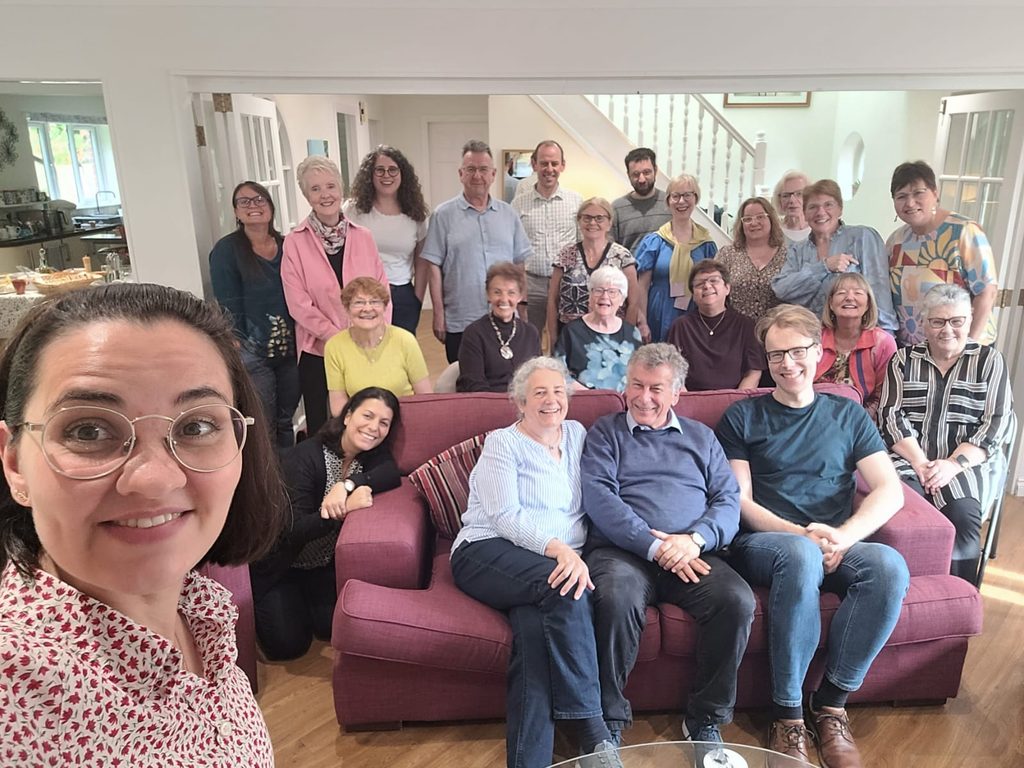
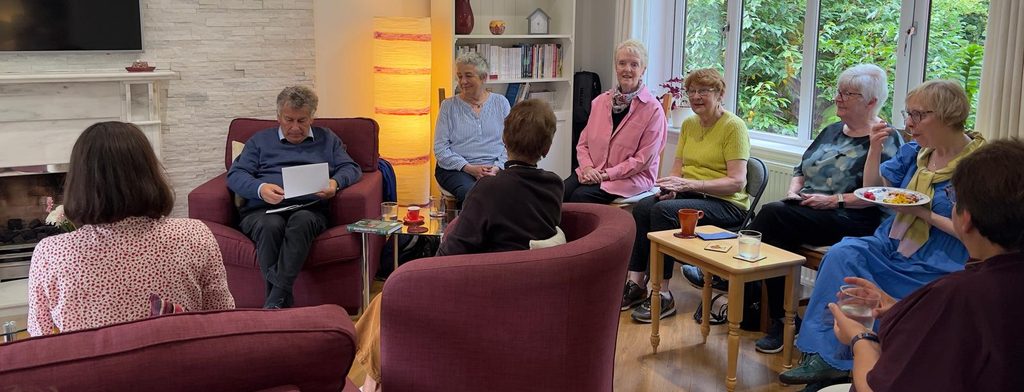
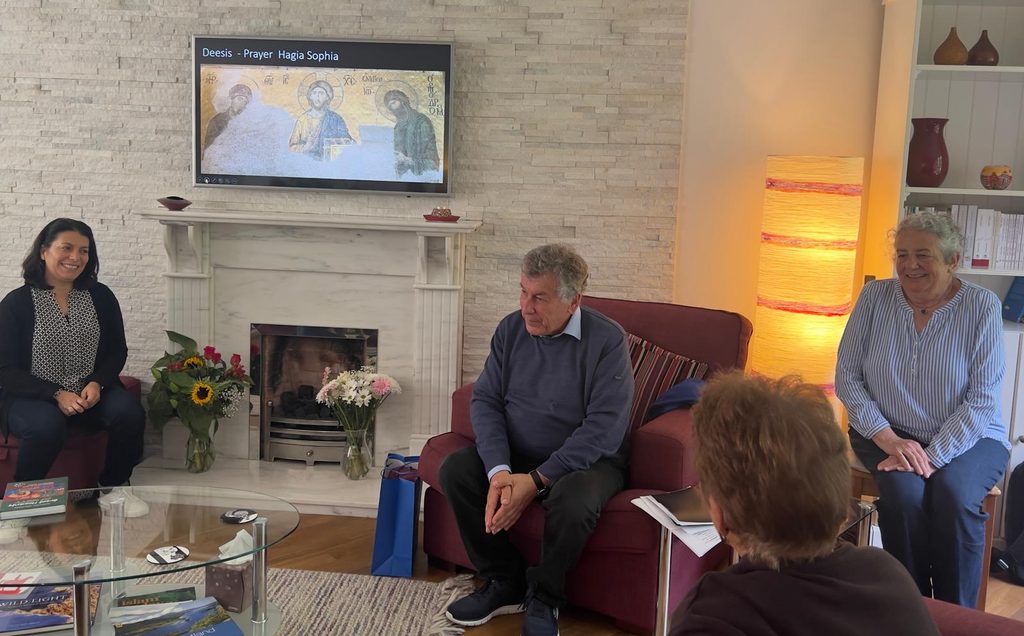
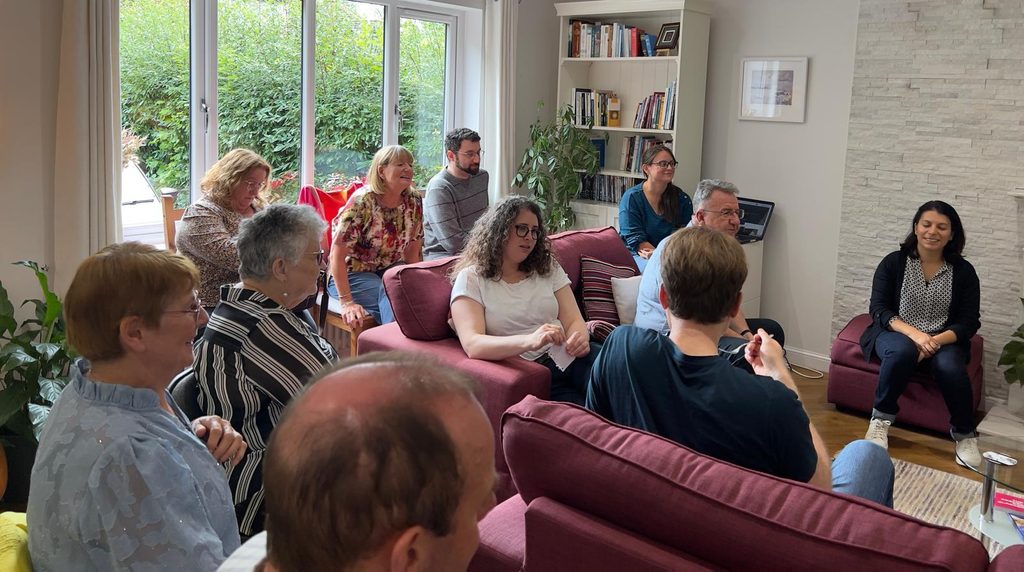
Thomas pointed out that the two movements – the Focolare and the YMCA – share the same source of inspiration that gave rise to both: Jesus’ prayer for unity (John 17:21). He then outlined the key stages in the history of Together for Europe. In particular, he recalled the meeting of collaborators on 8 December 2001: following talks by Chiara Lubich and the Protestant bishop Ulrich Wilckens on Jesus crucified and forsaken, a Pact of Mutual Love was drawn up. This same Pact is renewed every year by the collaborators and forms the basis of Together for Europe.
Different charisms in unity
After sharing lunch in a warm, family-like atmosphere, the 20 people present, representing three Christian denominations – the Church of Scotland, the Scottish Episcopal Church and the Catholic Church – were captivated by Thomas’s stories of reconciliation and forgiveness, stemming from his experience of finding Jesus in ‘the other’, in those different from himself. ‘By being together, the Churches and Communities experience the presence of Jesus amongst us. It is the experience of God that brings his people together; different charisms come together in unity. It is a meeting of riches, for God has placed gifts within these Communities which unfold with greater power through their interaction.’
Some of us have shared personal experiences gained from working for years within ecumenical networks at local level; these experiences were reflected in the ‘5 keys’ identified by Together for Europe to describe the path towards unity: Jesus at the centre; the Covenant of Mutual Love; the Word of God, to be heeded and put into practice; reconciliation that overcomes every barrier; a new attitude towards others, as we discover and share our mutual riches.
Images that speak volumes
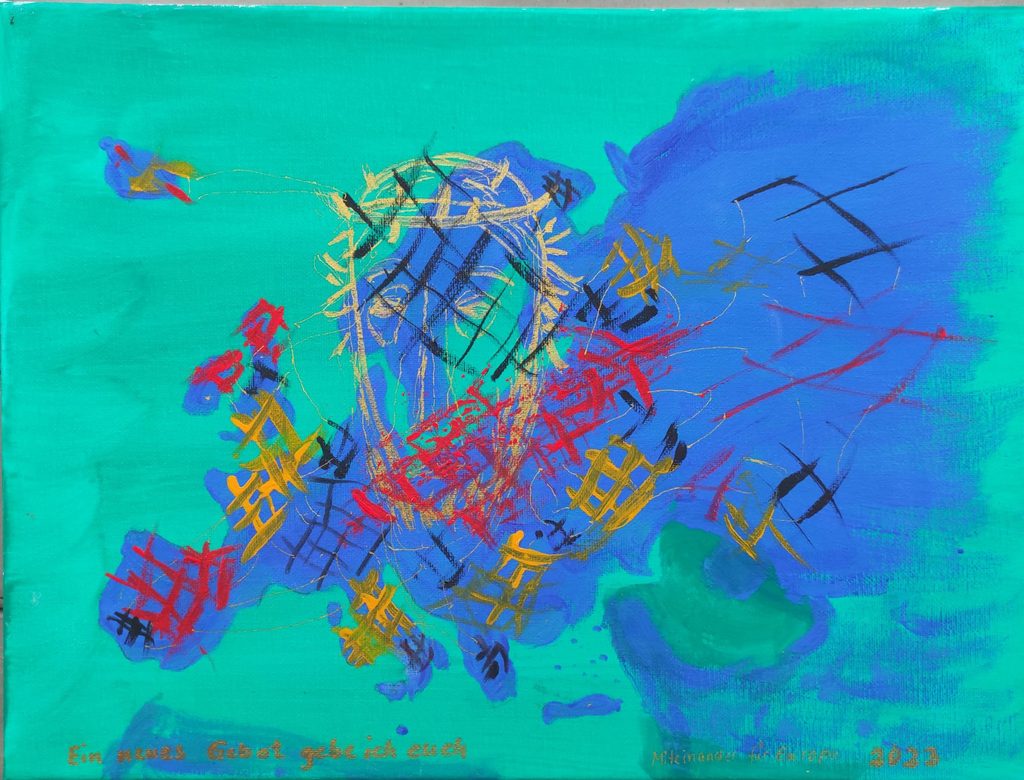
We were struck by two particularly evocative images: a Byzantine mosaic from the historic Hagia Sophia basilica in Istanbul, in which John the Baptist and Mary, standing on either side of Jesus, bow towards Him and, in doing so, bow towards one another. ‘This shows what happens when we follow Jesus’ commandment: we turn towards Jesus Christ and, as a result, towards one another.’ And then, a painting by Hanna, Thomas’s wife, depicting the face of Jesus – suffering, yet serene – who seems to be saying: ‘I am here. I have always been here and always will be.’ Against a deep blue background, Europe is dotted with vibrant lines forming networks, all connected by thin golden threads leading to Jesus.
A football match
‘Hope’ is certainly a word that sums up the afternoon we spent together; the bond between those present has grown stronger and our love for one another has deepened. This has given us the courage to continue striving for unity. “Today I was subjected to sectarian verbal abuse whilst travelling by train after the football match,” someone told us the following day. “If Thomas hadn’t urged everyone to work towards eradicating sectarianism – which is often linked to the division between football teams – I wouldn’t have had the courage to respond calmly to that man, given that there were children in our carriage. Thanks to what Thomas said, I have begun to forgive, entrusting everything to God: that way, I don’t carry 500 years of hatred and prejudice in my heart.”
The infectious joy and the special atmosphere that filled the city have given our French National Committee of Together for Europe fresh inspiration and brought us closer together than ever before. As a Christian, this day has encouraged me to bear witness to our values with even greater conviction.
Unity in diversity
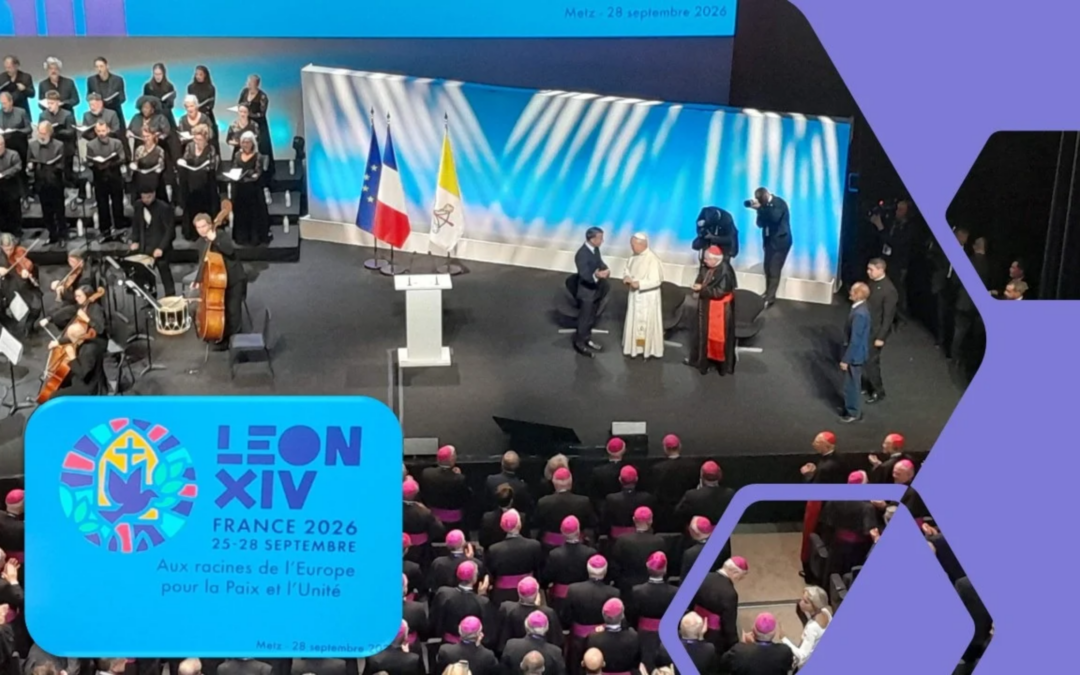
The Pope’s address, ‘To the Roots of Europe for Peace and Unity’, took place immediately after a meeting with representatives of all religious traditions in France. It was clear that all believers share a common vision of a Europe that remains true to its diverse roots and is actively committed to peace.
The Pope emphasised the principle of ‘both… and’: Europe was born out of dialogue. It must return to its Christian identity, whilst also acknowledging its Greek, Roman, Germanic, Slavic, Jewish and Muslim influences.
Willingness to engage in dialogue
The Pope’s statement, which is central to our work, reads: ‘In today’s multicultural context, reaffirming the universality of values – which is essential for Europe’s survival – requires both a rediscovery of its roots and a willingness to engage in dialogue with others.’
Together for Peace
During the reception that followed, we had the opportunity to take part in some inspiring encounters – including one with a Coptic Orthodox priest who was enthusiastic about this historic meeting. Earlier, the religious leaders had already signed, in our presence, a joint appeal for peace.
For our National Committee, this day provided the ideal opportunity to get us in the right frame of mind for our forthcoming meeting in Würzburg (29–31 October 2026), entitled ‘Called to Peace’.
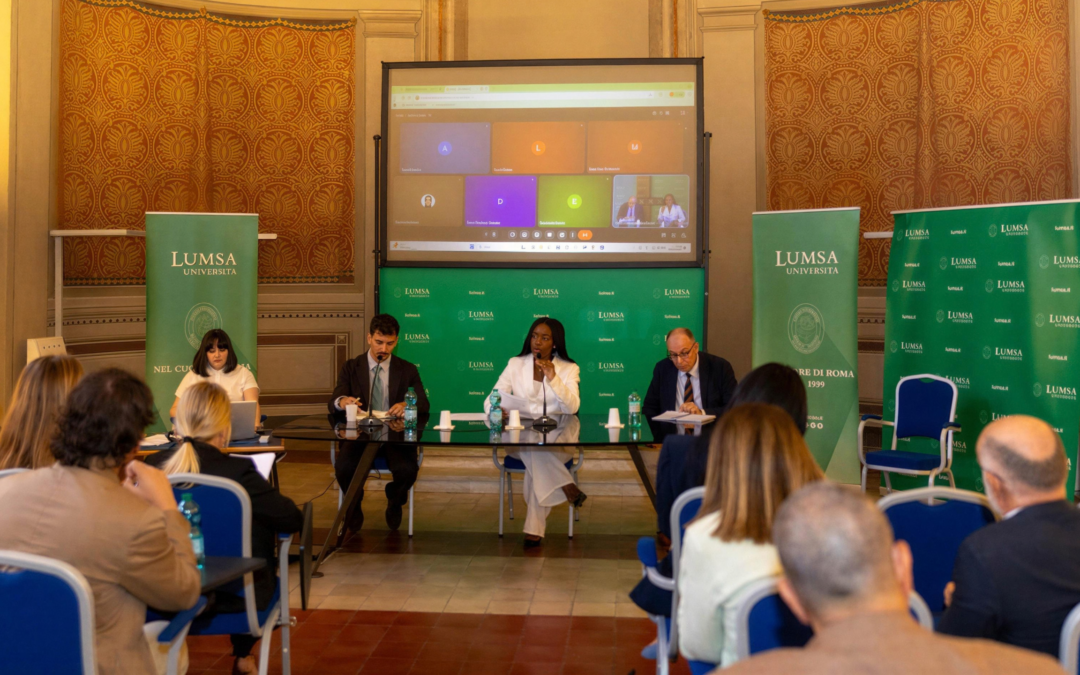
The Ut Omnes* group took part in the event ‘SOTEU 2026 – Europe: Our Choice’ at the Libera Università Maria Santissima Assunta (LUMSA) in Rome. The meeting, introduced by Professor Alberto Lo Presti, followed the broadcast of the speech by the President of the European Commission.
In her lengthy speech, she began by addressing the issue of the military defence of borders, opening with a quote from Charles Dickens: ‘It was the best of times, it was the worst of times’. This dichotomy captures the essence of today’s Europe: a Union that is strong in its achievements and potential, yet vulnerable in the face of external threats.
Distinguished guests
The SOTEU featured four symbolic figures: Canadian Prime Minister Mark Carney; the family of Danish pilot Rune Kyndal, who died whilst fighting wildfires in Europe; Sasha Paskal, a very young Ukrainian gymnast maimed by a Russian missile and a symbol of resilience; and the founders of a tech start-up, Rafa from Poland and Pekka from Finland, who are leading experts on artificial intelligence.
The President surprised the audience by making a historic proposal for Canada to become the first ‘associate member’ of the European Union, an initiative that draws on the ecumenical values of collaboration championed by Ut Omnes and the Together for Europe network. Another key issue was the safety of children online, with reference to the 14-year-old Belgian girl Oléa, a victim of cyberbullying. To tackle such tragedies, the EU Kids Act was announced – a package of laws designed to protect children online.
The members of Ut Omnes then opened the debate. Italian MEP Marco Tarquinio (S&D), who was unable to attend as he was in Strasbourg, sent a video message focusing on immigration and borders. On the subject of solidarity, Ut Omnes quoted St Paul (‘If anyone does not want to work, let them not eat either’), to emphasise everyone’s duty to contribute to society.
Homeland of Homelands
The debate highlighted how external forces are attempting to divide the Union by fuelling nationalism, which weakens peoples rather than protecting them. Europe is described as a ‘homeland of homelands’, a symbol that is both strong and fragile. Defending the Union and the sense of freedom is a global challenge that concerns every citizen, regardless of age or gender
From an (adapted) text by Livio Tetamo Zamparini, a young member of the Ut Omnes group
*Ut Omnes is a group of young people who are committed to European unity and who work within the Together for Europe network
“I am praying that we can extend the spirit of dialogue we experienced in Brussels to the whole world.” With these words, Luca, from Romania, speaks of that “something special, something great” which touched the hearts of those who took part in the Together for Europe events in Brussels from 11 to 13 May 2026.
We are compiling and making available various materials from the eventful days in Brussels, of which the morning at the European Parliament was just a part.
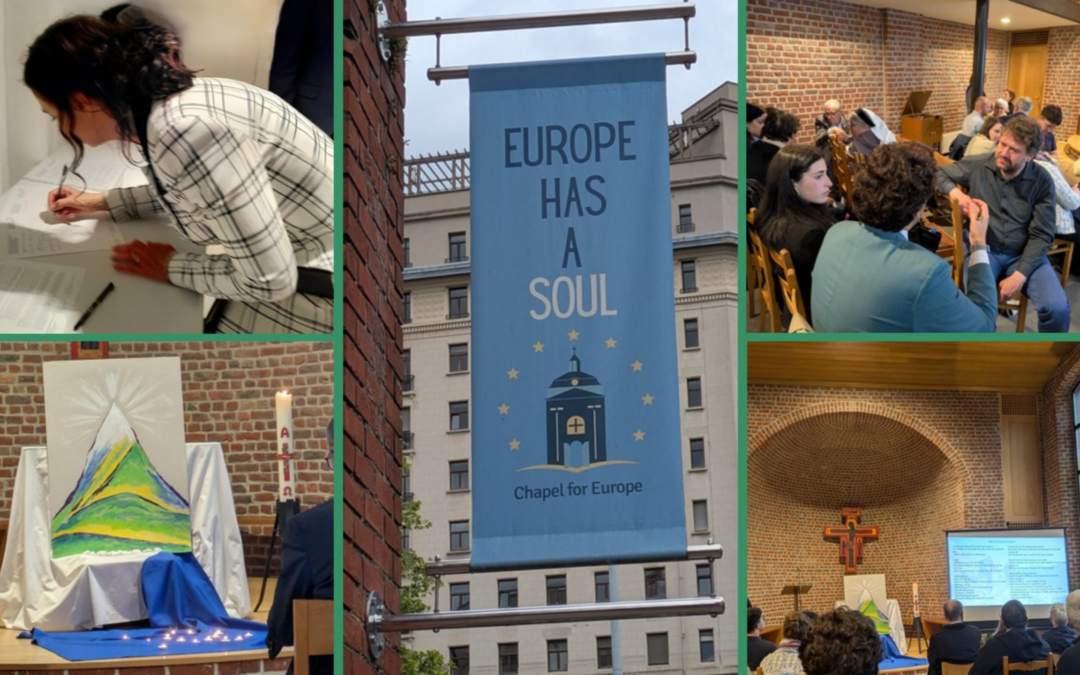
The day before, there was a packed afternoon programme of workshops, concluding with an ecumenical service at the Chapel of Europe, outside which the words “Europe has a Soul” are proclaimed.
The service was coordinated by the local Together for Europe group and opened with the song “We Choose Peace”. These were days in which peace was actively chosen and built.
As people were saying their goodbyes, some were repeating the phrase, “The Europe of tomorrow has already started to take shape. And it has the face of these young people.”
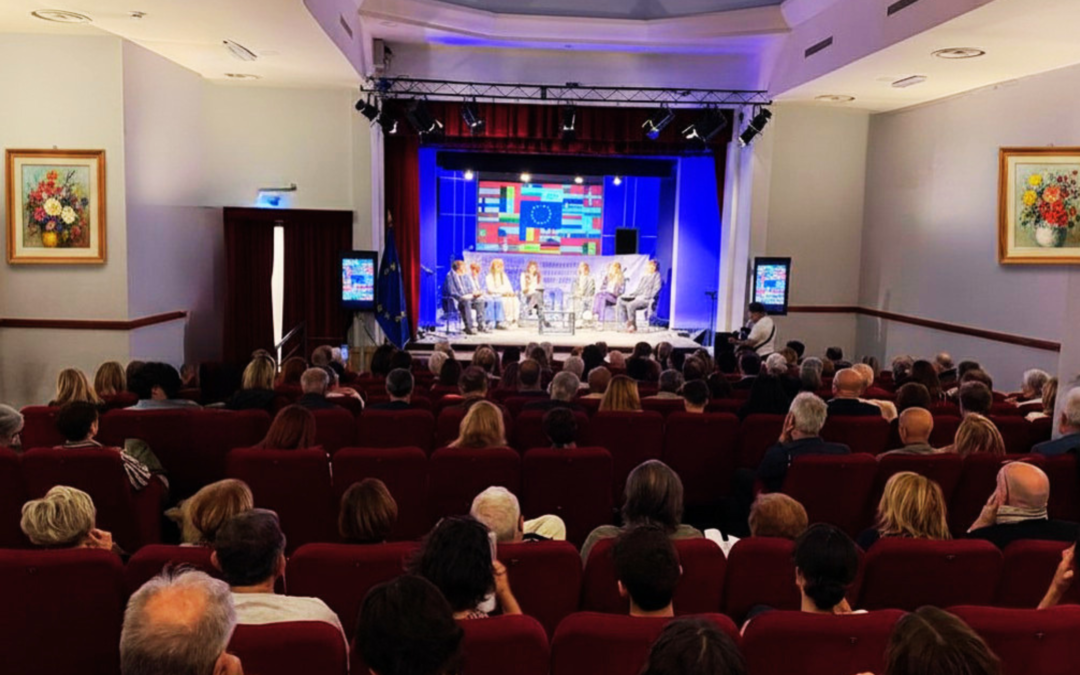
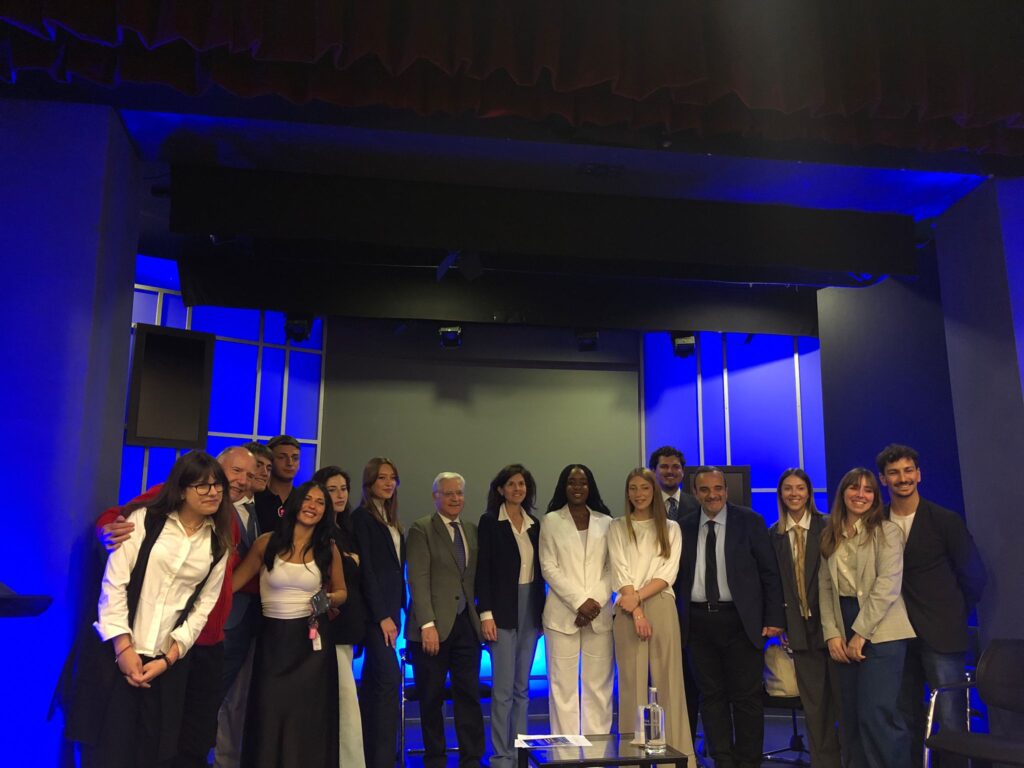
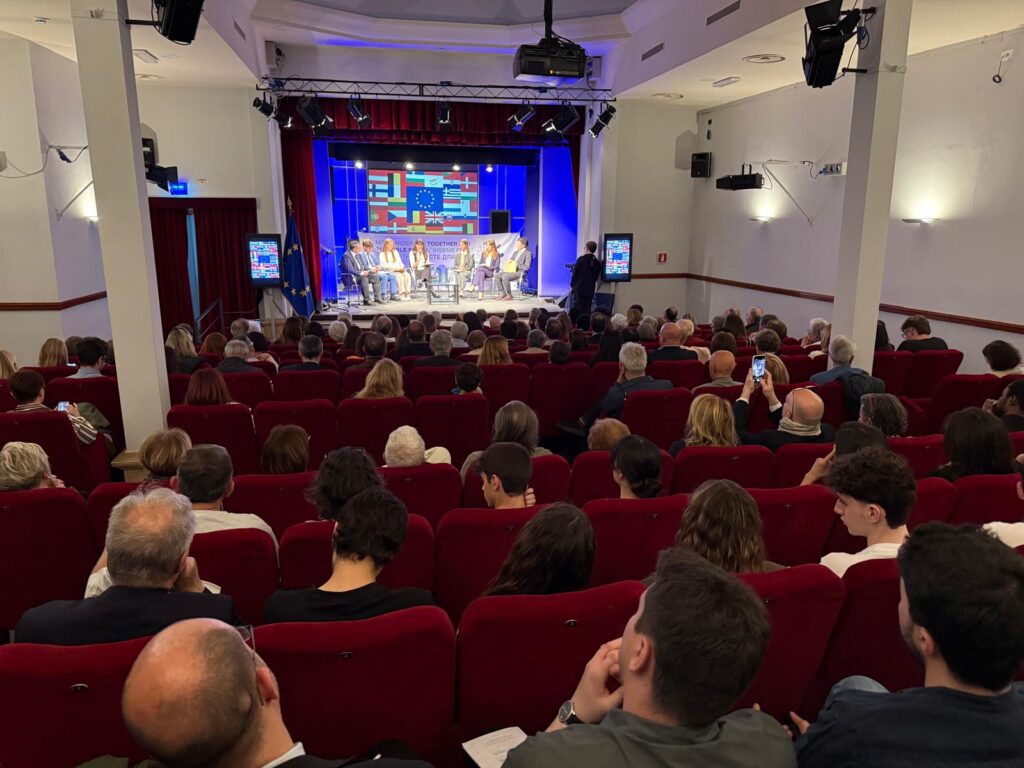
by reflecting on the identity of the European Union and the practical meaning of developing European citizenship. This is the proposal put forward by the ecumenical network Together for Europe, which on Saturday 9 May organised the event ‘A Light for Europe in a Global Twilight’ at the Teatro Rossini, the very venue from which Don Luigi Sturzo launched his ‘Appeal to the Free and Strong’ in 1919. The participants included young people and representatives from the academic and political worlds, called upon to reflect together on the founding values of the EU in the current global context. A “twilight” characterised by conflicts and crises
Leading the discussion…
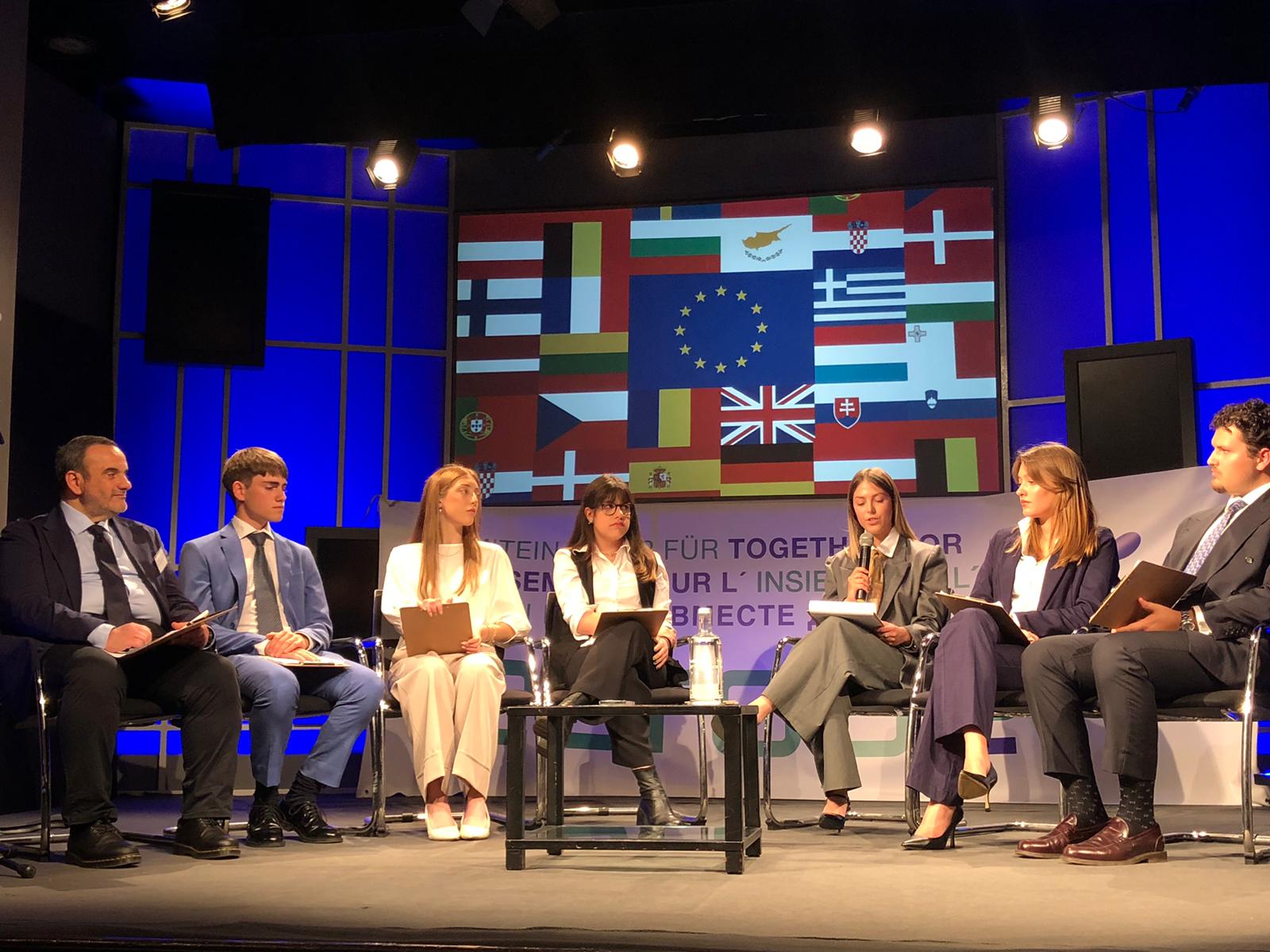
Amid live musical interludes, six young people from the group Ut Omnes – founded by a group of students from LUMSA University and now expanded to include students from other universities – who will be at the European Parliament in the coming days to meet with MEPs and sign an “Intergenerational Pact”. At the heart of the debate was the issue of European citizenship, not limited solely to the institutional dimension. After all, as the young Mattia Federici emphasised in his speech, over the past few decades the EU has built ‘an extraordinary legacy’ in economic, legal and institutional terms, without, however, managing to fully instil in its citizens a genuine sense of shared belonging. European citizenship, he observed, ‘exists only in the treaties and in voting rights’
Hence the proposal to…
revitalising the European project through a new narrative, by investing in civic education and greater citizen participation in decision-making processes. But this, as Alessandra Arcidiacono – another of the young people taking part in the debate – pointed out, is not enough: ‘Citizenship is made up of laws, cultures, languages and traditions, but it is the spirit that must hold it all together’. A spirit already present in the younger generations: “Young people are already living Europe even before they can define it,” she observed. “For them, Europe is not a destination but a starting point.”
Offering a geopolitical interpretation of the current historical moment…
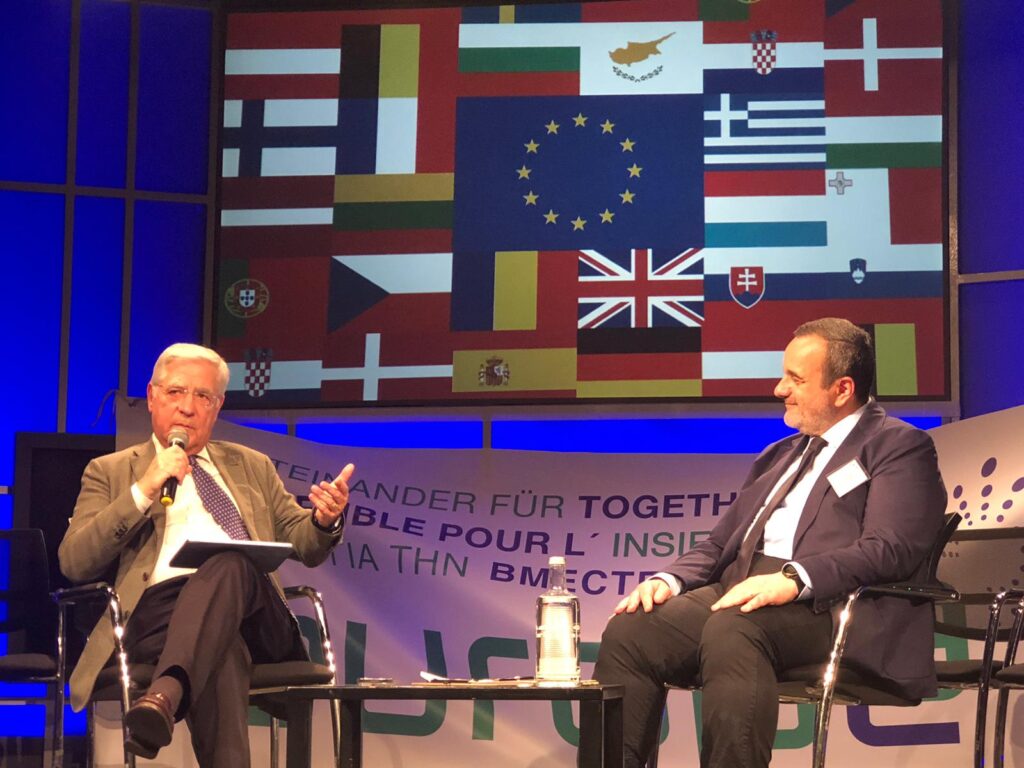
It was Pasquale Ferrara, ambassador and former political director at the Ministry of Foreign Affairs, who urged those present to rediscover Europe’s original vocation as a space for dialogue and coexistence. Starting with a critique of any ‘closed’ conception of European identity, arguing that citizenship cannot be based solely on blood or descent, and citing the jurist Luigi Ferrajoli and his idea of a Constitution for the Earth, Ferrara emphasised the need for European citizenship to be situated within a broader perspective of universal citizenship. This is an achievable goal if we move beyond the image of ‘roots’ to embrace that of a ‘river’: an identity that changes, grows and transforms without losing continuity. A metaphor which, for the diplomat, aptly describes the nature of Europe, called upon to hold together its many diverse elements. After all, Europe ‘has taught the world that conflicts can be managed through the rule of law and political dialogue’. That is why, in a scenario marked by the resurgence of military force, the Old Continent should distinguish itself as a ‘gentle force’, capable of governing without succumbing to the logic of violence.
The long afternoon has come to an end…
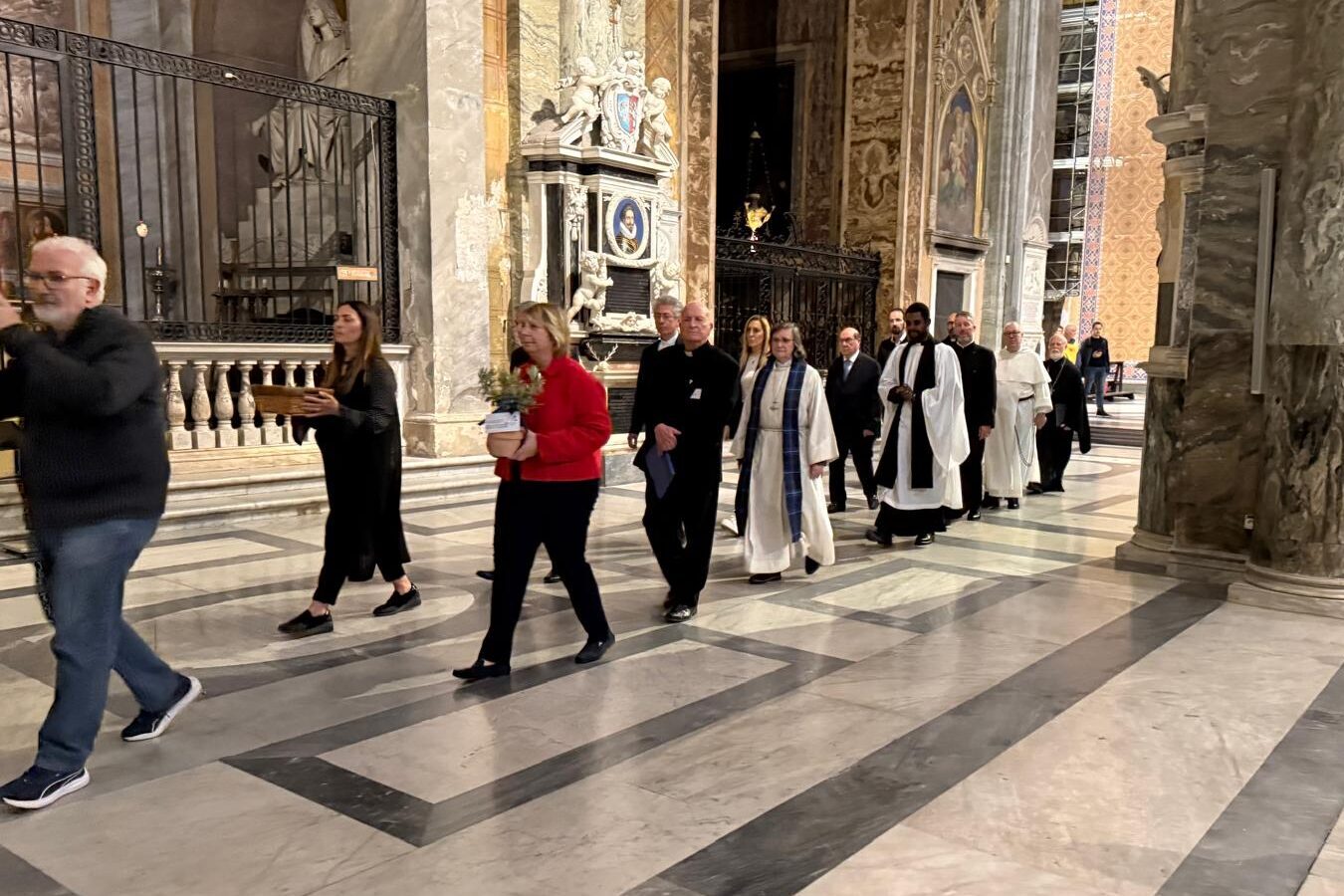
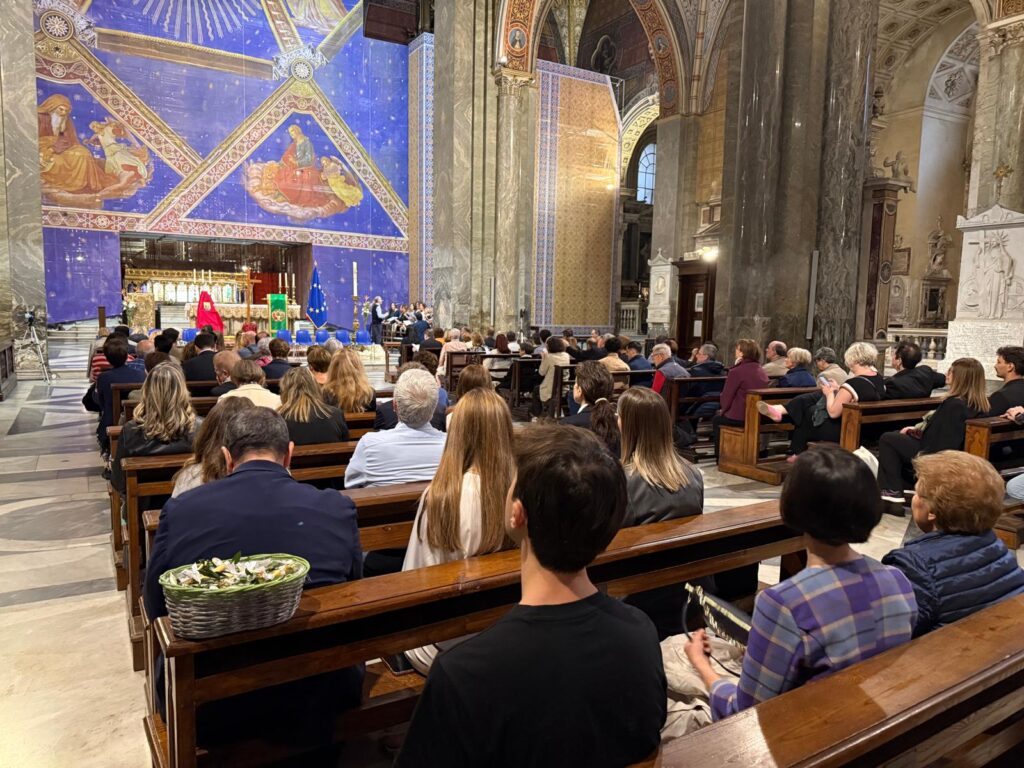
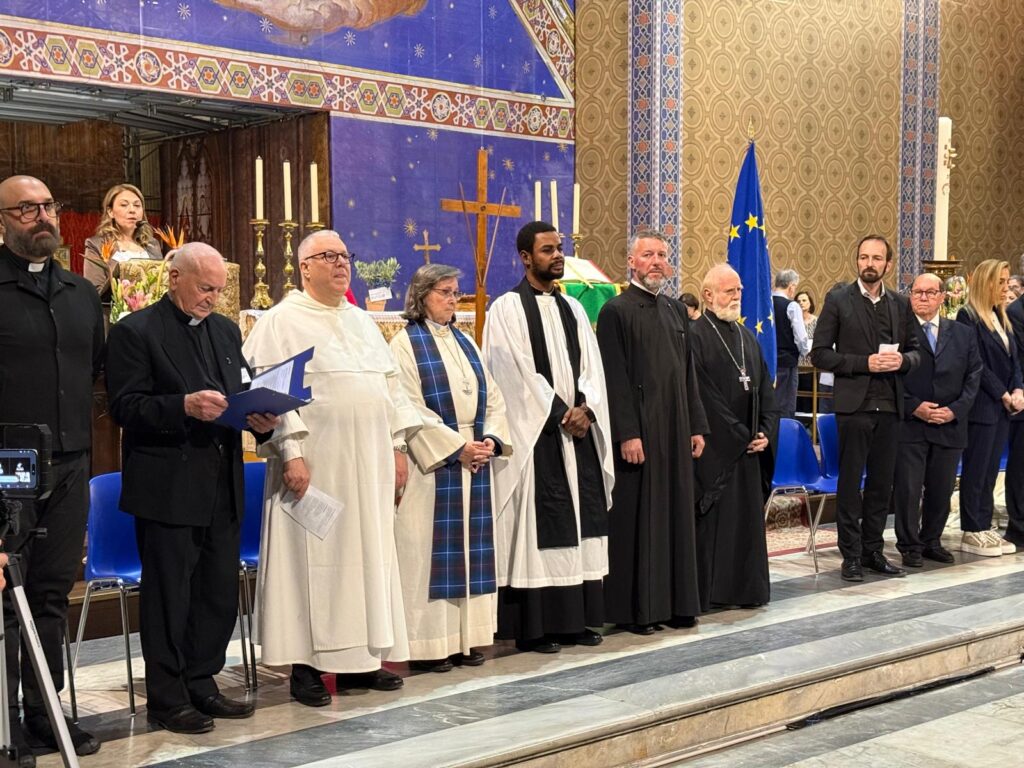
with an ecumenical prayer service in the Basilica of Santa Maria sopra Minerva, which began with opening remarks by Mons. Marco Gnavi, head of the Office for Ecumenism, Interreligious Dialogue and New Religious Movements of the Diocese of Rome, and featured prayers for peace led by Lutherans, Anglicans, Presbyterians, Evangelicals, Methodists, Orthodox and Catholic Christians.
Youth Group Ut Omnes_TfE Rome 9 May 2026_Photo: D. GollerPasquale Ferrara and Alberto Lo Presti_TfE Rome 9 May 2026_Photo D.GollerEurope Day_TfE Rome 9 May 2026_Photo D. GollerConference room TfE Event Rome 9 May 2026_Photo G. CiottoliEcumenical prayer_TfE Rome 9 May 2026_Photo: G. CiottoliEcumenical prayer_TfE Rome 9 May 2026_Photo: G. CiottoliEcumenical prayer_TfE Rome 9 May 2026_Photo: G. Ciottoli