
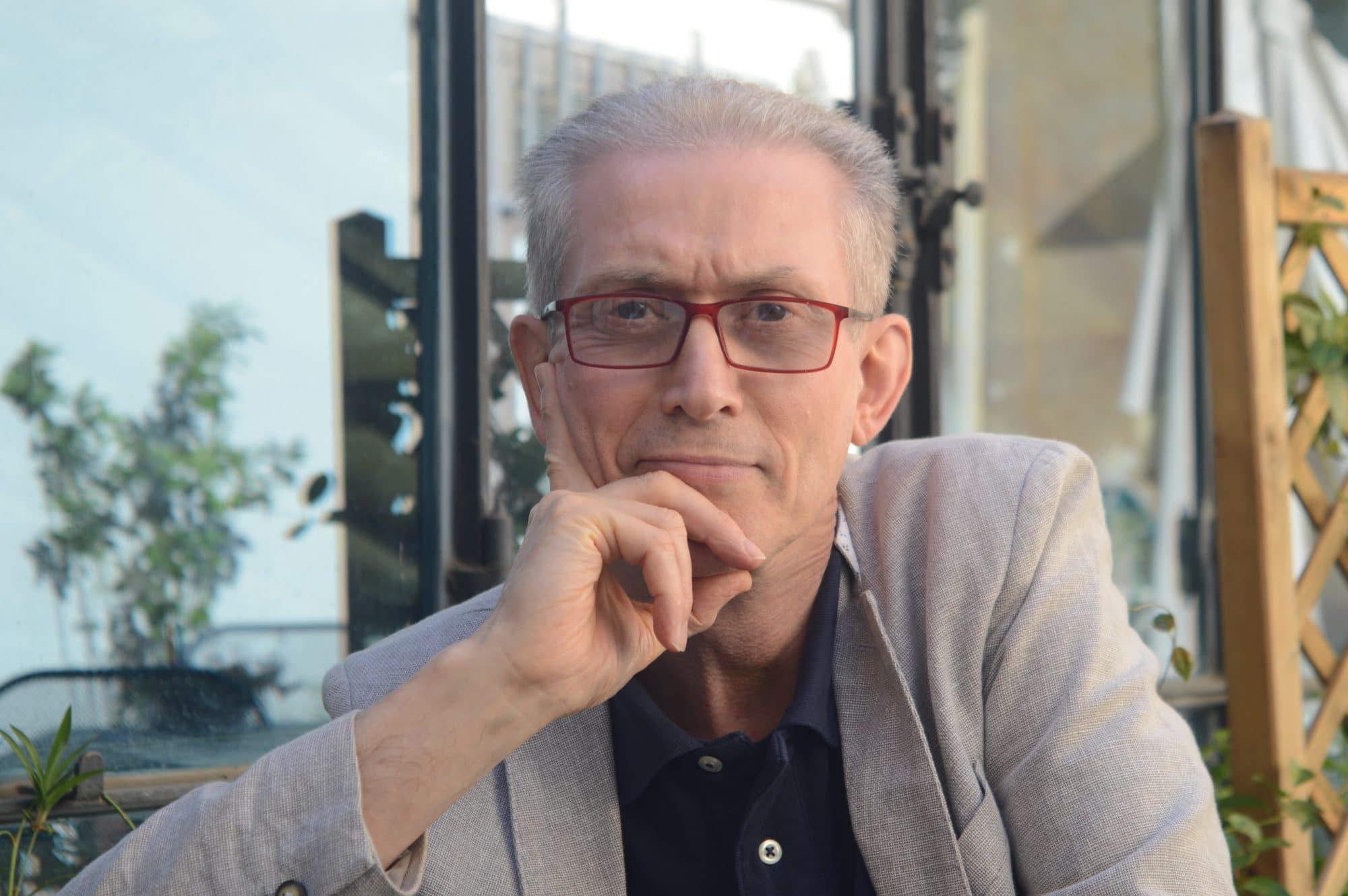
It is not easy to sum up more than ten years in Slovenia, Croatia and Romania.
I can say that I felt immediately at ease. My early times in Slovenia were demanding, because it was so completely different to where I had come from. I did not speak the language; the weather was very cold with the typical smell of coal burning in stoves inside seemingly every house. One of my first enduring impressions was the sense of order and discipline. I can recall going to buy fruit with one of my friends from the community. While he joined the queue outside the shop, I stood slightly to the side. Then I noticed that there was another queue forming behind me… I soon realised that the same was happening at bus stops too. I was very impressed by it.
After 5 years in Slovenia I then moved to Croatia which accompanied an immediate sense of freedom: I was starting to study the language at university, I was meeting many people, exploring and discovering the city I was living in and doing many interesting things which I could not do before. I found the Croats similar to my own people: warm, welcoming and appreciators of good food.
Fall of the Wall
This was an unforgettable experience lived with my friends moment by moment, aware that what we were seeing on the TV was the world in the process of changing!
The war
The war in the Balkans was one of my strongest experiences of that period. It was a strange one in that Zagabria, where I lived at the time, was not involved in the conflict directly. The first few days, however, were terrifying because of the presence of snipers shooting randomly at civilians. My strongest memory however is not so much of destruction but of solidarity among people. It was very moving to witness the arrival of humanitarian aid in the form of food and clothes. Around that time my parents both passed away in Naples. I went back to Italy, emptied my family home in Naples and brought everything back with me to Croatia to help those in need.
I recall how in 1993, still in the midst of war, we managed to organise a youth festival for approximately 3.000 young Catholic and Orthodox Christians, as well as Muslims from former Yugoslavia, Romania, Bulgaria and Moldova. One of the most emotional moments was a chant by a Muslim choir! The event was broadcasted by TV and radio and was on the front pages of all newspapers in the capital.
Dacia (Romania)
My experience in this country was one of coming from a life of prosperity and wellbeing to a situation of relative poverty. There was a sense in which the communist regime had managed to destroy all cultural, civic and folk tradition of that country. I was shocked! I recall a youngster whom I knew from having seen him around and who asked me for money. At the time, I could not help him because I did not have the amount he required. The episode made me think a lot: why did he asked me of all people? Because he knew I was Italian and thought I can return at any point where I came from. Real poverty is a feeling of not having anything and no one “able to help”.
As in Zagabria, also in Romania I experienced a deep communion among brothers and sisters who were looking for something that would finally give meaning to their life: Love! And with many of them, just like with those in Slovenia and Croatia to this day I have strong brotherly relationships.
by Gennaro Lamagna
0 Comments