by Claudia Di Lorenzi | 3 Apr 2017 | 2017 | 60th Treaties of Rome, Experiences, reflections and interviews, Italy, News
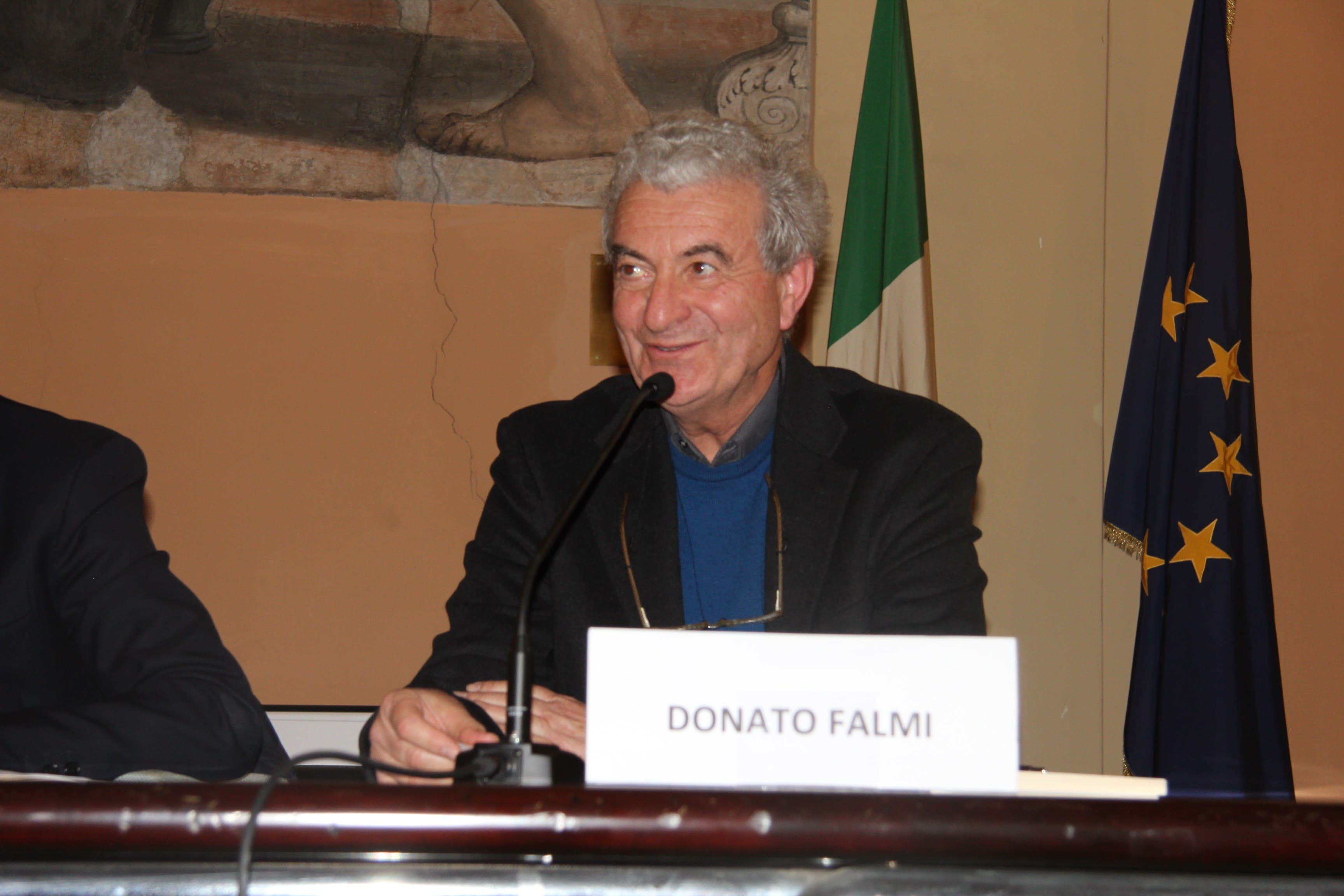
Dr. Donato Falmi, former Director of the Italian New City Publishing House and Co-responsible for the Focolare Movement in Rome and Central Italy, during the Ecumenical Prayer Celebration in Rome 2017
Looking at Europe today, divided and lost, it seems that Chiara Lubich had a prophetic intuition, back in 1999, when she began establishing an international ecumenical network of Christian Movements…
“It was prophetic in that Chiara had foreseen the obstacles that unity in Europe would encounter, and the need for a fundamental, perhaps hidden spiritual force capable of facing up to the negative and disintegrating tendencies present in Europe today. When Chiara lunched this idea, the European ideal was still popular, today it needs to be rediscovered. Had we not had the experience of this journey together, we would be ill equipped to face today’s challenges. It is, beyond any declaration of principles, a practical way of giving Europe back its Christian soul, putting Christianity back as the foundation of Europe (…). The experience made together by Movements and Churches belonging to different ‘Christian souls’ – because Christianity is made up of one reality with many different expressions – might be just the right way to show that Europe has a Christian foundation. In this sense, Chiara’s intuition was ingenious”.
Pope Francis emphasised dialogue as the one thing needed in order to build Europe with more unity and solidarity. And it is in dialogue that the Focolare Movement, since its very beginnings, has found a path to unity. What does it mean to lead a dialogue – and how can one learn how to dialogue?
“Chiara makes a rediscovery of the nature of God itself, of God who is love. Another term for ‘love’, a term that expresses the dynamics of a loving relationship, is ‘dialogue’. What is more dialogic than love? On the other hand, there is no real dialogue without love. This is because dialogue requires a welcoming of the other and forgetting of self (not negation of self, but a sort of stepping back in order to welcome another). That is a basic rule. Once it has been established, dialogue becomes fundamentally the only way to achieve unity, because it both respects diversity whilst focusing on what is good and what unites”.
In the last years, there has been a proliferation of populist and so-called sovereignty movements. Perhaps Europe needs an examination of conscience to ask itself what went wrong and where to go next?
“What we are witnessing is a result of Europe’s focus on material wellbeing. Europe has developed to the benefit of the entire world, with values such as those summed up by the Universal Declaration of Human Rights and signed by the world leaders, it has, however, also been affected by the temptation to settle on wellbeing of a material character, forgetting the depths of the human person. In achieving the highest objectives of human civilisation, Europe also reached a level of wellbeing which made it forget deeper preconditions of civil co-existence. Today we are paying the price for this. We have, nevertheless, also been rediscovering forgotten values, and becoming aware that material well-being has its own value in the right place, together with other values which need to come first.”
Claudia Di Lorenzi
by Claudia Di Lorenzi | 3 Apr 2017 | 2017 | 60th Treaties of Rome, Experiences, reflections and interviews, Italy, News
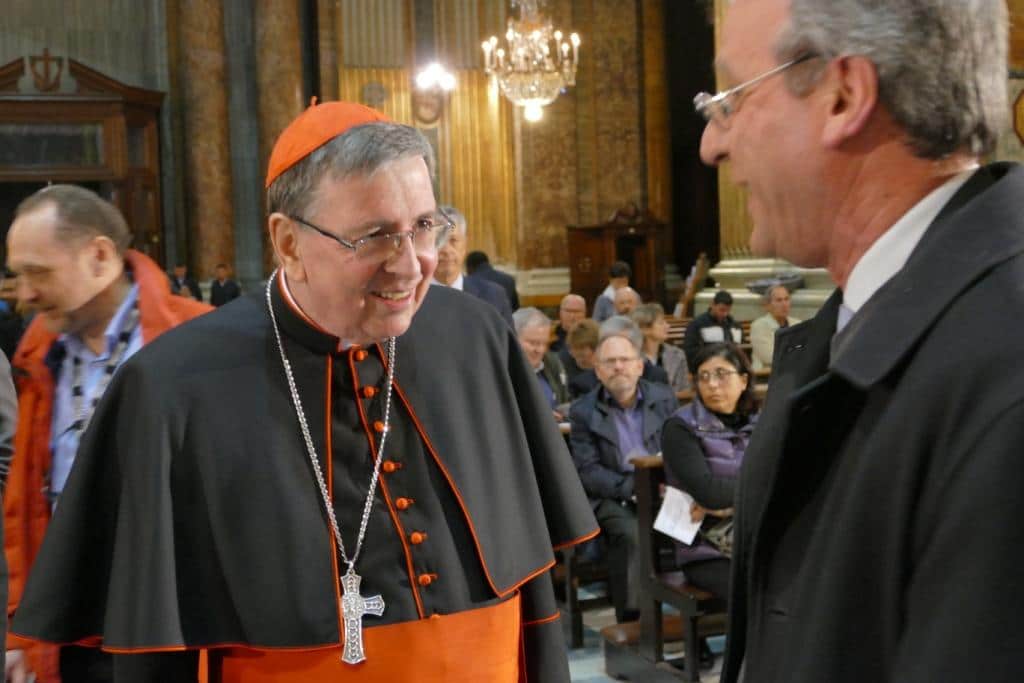
Ecumenical Prayer Vigil for Europe, 24th March 2017 – Interview with Card. Kurt Koch, President of the Pontifical Council for Promoting Christian Unity
Your Eminence, this Vigil prayer which has brought together different Christian denominations shows that unity in diversity is possible. What sort of example can an evening such as this offer to a Europe still divided and torn on basic issues?
“This Prayer evening has been organised by Movements belonging to different Churches: there is a great variety and diversity present, however there is also unity, all of us are together – for Europe. This reconciliation between unity and diversity is very important for Europe, which is called to embody unity without negating diversity. In fact, there needs to be a greater understanding of diversity in order for all of countries to contribute effectively to building unity”.
One of the objectives of this group which unites different Christian Movements is to identify so-called “signs of the time”, that is to say, those signals which at any given time in human history indicate the direction in which humanity is advancing, however slowly towards unity. Can you yourself discern such signs?
“The greatest challenge of today is related to the influx of refugees. The challenge is for Europe to welcome them, to be open to them. There is a saying: “If I only know England I don’t really know England”, of course this saying is equally valid for any other country, like Italy or France, etc. So, realising that the other is not my enemy, is a good thing: once this has been established, everything will proceed well”.
Pope Francis stressed that peace is achieved through integration, dialogue and work, and that for Europe work is, on the political level, a priority. What is your view in this regard?
“It is fundamental that everyone be able to access employment. This is a big challenge because it concerns the very dignity of the human person. Within the working environment then what matters is collaboration, that there be no contempt between co-workers… So, the opportunity for everyone to access dignified employment clearly contributes to the unity of Europe”.
Claudia Di Lorenzi
by Claudia Di Lorenzi | 3 Apr 2017 | 2017 | 60th Treaties of Rome, Experiences, reflections and interviews, Italy, News
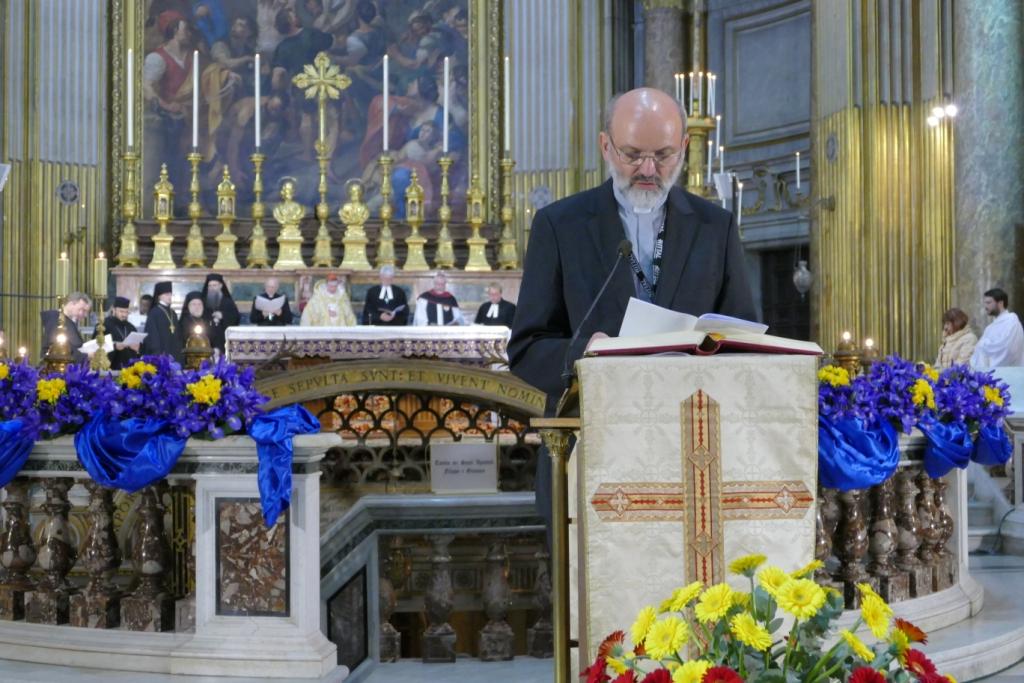
Fr. Heinrich Walter, Responsible for International Coordination of the Schoenstatt Movement, on the occasion of the Ecumenical Prayer Celebration in Rome 2017
In your view, what contribution can Pope Francis offer to the building of a Europe in which there is more solidarity and more inspiration drawn from Christian values?
“Being of Argentinian origin, I believe the Pope sees Europe differently than we do, more objectively, and understands that Europe is frightened and as a result is lacking vitality. Pope Francis is enthusiastic and understands very well that what the world as a whole needs its renewal.”.
What witness can Christian Churches united in their diversity offer Europe?
“In this Europe in crisis countries lack the ability to offer solutions based on their own individual resources. Some countries have suffered excessive pressure due to the refugee emergency situation. What is needed is an alliance among the countries of Europe, so that each can offer a contribution freely to an overall solution”.
Claudia Di Lorenzi
by TogetherforEurope | 31 Mar 2017 | 2017 | 60th Treaties of Rome, Italy, News
The 25th March 2017 marked the 60th Anniversary of the Treaties of Rome. The voice of Together of Europe is heard loud and clear
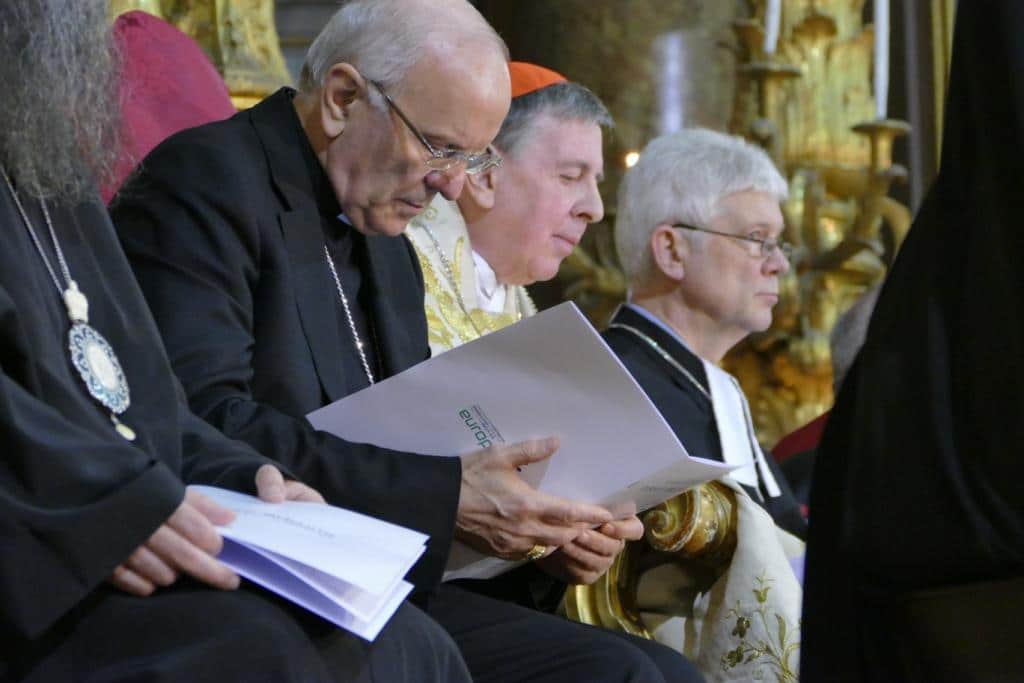
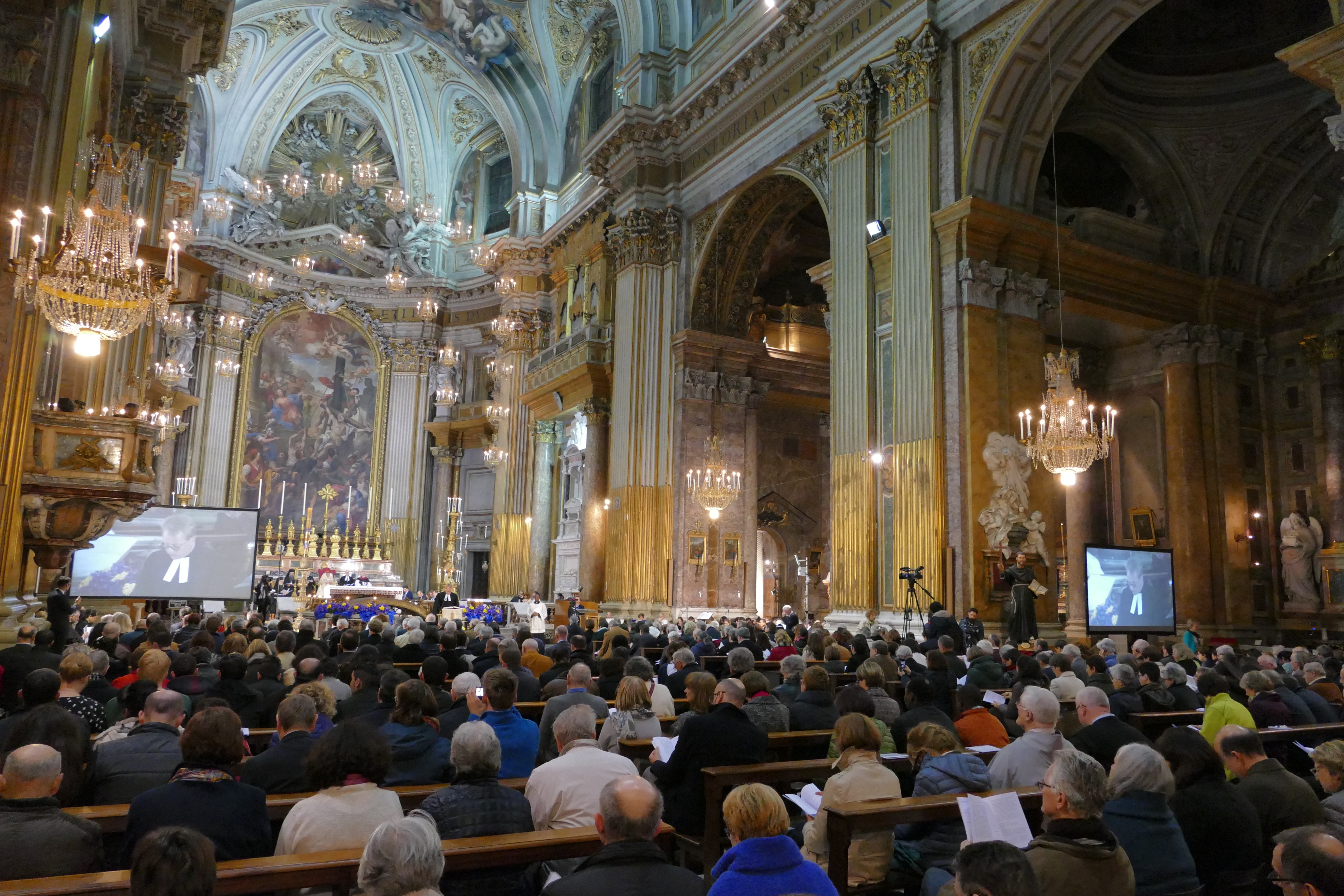
The eve of this anniversary affording an opportunity for politicians, ecclesial leaders and lay people representing the network Together for Europe to meet in the Church of Twelve Holy Apostles (Basilica dei XII apostolic) in Rome for an Ecumenical and International Vigil. The challenges: How to give shape to an authentic European/Christian humanism? How to achieve the opening up of faith to the wider culture?
At the Vigil, presided by Cardinal Kurt Koch, President of the Pontifical Council for Promoting Christian Unity, 750 participants of 23 Movements and Communities were present. Present also, were Bishop Nunzio Galantino, the Secretary-General of the Italian Episcopal Conference, Mons. Siluan, Bishop of the Romanian Orthodox Church in Italy, Heiner Bludau, Dean of the Evangelical Lutheran Church in Italy, Andrea Riccardi, historian and founder of the Community of Sant’Egidio and Gerhard Pross, moderator of Together for Europe.
The President of Italy, Sergio Mattarella sent a message to the Vigil participants, in which he expressed his “desire to have been present and his firm conviction that such moments of encounter, offer a strong sign of hope, necessary in building a Europe of unity and solidarity.”
A few voices heard during the evening: “Europe need to come more to the fore”; “God, throughout history, has entrusted this Continent with the mission to connect and bring closer heaven and earth, faith and its impact on the world!”; “Christian values are European values and vice-versa. A culture of dialogue, tolerance, openness and brotherhood that can be lived beyond denominations, religions or creeds. This Vigil will serve to re-awaken such great values.”
In 56 European cities, parallel events of solemn prayer were held, and were well attended.
Click here to see the video clip of the event>>
See the video of the event (full version in Italian)>>
Click here to see also interviews during the event (playlist)>>
by the International Secretariat of Together for Europe
by TogetherforEurope | 26 Mar 2017 | 2017 | 60th Treaties of Rome, Italy, News
Ecumenical and International Prayer Vigil – Faith opens up to culture
On the eve of 24th of March 2017, the Church of the Twelve Holy Apostles (Basilica dei XII Apostoli) in Rome was heaving with some 750 people who gathered for a Vigil commemorating the 60th Anniversary of the signing of Treaties of Rome presided by Card. Koch, President of the Pontifical Council for Promoting Christian Unity. Catholics, Protestants, Orthodox, Anglicans, clergy and lay gathered, taking up the invitation of Together for Europe, a joint initiative of over 300 Christian Movements and Communities. Together for Europe was also represented at the Vigil by a choir composed of eight Movements and by a choir of the Romanian Orthodox Church.
President of Italy, Sergio Mattarella sent a message to the Vigil participants, in which he expressed his “desire to have been present and his firm conviction that such moments of encounter, offer a strong sign of hope, necessary in building a Europe of unity and solidarity.”
Mons. Nunzio Galantino, Secretary–General of the Italian Episcopal Conference, Andrea Ricardi (founder of the Community of Sant’Egidio) and Gerhard Pross (current moderator of Together for Europe) spoke during the programme on various aspects of the crisis currently gripping the European continent, provoked by among other things, national greed on both collective and individual levels. They launched an invitation to uphold the belief of the Founding Fathers in the European project and to strive for peace, justice and solidarity throughout the world (Preamble to the Treaty establishing a Constitution for Europe, declared by Heads of State on 29th October 2004).
The Trisagion hymn “Holy God, Holy Mighty!”, sung by a gathering themselves deeply moved, sounded particularly powerful and solemn against such a backdrop.
In an interview, Fr. Heinrich Walter of the Schoenstatt Movement, emphasised: “There are two key moments on the journey towards renewed European integration. Firstly, the Christian roots of Europe ought to be nourished. This is something which the Movements have been working for. Secondly, we must respect the freedom of others. We try to do this within the Together for Europe network and we wish to share this experience of ours with all of Europe.”
After the Vigil, Symeon Catsinas, a Greek Orthodox parish priest in Rome, shared his joy: “I am very happy with this evening’s event. As Christians, we need to work together in order to offer a joint witness. It is imperative that we follow on this path together.”
When asked if the document “From Conflict to Communion” can be regarded as a model for Europe, the dean of the Evangelical Lutheran Church in Italy, Pastor Heiner Bludau, said: “The document certainly shows a positive step. We now need to see its impact on life in order for it to be a convincing model for all of Europe.”
The words of high politics and those of Holy Scriptures resounded as if on the same level. Jesus Moran, Co-President of the Focolare Movement, said: “Europe is unthinkable without Christianity. Christianity which formed Europe is the Christianity of a united Church: ecumenical “Catholicism” (universality) therefore is the most fundamental reality of Europe. As such, Europe needs to rediscover itself as a civilization of Christianity. Christian values are European values and vice-versa. Culture of dialogue, tolerance, openness and brotherhood can be lived beyond any denomination, religion or creed. This Vigil will serve to re-awaken these great values.”
Over 4,000 people followed the event live and it was widely shared on social media.
In 50 European cities, parallel events of solemn prayer were held, and were well attended. The voice of Together of Europe was made heard loud and clear!
Beatriz Lauenroth
To see the complete photo gallery: https://www.flickr.com/photos/fotomas2008/sets/72157681856163965
by Silvano Magnelli | 17 Mar 2017 | 2017 | 60th Treaties of Rome, Experiences, reflections and interviews, Italy, News
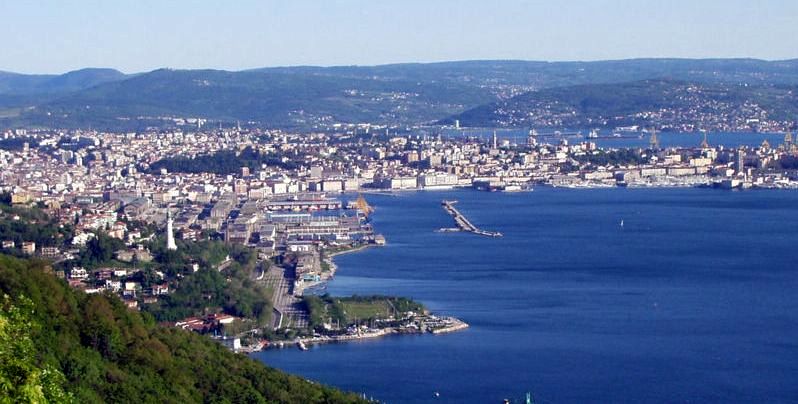
With the 60th anniversary of the Treaties of Rome approaching, people in European cities gather to give witness to a Europe focused more than ever on dialogue and brotherhood. Trieste is one of them.
60 years ago, the Founding Fathers of Europe took the first steps on a path which would lead to greater European unity against the stench of blood and smoke and the rubble of a war driven by nationalist and racist extremism in Europe and which subsequently spread throughout the world. Only a comprehensive reformation including international, political, civic, economic, cultural and religious relationships between peoples and communities would be capable of paving a new way to help Europeans to emerge from a culture of widespread hatred.
60 years after the historic days which marked the signing of the Treaties of Rome in 1957, we re-affirm European unity as the indispensable means to maintaining peace and peaceful co-existence. Despite the failings, undeniable gaps, rigidities, bureaucratic excesses, misunderstandings and serious inequalities of the European Union, the advantages of the re-composition of Europe largely prevail. We must strive to continue on and to perfect the path we have undertaken, rather than obliterate it, as called for by nationalist and separatist voices, something that would only serve to draw us back into peace-threatening situations.
More than four million young European students have benefited from the Erasmus program in terms of formation and knowledge. Equally significant has been the number of European professionals, who have taken advantage of the freedom afforded by mobility within the EU which has facilitated the acquisition of expertise, as well as increased cultural, technological, commercial and economic exchange. Many young people have put themselves at the service of other European countries to their own, through the European Voluntary Service. A broad scholarly exchange has been made possible thanks to collaborations between universities. Improvements across a range of areas such as occupational and environmental safety, health care, tourism and culture, have been achieved through European directives that are reflected in national legislation. Religious communities have also set in motion processes for unification and integration extending to all Christian Churches and every religion.
We cannot afford to give up such benefits. Instead we must intensify and uphold this model for the sake of all European peoples who have suffered enough. In order to re-affirm this commitment, we will meet on 24th of March at 6pm in St. James’ Oratory (Oratorio di S. Giacomo) in Trieste for an evening of celebration marking this 60th anniversary. Promoting the event are approximately twenty associations, movements and communities, that all form part of a broader initiative called Together for Europe, which for the last 17 years has been active in many European cities, including Trieste. Together for Europe brings together the faithful of different religions, non-believers and people of good will who, rather than conflict seek peace and encounter. This will be an evening of reflection, brotherhood and celebration motivated by our own awareness of the urgent need to rediscover the importance of coming together in solidarity.
For the Coordination team of Together for Europe for Trieste, Italy
Silvano Magnelli
Photo Trieste: Di ryogt www.flickr.com/photos/ryogt/12980775/, CC BY-SA 2.0