
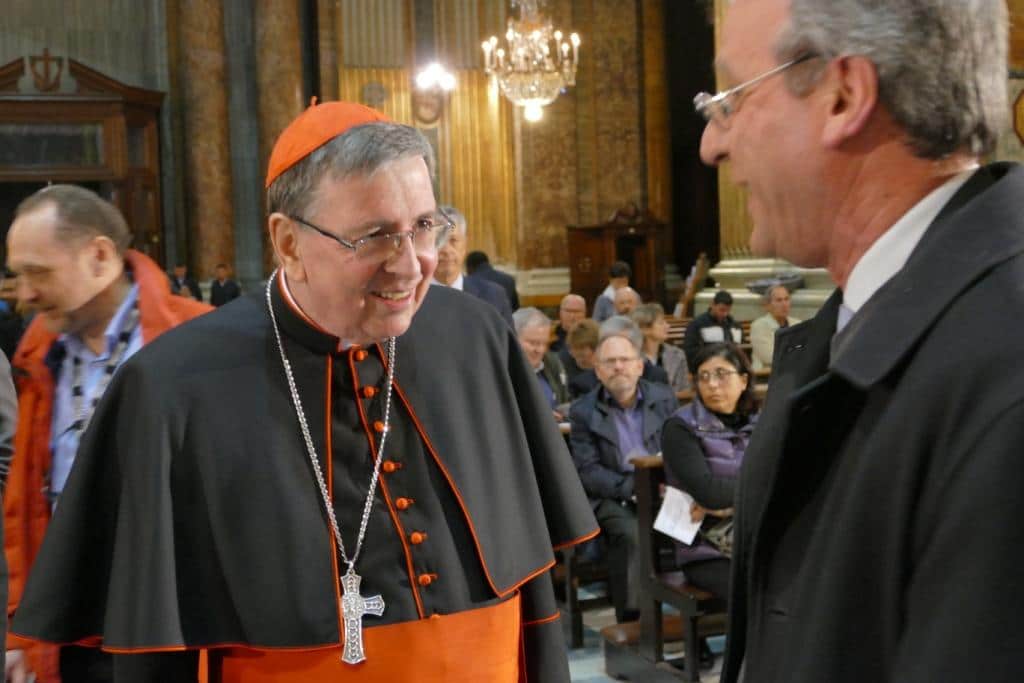
Ecumenical Prayer Vigil for Europe, 24th March 2017 – Interview with Card. Kurt Koch, President of the Pontifical Council for Promoting Christian Unity
Your Eminence, this Vigil prayer which has brought together different Christian denominations shows that unity in diversity is possible. What sort of example can an evening such as this offer to a Europe still divided and torn on basic issues?
“This Prayer evening has been organised by Movements belonging to different Churches: there is a great variety and diversity present, however there is also unity, all of us are together – for Europe. This reconciliation between unity and diversity is very important for Europe, which is called to embody unity without negating diversity. In fact, there needs to be a greater understanding of diversity in order for all of countries to contribute effectively to building unity”.
One of the objectives of this group which unites different Christian Movements is to identify so-called “signs of the time”, that is to say, those signals which at any given time in human history indicate the direction in which humanity is advancing, however slowly towards unity. Can you yourself discern such signs?
“The greatest challenge of today is related to the influx of refugees. The challenge is for Europe to welcome them, to be open to them. There is a saying: “If I only know England I don’t really know England”, of course this saying is equally valid for any other country, like Italy or France, etc. So, realising that the other is not my enemy, is a good thing: once this has been established, everything will proceed well”.
Pope Francis stressed that peace is achieved through integration, dialogue and work, and that for Europe work is, on the political level, a priority. What is your view in this regard?
“It is fundamental that everyone be able to access employment. This is a big challenge because it concerns the very dignity of the human person. Within the working environment then what matters is collaboration, that there be no contempt between co-workers… So, the opportunity for everyone to access dignified employment clearly contributes to the unity of Europe”.
Claudia Di Lorenzi
0 Comments