
Europe: our choice
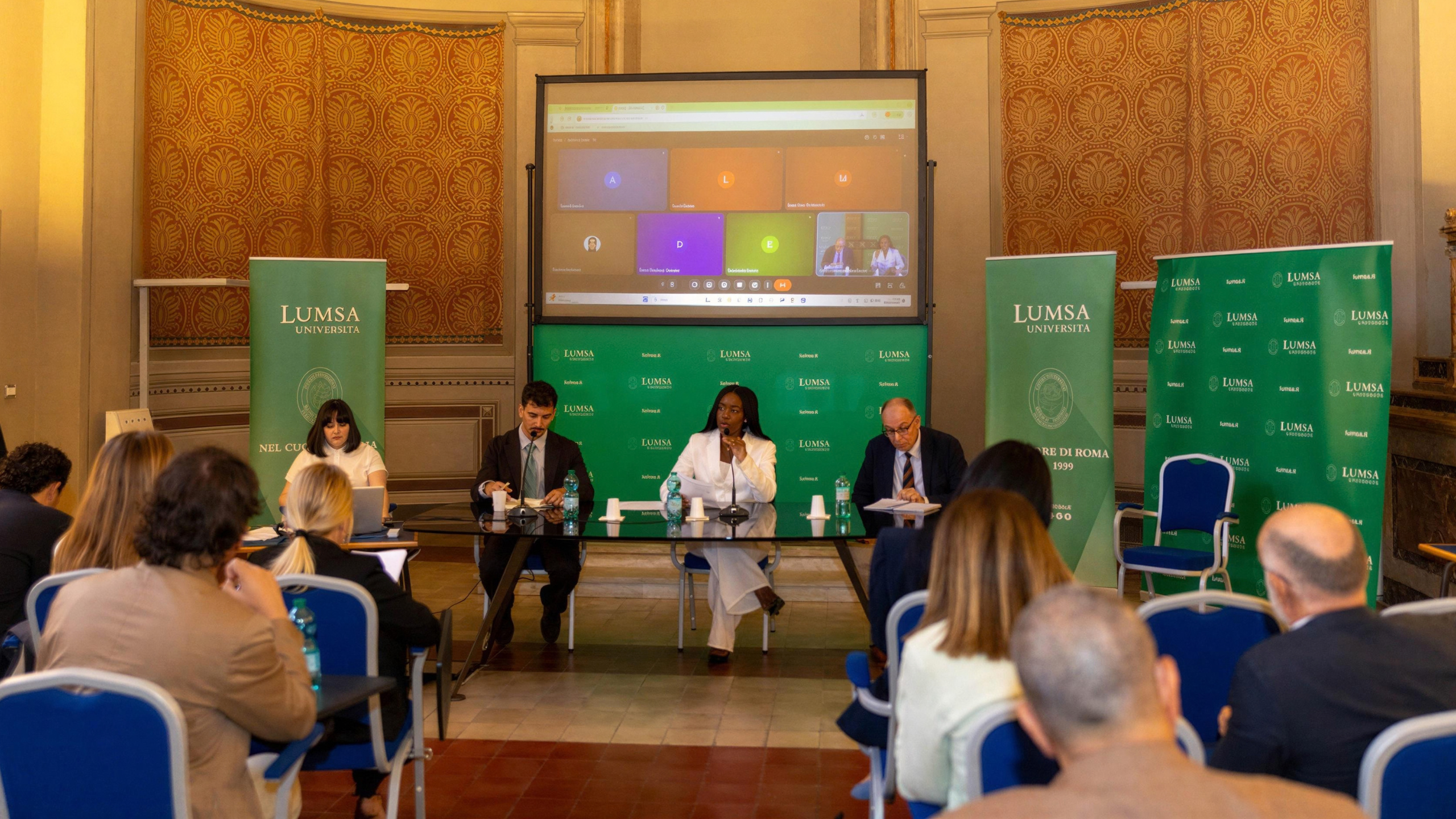
The Ut Omnes* group took part in the event ‘SOTEU 2026 – Europe: Our Choice’ at the Libera Università Maria Santissima Assunta (LUMSA) in Rome. The meeting, introduced by Professor Alberto Lo Presti, followed the broadcast of the speech by the President of the European Commission.
In her lengthy speech, she began by addressing the issue of the military defence of borders, opening with a quote from Charles Dickens: ‘It was the best of times, it was the worst of times’. This dichotomy captures the essence of today’s Europe: a Union that is strong in its achievements and potential, yet vulnerable in the face of external threats.
Distinguished guests
The SOTEU featured four symbolic figures: Canadian Prime Minister Mark Carney; the family of Danish pilot Rune Kyndal, who died whilst fighting wildfires in Europe; Sasha Paskal, a very young Ukrainian gymnast maimed by a Russian missile and a symbol of resilience; and the founders of a tech start-up, Rafa from Poland and Pekka from Finland, who are leading experts on artificial intelligence.
The President surprised the audience by making a historic proposal for Canada to become the first ‘associate member’ of the European Union, an initiative that draws on the ecumenical values of collaboration championed by Ut Omnes and the Together for Europe network. Another key issue was the safety of children online, with reference to the 14-year-old Belgian girl Oléa, a victim of cyberbullying. To tackle such tragedies, the EU Kids Act was announced – a package of laws designed to protect children online.
The members of Ut Omnes then opened the debate. Italian MEP Marco Tarquinio (S&D), who was unable to attend as he was in Strasbourg, sent a video message focusing on immigration and borders. On the subject of solidarity, Ut Omnes quoted St Paul (‘If anyone does not want to work, let them not eat either’), to emphasise everyone’s duty to contribute to society.
Homeland of Homelands
The debate highlighted how external forces are attempting to divide the Union by fuelling nationalism, which weakens peoples rather than protecting them. Europe is described as a ‘homeland of homelands’, a symbol that is both strong and fragile. Defending the Union and the sense of freedom is a global challenge that concerns every citizen, regardless of age or gender
From an (adapted) text by Livio Tetamo Zamparini, a young member of the Ut Omnes group
*Ut Omnes is a group of young people who are committed to European unity and who work within the Together for Europe network
0 Comments