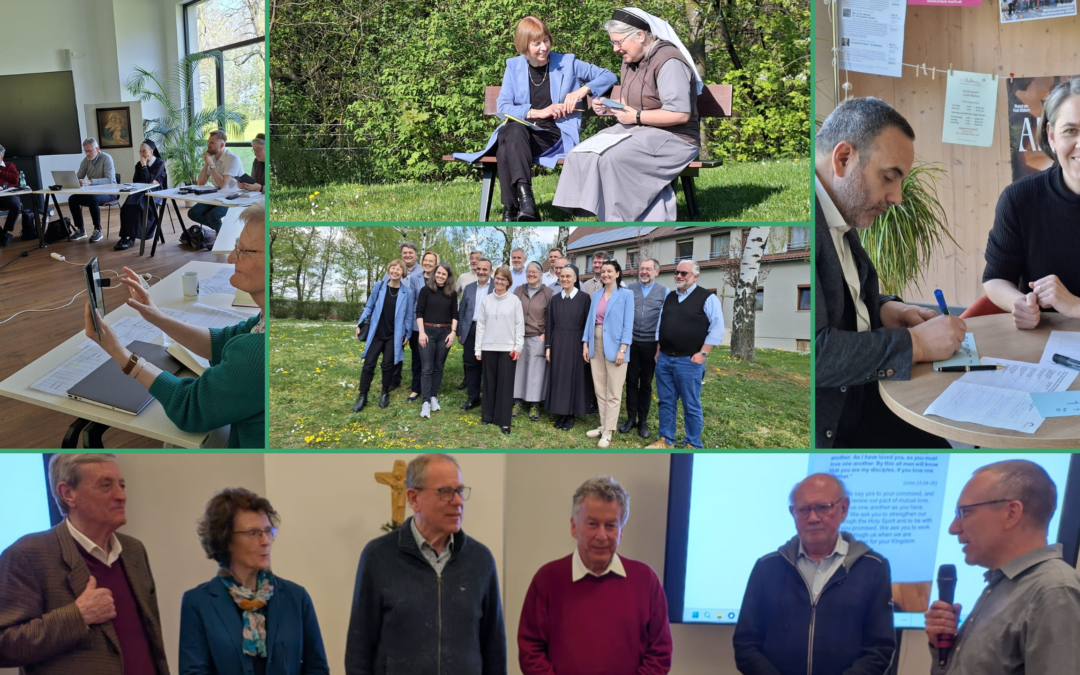
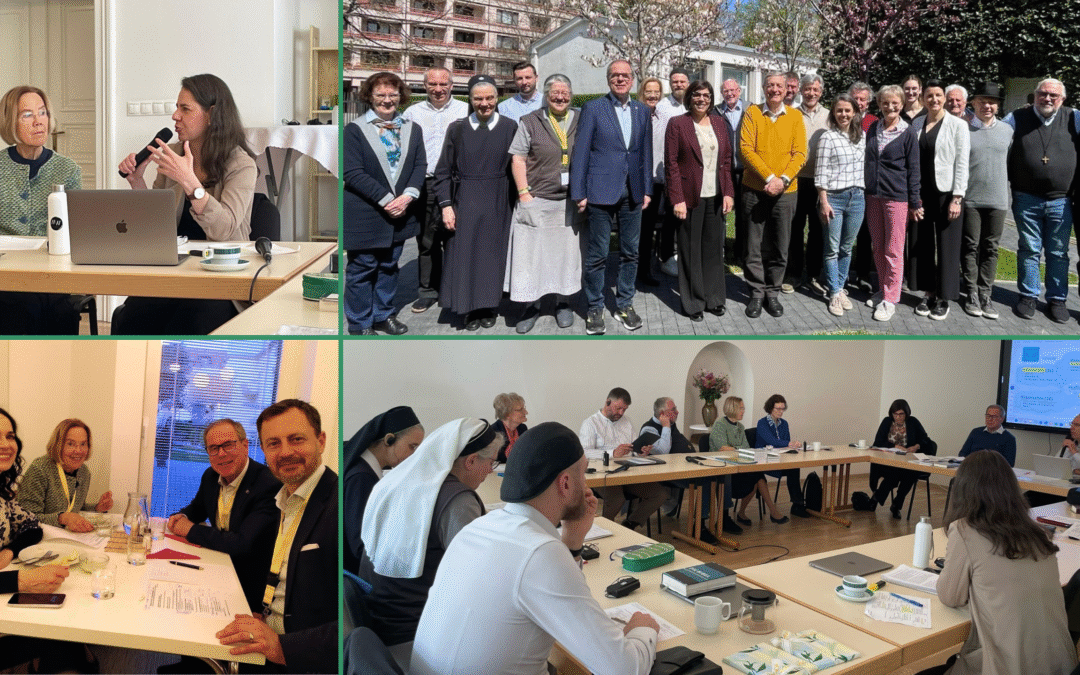
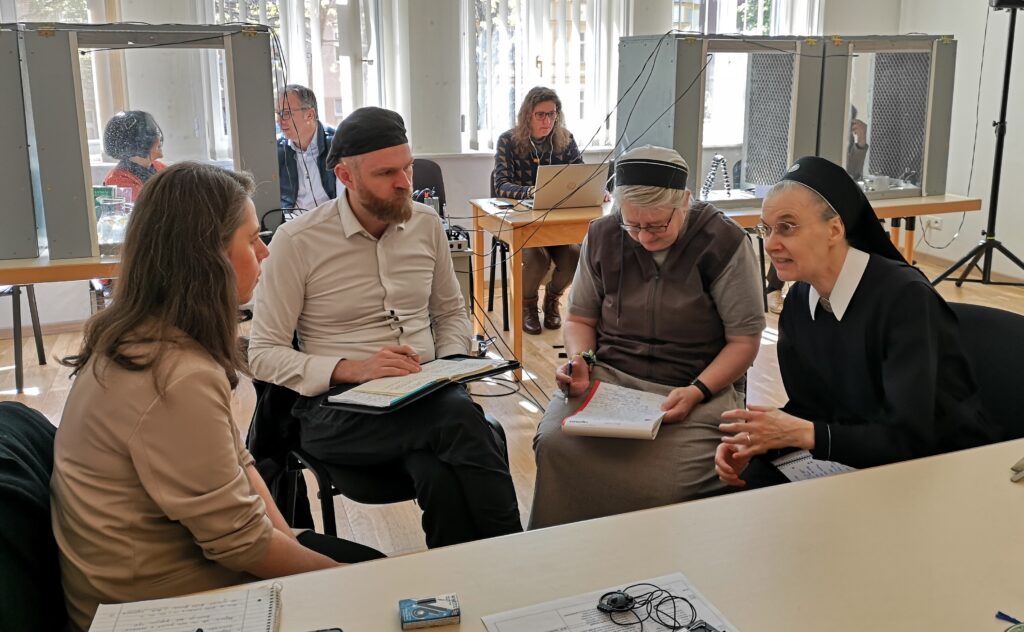
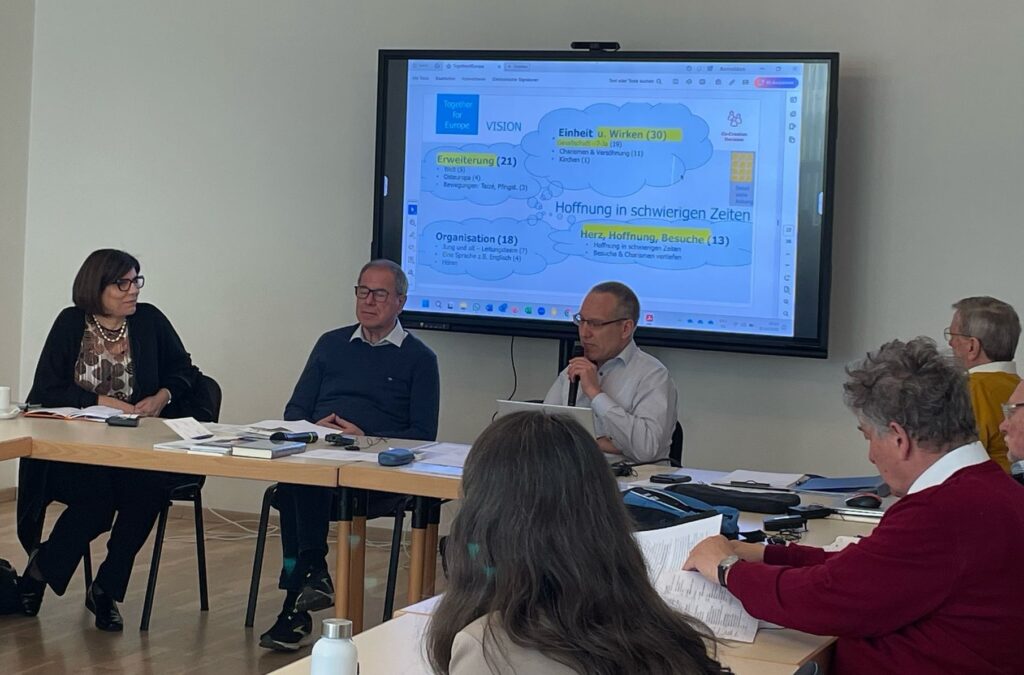
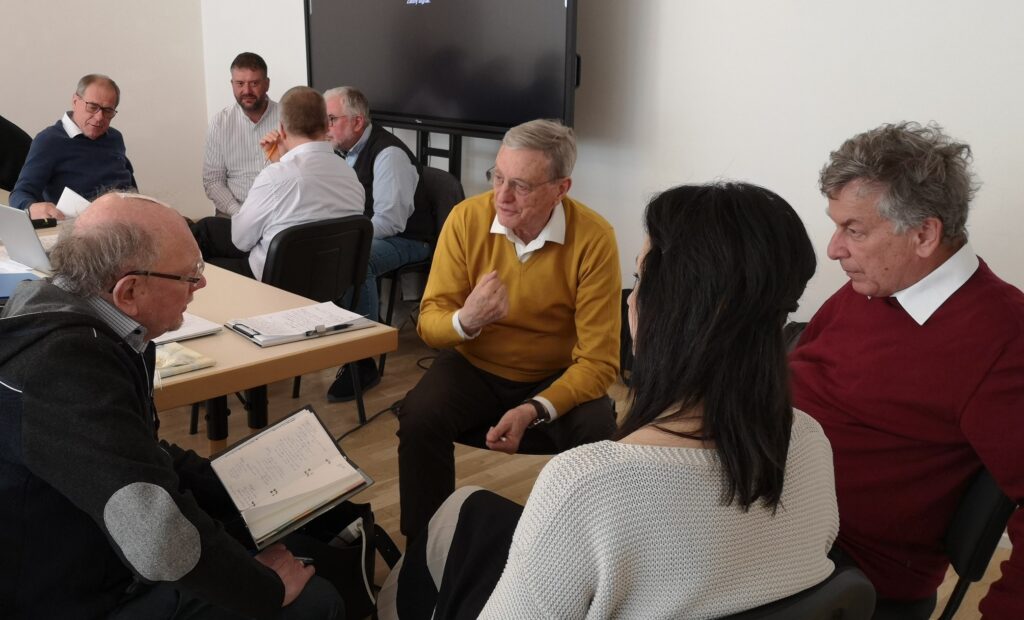
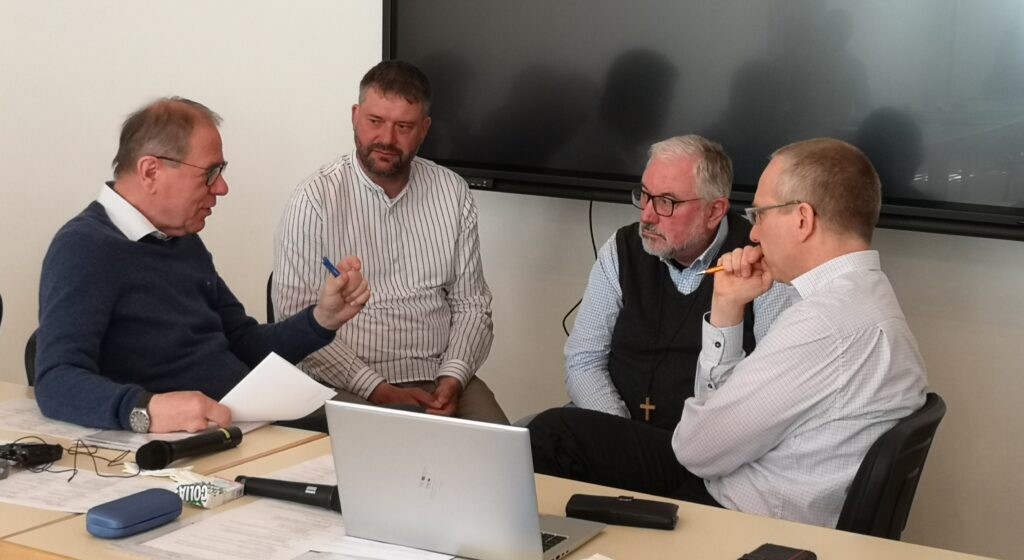
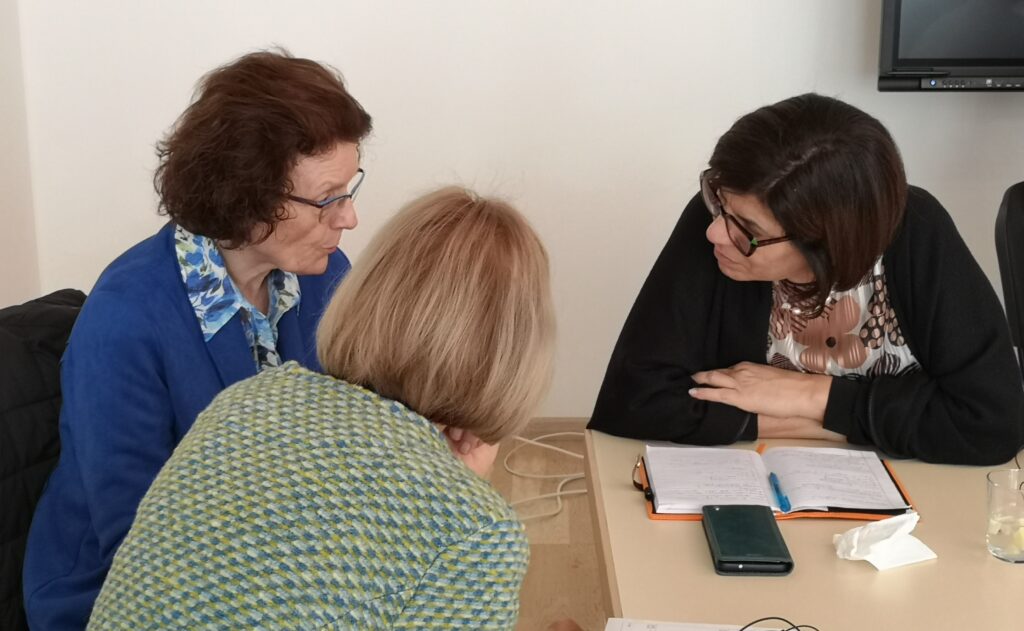
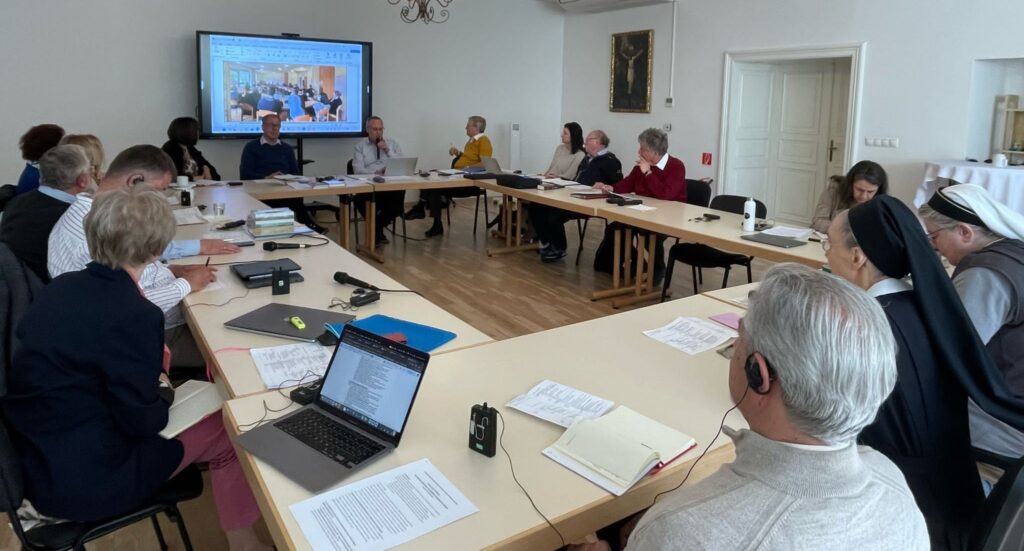
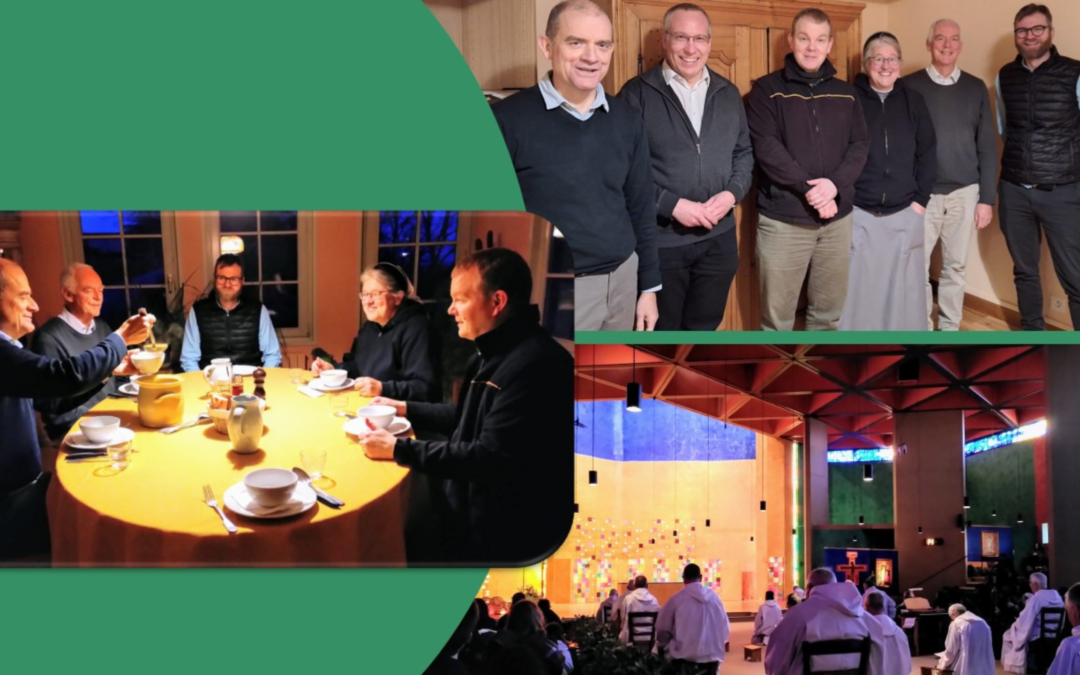
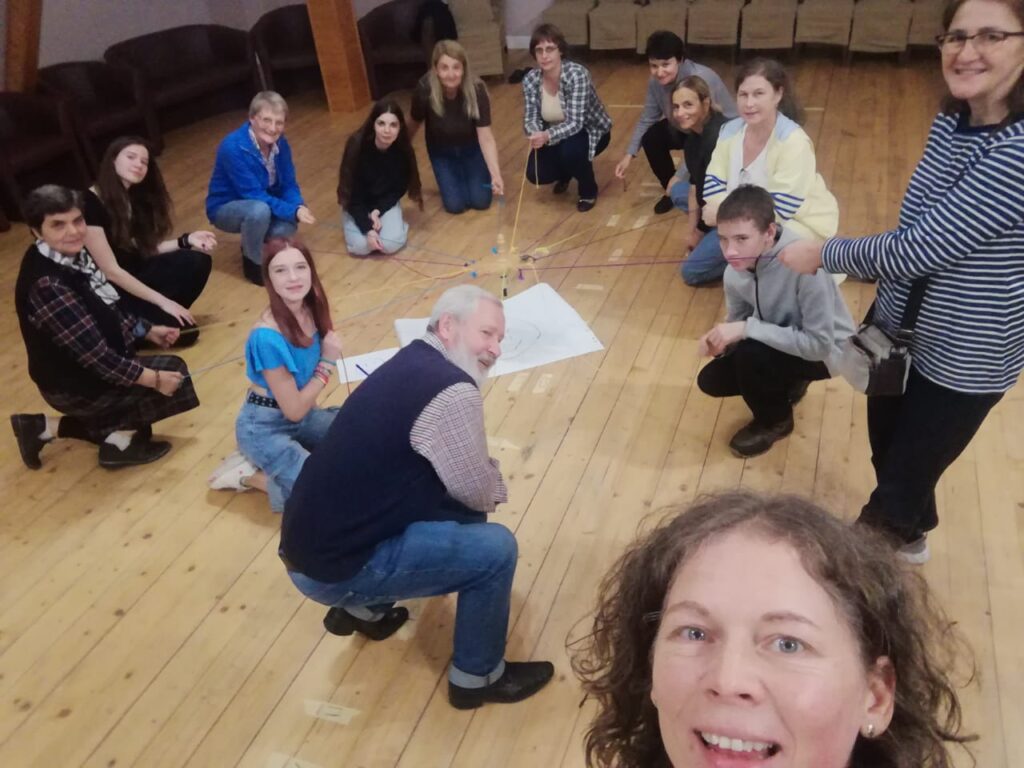
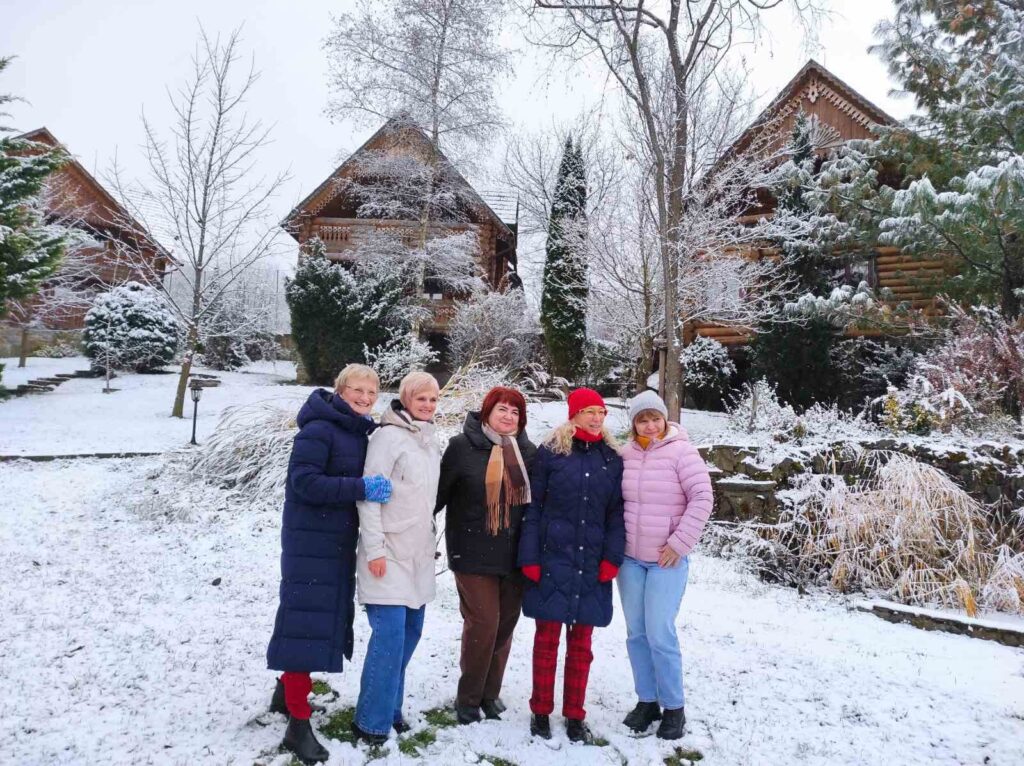
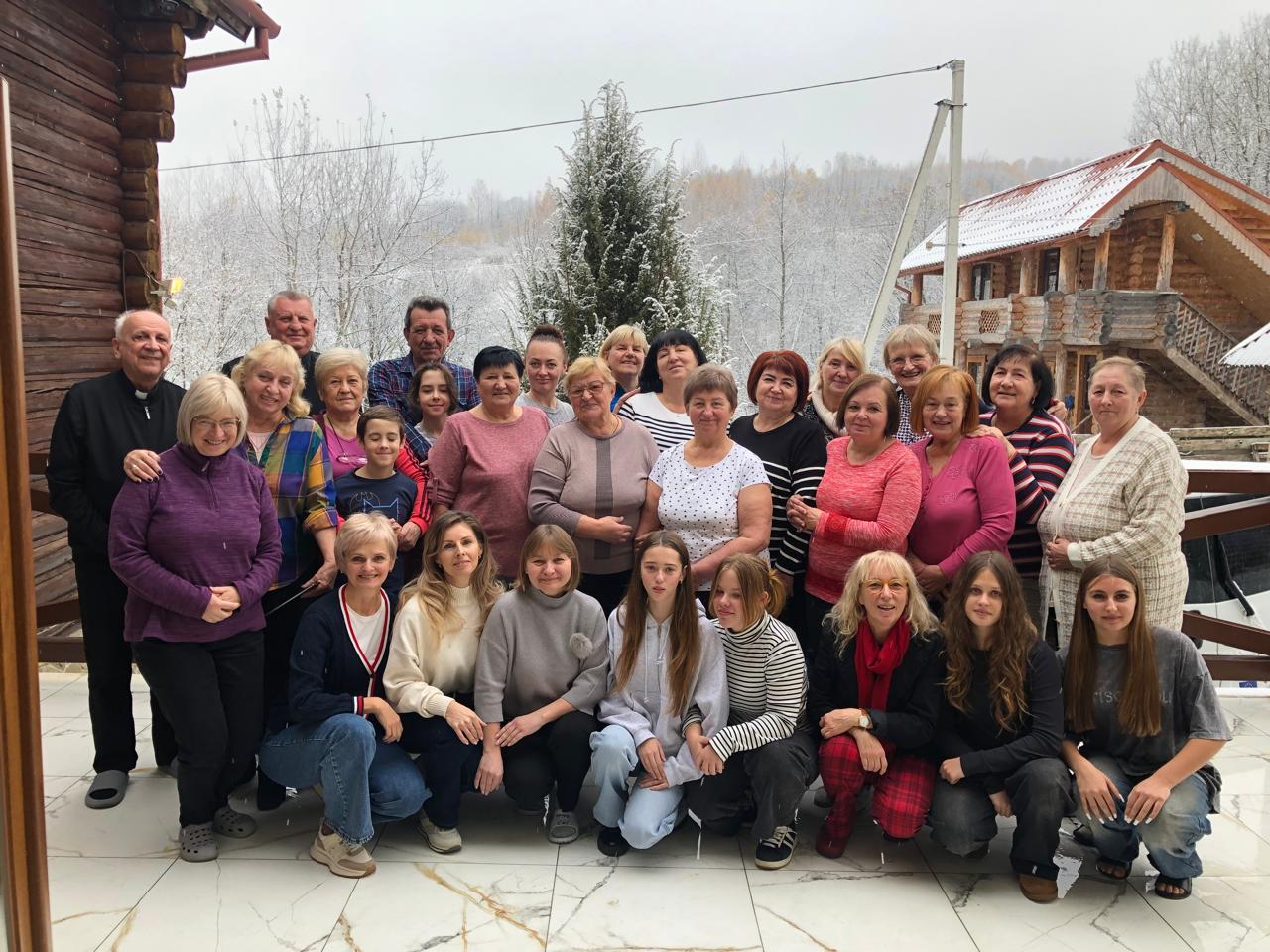
From 16 to 18 April 2026, the annual retreat of the Steering Committee was held at the Schoenstatt Centre on the Kahlenberg in Vienna. Twenty-six representatives from eight Christian movements spent several days listening and discerning, during a period marking a historic turning point in the life of the international coordination.
A generational change in the spirit of unity
The highlight of the meeting was the handover by some of the Committee’s long-standing members, who have dedicated themselves to supporting TfE’s journey for decades. Their moving farewell paved the way for a new chapter, built on a spirit of gratitude and trust.
Margaret Karram, President of the Focolare Movement, highlighted the value of this service; in a letter, she expressed her deep gratitude to the outgoing members for their contribution to shaping the network’s identity and journey.
The leadership of the network is being handed over to a new moderation group made up of three members, drawn from different Churches and movements. This is a tangible sign of continuity and openness to new horizons. In a European context marked by uncertainty, IpE reaffirms its mission: to bear witness that unity in diversity is a prophetic response to the challenges of our time.
Agenda and next steps
During the meeting, a number of future priorities were outlined, with particular emphasis on the role of the National Committees and the involvement of young people. Events already scheduled include:
11–13 May 2026 – To mark Europe Day, around 120 young people will present a “Pact between Generations” to the European Parliament, based on their experiences within TfE.
Annual meeting of the “Friends of Together for Europe” in Würzburg (Germany).
This journey therefore continues, in the knowledge that walking together, whilst making the most of each other’s gifts, remains the way to build a Europe that is more united, more supportive and open to the future.
I am in Ukraine for the third time in a year. I see a country at its limit after almost four years of war. The resilience of the people is incredible, but the tension is palpable everywhere. Nerves are frayed, and this is more than understandable.
Winter without electricity, water, and heating, alarms and continuous bombings at every hour of the day and night: all of this is now an integral part of daily life. It is a life of permanent insecurity, a life at the mercy of threats.
A minute of silence and respect
Despite the chaos, there are moments of deep solidarity and reflection that keep the country united. Every morning at nine o’clock, a song of national resistance echoes through the streets of Ukraine. Public life comes to a standstill for a minute. The supermarket cashier stops scanning items, the man at the café sets his coffee cup down on the table, and the librarian at the book counter pauses. This minute is dedicated to the memory and respect of fallen soldiers and all those who are holding the line on the front. It is a moving daily ceremony that draws attention to the victims of the war.
Where prayers save lives
Being close to death profoundly changes one’s perspective on life and faith. A young man who was fighting on the front told me, ‘In the face of death, there are no atheists. Even men who are not believers, in that moment, plead: “Say a prayer for me too, because I don’t know how to pray.”‘ Another soldier recounted an ambush in which his unit fell: ‘We were under heavy enemy fire. Miraculously, the bullet lodged in my bulletproof vest. Many people all over the world are praying for us, and I know for certain that one of those prayers saved my life.’
Beatriz Lauenroth, press officer of Together for Europe
When we talk about Europe today, we talk about economic problems, disputes, conflicts and wars. Sometimes one might think that Europe is disintegrating. ‘This danger makes the work of the Together for Europe (TfE) network, which emphasises the spiritual roots of the continent, all the more valuable,’ says a journalist who has been following the network for some time.
Influencing Peace in Europe
In April 2025, the customary meeting of the Steering Committee took place in Bratislava, Slovakia. For the first time in a Central and Eastern European country, the group was hosted by the charismatic Catholic network ENC (European network of communities). Eighteen people from seven Movements and five countries represented the European network in Bratislava, among them Margaret Karram, president of the Focolare Movement, Gerhard Pross, current TfE moderator, and other leaders from Quinta Dimensione, Vineyard, Schönstatt and various YMCAs in Germany. ‘TfE would like to be at the service for Europe. Internally we are constantly practising building unity in diversity. And through this experience TfE positively influences the commitment to peace in Europe.’ This is what was affirmed by Sr. Nicole Grochowina, Christusbruderschaft in Selbitz. And then she quoted Isaiah 43:19: ‘Behold, I do a new thing, do you not see?’
A breathtaking overview
This spirit of innovation could be felt, for example, when representatives of seven local Movements, local Christian politicians (Eduard Heger, Miriam Lexmann, Viliam Karas and Branislav Skripek) and personalities from the ecclesiastical world arrived at the meeting; among them there was the nuncio Monsignor Nicola Girasoli. In a breathtaking overview, the Movements made their charisms and commitments known, many of them in the world of youth. It was a unique opportunity for mutual acquaintance not only with TfE, but also with each other and with the political world. Slovakia, politically tried, shows great inner strength. There was a profound feeling between everyone present. The next morning, representatives of ENC Slovakia arrived with their president, Alex Myskov, and expounded the reality of their network. As TfE and ENC got to know each other better, it was evident how quickly friendship grows.
Shouting from the rooftops
‘It is more important than ever not to put the experience of TfE under the bushel, but to ‘shout it from the rooftops’. Thus Margaret Karram, to encourage the Committee for future steps. She continues: ‘TfE gives an impetus to Europe to breathe with two lungs, that is, to live the dialogue between East and West’. The plans for the future, e.g. a large meeting in 2027, will be discussed in more detail at the Meeting of the Friends of TfE from 6 to 8 November 2025 in Castel Gandolfo/Rome.
The Taizé community is ecumenically oriented and has regular prayer times in the morning, at noon and in the evening, during which the famous Taizé songs, Bible reading, shared silence and participation in communion play a central role. The 60 or so brothers invite young people from all over the world to participate in their life for a week. In fact, about a thousand Portuguese young people were in Taizé at the same time as our delegation.
Meeting
The shared reading from the book of Joel (2:12-18) led the delegation to a conversation with the prior of the community, Brother Matthew, and Brothers Richard and Andreas. The text struck the readers precisely in reference to Europe, where it says: ‘Tear your hearts and not your garments’. The appeal is addressed to all generations, that they approach God with sincere devotion and ask for his mercy. On this the group agreed. Being in contact with so many young people, the brothers of Taizé also have an insight into their fears, for which they feel an urgent need to be accompanied. Taizé is therefore undoubtedly a spiritual place for young people, where they find a listening ear and understanding.
A Bridge to link Together for Europe?
How can a bridge now be built between Taizé and TfE? The trio recognised that the Brothers’ charism and their contribution to the whole, and consequently also to Europe, lies in their closeness to young people, their fidelity to their prayers and their hospitality. Now the next steps must be identified together, starting with the friendship that has become deeper. And who knows? Perhaps in the future there will be a ‘Together for Europe’ meeting of young people in Taizé? We, together with the brothers, can certainly imagine it.
Impressions
Sister Nicole, Father Raffael and Matthias returned home happy and full of joy. ‘Besides the meeting with the Taizé brothers, these days brought us closer to each other – we are among the youngest in our Steering Committee. We need such experiences. The trips we make together and the meetings with the different Movements we visit make us realise: ‘Together in Europe is alive and we go on together!’
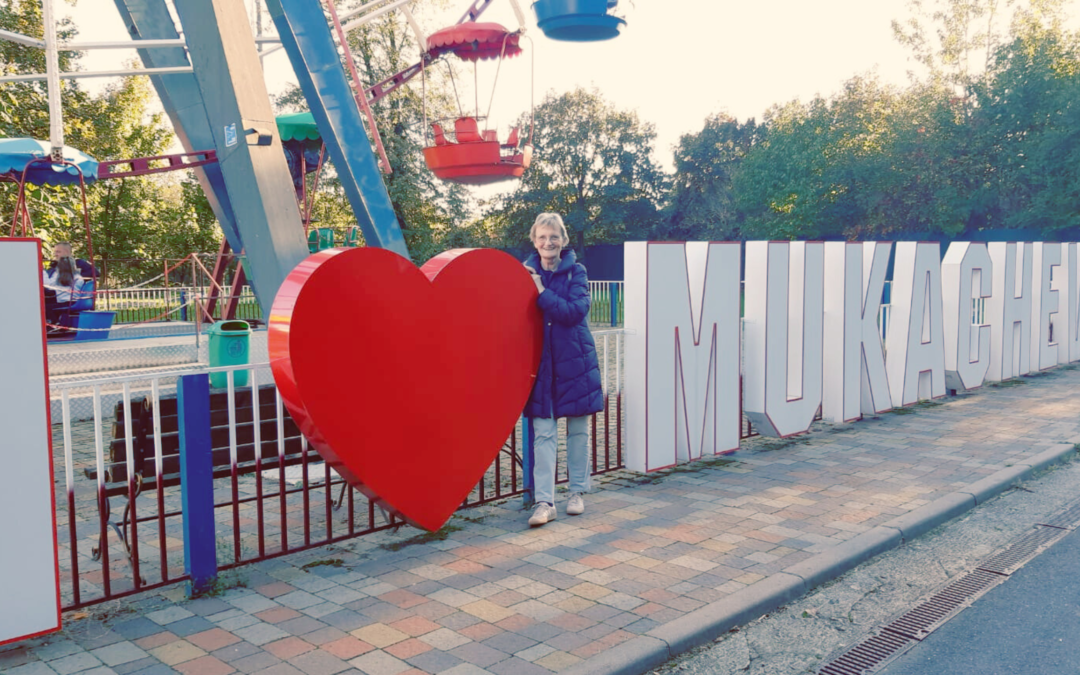
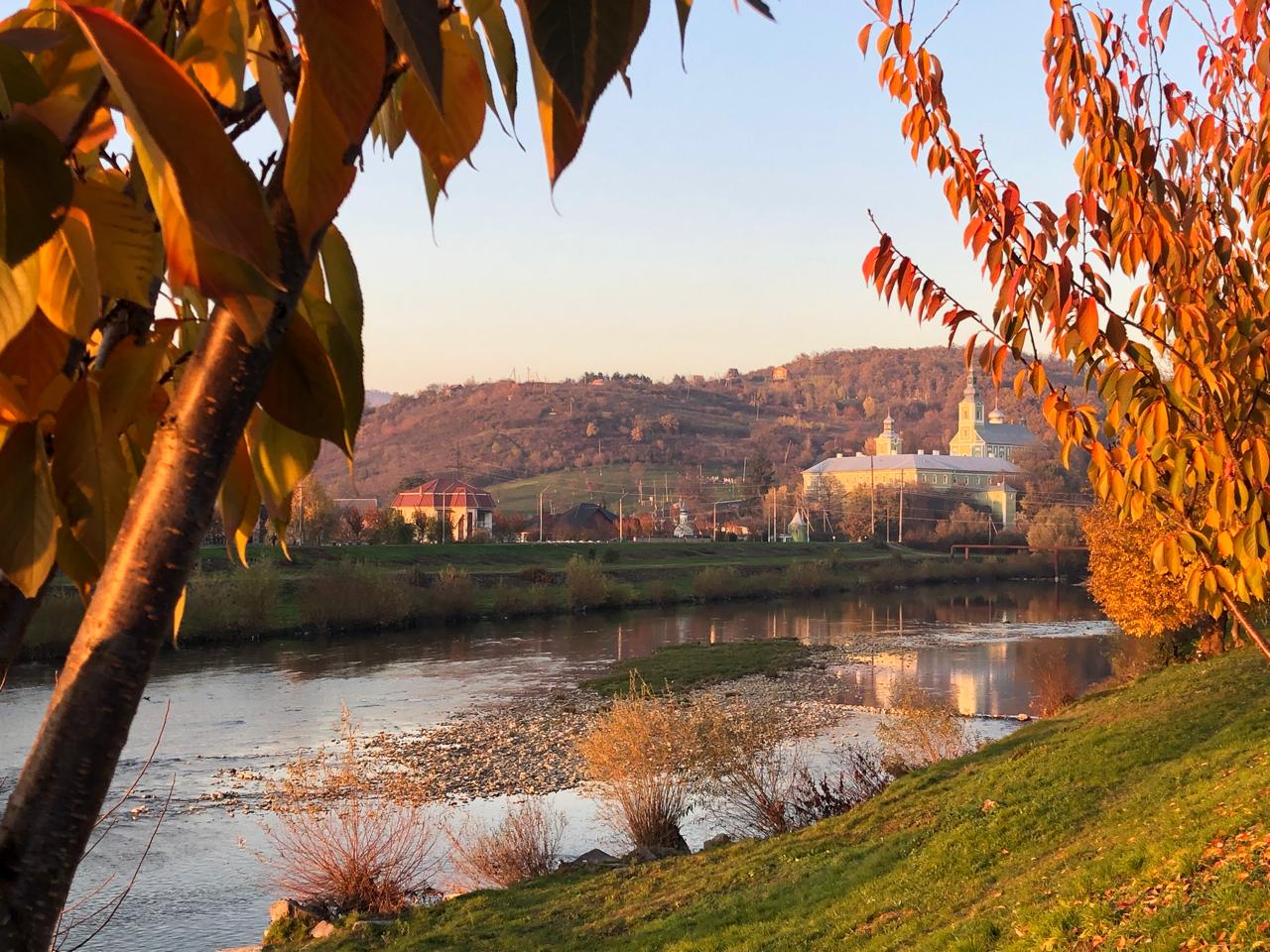
Mukacevo: I had never even heard of that town in western Ukraine when I arrived there in September 2024. It borders Hungary, Slovakia and Poland. I arrived there one fine September day, with the intention of supporting the small focolare community in this country tormented by war. Ukrainian friends had told me: ‘When the bombing of Kyiev started in 2022, the whole world was following us. Now the interest has waned and we are beginning to feel abandoned.’ This realisation – not without bitterness – set something in motion within me: Yes, I too want to give a sign of solidarity. As Pope Francis puts it: I want to make myself close to an experience that seems so far away from my life. My choice is facilitated by the fact, that I speak Russian – a language with which one can understand Ukrainians. I have decided, therefore, to make myself available for a certain period of time.
The airspace over Ukraine is closed. It took me two days to travel from Holland, where I live, to Mukacevo. When I arrived there, I had a totally new experience: air-raid warnings followed y bombardments, e.g. on the power station of Mukacevo. With each warning, people – consciously or unconsciously – fall into a ‘state of shock’. A friend came up with a drastic comparison to explain what happens on a psychological and spiritual level: ‘It is like unplugging a switched-on computer several times in a row. When you plug it back in, the system suffers. Our physical and mental health are severely rattled. In Ukraine we have been living like this for three years.’
I was strongly impressed by the women, many of whom nurture a solid faith in God. War meant that many men were at the front, wounded or dead. Others have fled and are hiding somewhere. The focolarine explained to me: “We stayed in Ukraine to share with the people an experience of God among us. He gives us the strength to resist”.
It is said that Ukrainians are very tenacious, and do not give up easily. I felt I can learn a lot from them. Oleksandra runs a family furniture business. Before the war it was a flourishing business; now, however, the men who used to work there have all been called for military service. This means that the income to support her family was no longer available. I was impressed by Oleksandra’s faith in God that helps her to face such a precarious situation with courage and creativity every day.
Irina is a woman like many others in Ukraine: her husband is at the front in the Donbass region. They often communicated by phone and he tells her many horrible things; nevertheless, he also tells her about the solidarity and hope among the soldiers. Although he does not identify with a specific religiosnl he too started to pray. “At the front”, he says, “there are no atheists. There are moments when everyone is praying”.
Tanja fled from an occupied city with her two daughters, aged 10 and 12, She hid them in the car among her suitcases. While queuing at a checkpoint, someone got out of the car and got shot, dying instantly. Tanja was terrified, but at that moment she was only thinking about pressing the accelerator in case she was hit so as to get her daughters to safety.
I only stayed a few months with these people. When I returned home to the Netherlands, I realised that something inside me had changed profoundly. The months spent in Ukraine taught me a ‘life lesson’: an unshakeable faith in God and the dignity of always being able to persevere, without any complaints. Indeed, it was Ukrainian women like Tanja, Irina and Oleksandra, who taught me with their lives that it is worth believing in a God who never abandons his people.