
Is there a future for Europe? What do you think is the contribution that Churches and Ecclesial Movements can offer in this respect?
There is indeed a future for Europe. Communities and Churches do have a role to play individually as well as together and as part of civic life which has been growing stronger. In time it will generate its own new political leaders and until then it will continue reinforcing its civic commitment. The greatest damage to society comes from the apathy of millions who do not attempt to make a positive contribution. So these communities have a precise role. They develop and exercise certain aspects that are important for the functioning of society (for example order, freedom, obedience, responsibility, equality, hierarchy, respect, correction, individual and collective ownership, truth and so on).
9th May is Europe Day. What does this date mean to you?
The choice of date to celebrate is at once understandable, good and also necessary. The question is how to celebrate. We would like to see a big scientific interdisciplinary conference taking place as well as other forms of celebration that would appeal to society at large. Rather than an official celebration, we were thinking that perhaps an event like that of the European Capital of Culture might be interesting. We know from experience that official celebrations tend to be political and that the exploitation of such occasions for political purposes has the effect of distancing people from the event.
If you were President of the European Union with their responsibilities and decision-making powers, what would be your priorities aimed at increasing the unity of peoples in Europe?
I would avoid uniformity, and aim at pursuing, reinforcing and accelerating integration, based on a mutual recognition of identities and on solidarity. The United States is an example of such an approach, where only one language is spoken, and a looser integration bonds were replaced by centralization. We would be for increasing the extent of international projects such as Erasmus for researchers and third level staff and gradually opening up to involvement of secondary education teachers; making a six-month period of studies abroad obligatory for university students independent of their field of studies, as well as running continuous inter-institutional courses between bordering countries.
How do you see Europe in today’s international political context?
I think it is facing two main challenges: Firstly, unity: if Europe does not succeed in becoming more unanimous in personifying unity, it will lose its position on the international scene; and secondly, corruption: any type of abuse, even the slightest one, be it political, moral, or sexual, damages greatly the international community independently of whether it is carried out by an authority or an individual. This can only be prevented through a continuous examination of conscience or reflection performed together.
It appears as if young people were not interested in politics. Do you think it is true?
Young people love to be practical. Abstract things do not appeal to them. The key is to increase numbers and invest money in international study programmes, so that young Europeans can have a chance to get to know Europe and its young people. Europe should also strive to define its main objectives in more concrete terms so that the young people can believe in them and become enthusiastic about them.
What do you think about populist tendencies? Are there better ways of going ahead Together?
Populism is a consequence of the latest economic crises as well as of military conflicts (for example foreign interference’s). It is also caused by nationalism. The European Union does not deal with nationalism efficiently which puts populists at an advantage. Furthermore, European citizens do not tend to have a direct relationship with European politicians. They often know only their own national political representatives who are the ones ‘listened to by the crowds’ and therefore directly responsible for how information from Brussels is transmitted in individual member states. In any case we need to learn to advance together. In what way? In the context of what was discussed so far, the first step might be to act on a personal level and gradually assume a collective responsibility, acknowledging the effectiveness and the role of acting together.
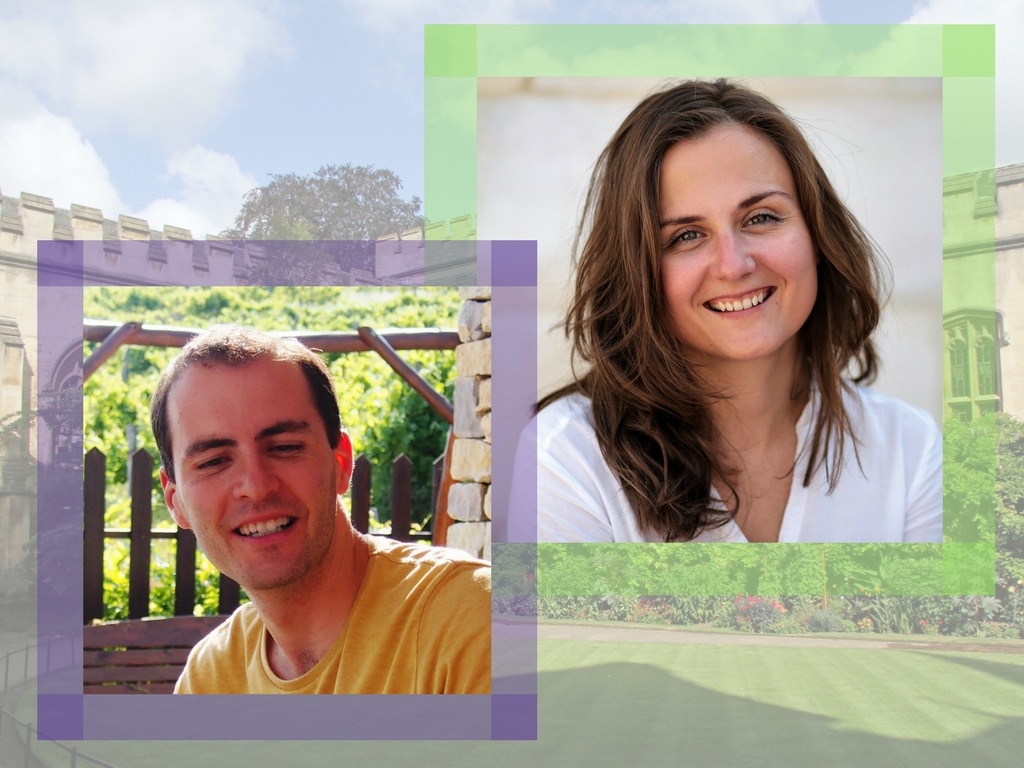
Zsófia Bárány PhD and Szabolcs Somorjai PhD, Hungary, researches in the field of modern sociology and economy, and politics and history of the Church
0 Comments