
Preparing the ground for reconciliation.
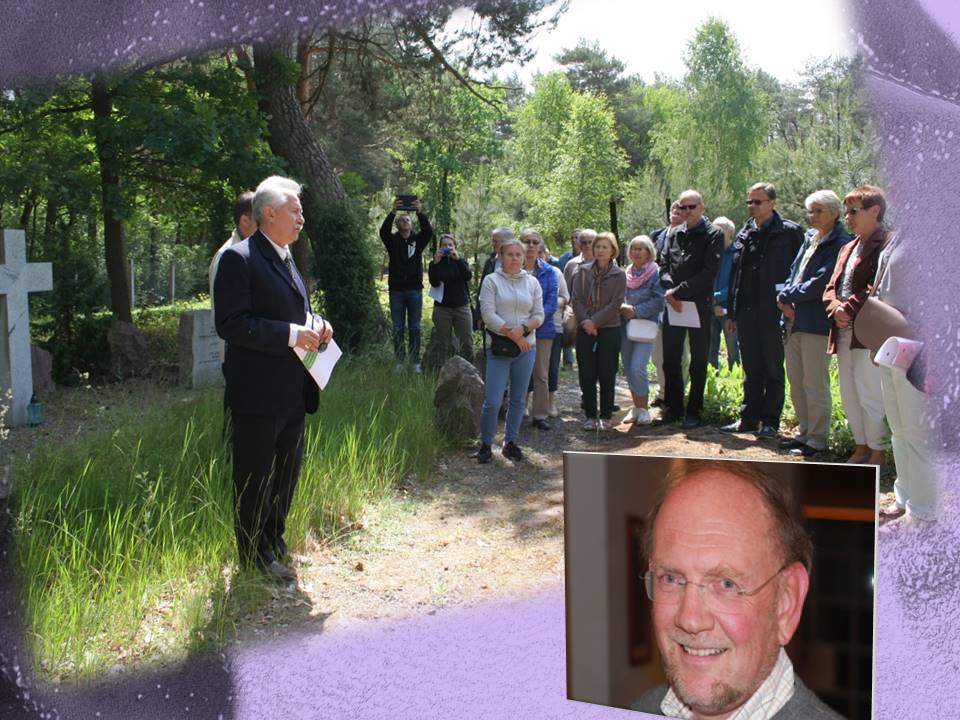
Walter Kriechbaum is an Evangelical Pastor and secretary of the YMCA of Bavaria. He has a soft spot for Europe and takes reconciliation seriously. To this end he has established friendships even in Poland and Ukraine within the international and ecumenical network Together for Europe.
“As a German, in my travels in Eastern Europe I’m often reminded of the historical cruelties. Once, while in the company of Polish friends, I found myself speechless at Lutsk (Ukraine), the place that commemorates the thousands of Poles that were mercilessly murdered. The same thing happened in a cemetery in the middle of one of the greatest battle fields of World War Two. All of a sudden, my friends asked me, a German and a member of the Evangelical Church, to pray upon the dead and ask for forgiveness and peace for our peoples of Europe”. Walter Kriechbaum experienced that living reconciliation together may entail, among other things, journeying with others along the pathway of affliction, taking upon oneself the sufferings of the others. Ecumenical reconciliation entails evaluating the gifts of the others and creating space for their development. Walter considers the suffering of an incomplete unity as a seed for the future.
Reconciliation does not require proportional representation
Munich 2016: During an ecumenical prayer meeting for the unity of Europe organized by Poles and Germans together, some twenty Russians entered the church unexpectedly. Water was leading the prayers together with a Polish friend, and for an instant was at a loss how to manage the new situation. Then he asked one from the Russian group to come forward and pronounce a prayer. At the end the participants – Catholics, Protestants, members of the Free Churches and Russian Orthodox – received a blessing from a Polish priest of the Schoenstatt Movement. Walter: “I learned that ecumenical reconciliation does not require either proportionality or deciding who is right. Jesus Christ dwells in the other’s heart and in a fantastic way he transforms diversity into a complementary, without any cancellations”.
Reconciliation requires trust
During his many travels in Eastern Europe Walter continues to weave a friendship net: “This, however, demands patience and perseverance. Sometimes it takes years to eliminate distrust. I have understood that the ecumenical experience “in the periphery” means feeling close and far away at the same time, and to be able to tolerate tension. When all of us turn our gaze upon Jesus, an interior closeness slowly develops. This cannot be forced; it is God’s work”. Walter is convinced that the mutual trust that ensues allows persons to speak freely and to experience an interior freedom.
Reconciliation requires that we be detached
According to Walter “reconciliation and ecumenical harmony cannot be organized. We ought to be detached all the time, and keep on entering into the Kairos of God. Only he knows the right time”. Nevertheless, we may prepare for this. “Together we will succeed to make Europe to shine. Its splendour is its people that are journeying toward reconciliation”. Walter is convinced of this and lives for it – starting anew each day.
Beatriz Lauenroth
0 Comments