by P. Hans-Martin Samietz | 25 Feb 2022 | Experiences, reflections and interviews, News
The coming together of groups and charisms stimulates a new form of Church
Something great, beautiful, undiscovered lies in every charismatic break-up. The initiative group of German-speaking Schoenstatters of Together for Europe became aware of this during the weekend of February 19-20, 2022, in Augsburg and Munich. They dared to knock on doors and entered into encounters with generations and charisms.
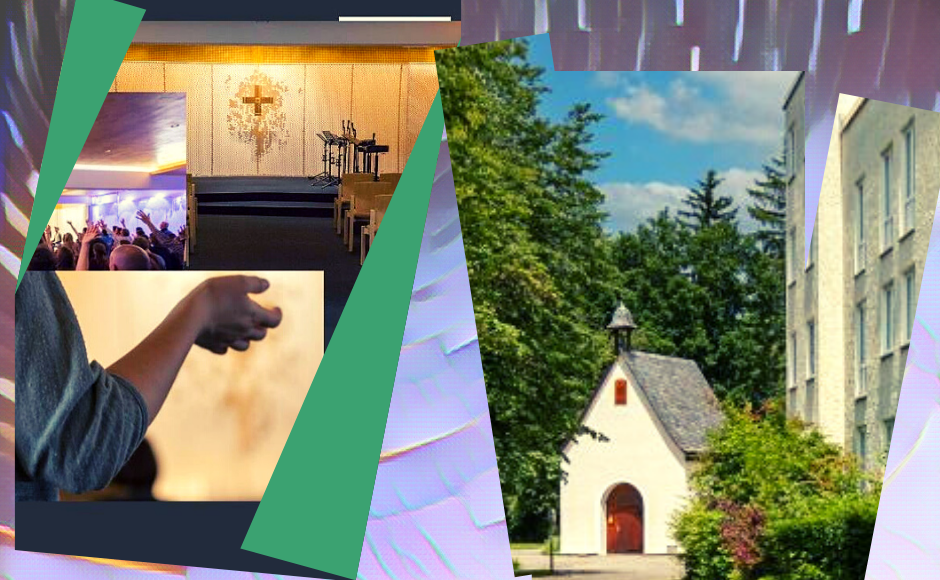
On Friday afternoon we met in the Prayer-House in Augsburg. The prayer room on the second floor is flooded with light and bright, centered towards a small wooden cross hanging from the ceiling in front of a white background. In the front, the band with well-chosen voices is singing antiphons of the first two verses of Psalm 50 and their alternate singing moves into a deepening conversation about these Bible verses – enlightening and leading to inner worship.
On Saturday afternoon we were at the Schoenstatt Centre in Munich. 4 young adults from YMCA Munich and the Focolare Movement came along with experienced people from the same movements, who discovered their life’s theme in Together for Europe.
Our goals: We pay attention to the intuition of the young adults present / We meet different generations and charisms / We share faithful interpretations of our encounter. Our finding: Together for Europe is a promise that allows us to discover a new design of Church. Each of these movements is a light inflamed by the Holy Spirit. If they step up to each other, an undiscovered land becomes visible, a Church that builds itself from churches, step by step, encounter by encounter.
On Sunday, in the rooms and during the church service of the Christian church “Vineyard Munich”, we witnessed people telling their stories of how God is acting concretely in their lives. How beautiful to know that every Sunday Christians are getting in contact with the God of life.
The pact of mutual love can be concretized in reaching out to groups and charisms that are strange to us, who are searching for God in their lives. The pact can be of central help in jointly grasping a new form of Church.
P. Hans-Martin Samietz
Photo: Gebetshaus.org / schoenstatt-muenchen.de
by Beatriz Lauenroth | 24 Feb 2022 | Experiences, reflections and interviews, News
Great preoccupations for peace: Europe prays and keeps on hoping
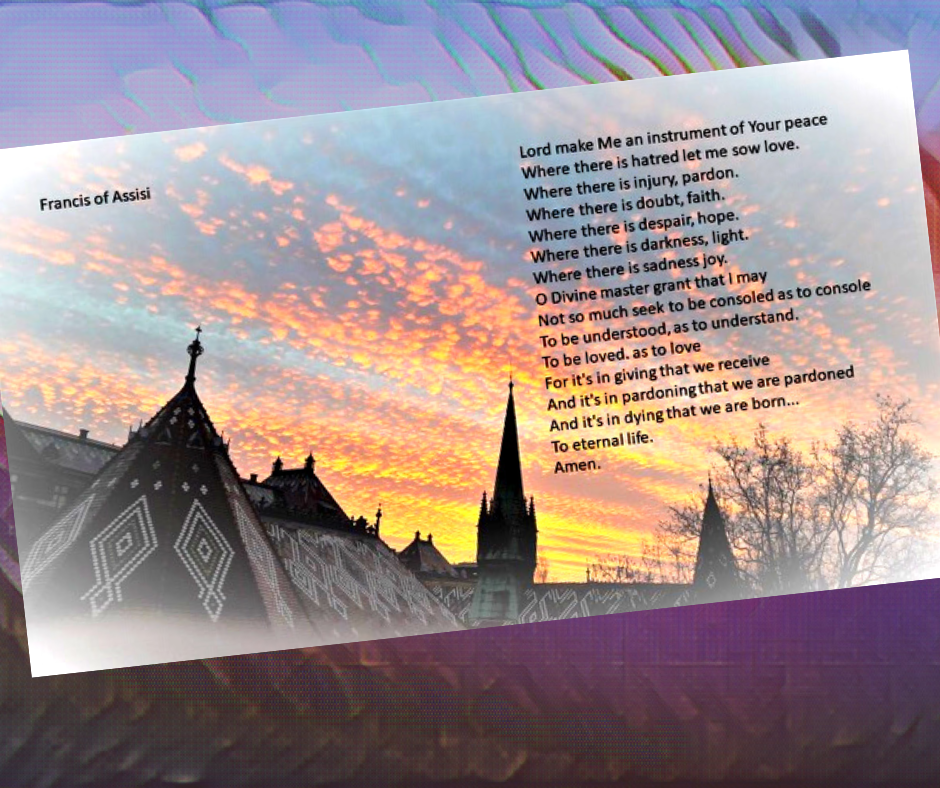
Many initiatives of prayer imploring peace are multiplying all over the Continent, starting from the Countries that are directly involved.
Our network Together for Europe, too, has rallied in this sense and has adhered to this great current of prayer for peace.
We would like to point out this initiative: an evening during which we can meet, understand better and pray. We will be linked to some Ukrainian brothers and sisters, to listen to them and pray together for peace (in German and English)
Wednesday, March 2, 2022, 7 p.m. – 8.30 p.m. (CET) via Zoom
(One needs to register at this address: mfe2021@web.de)
Beatriz Lauenroth
Photo: Ilona Toth
by Beatriz Lauenroth | 20 Sep 2021 | Experiences, reflections and interviews, News
The European Conference on the future of the Continent
How can one bring together 446 million persons for an exchange of ideas? The European Commission and the European Parliament have launched a digital platform to allow communication between those living in Europe. The aim of the Conference is to formulate by 2022 new responses for the future of Europe and to trace the next steps toward European integration.
This Conference is a sign of the times. The future of Europe does not depend solely on politicians; indeed, more than ever before, it depends upon the responsibility of each person.
The dialogue between European citizens started on 19 April 2021 on the online platform futureu.europa.eu. All inputs are being collected, evaluated and published in 24 official languages. This applies also for discussions regarding reform proposals.
The topics are divided into 10 categories:
- Climate change and the environment
- Health
- A stronger economy, social justice and employment
- The EU in the world
- Values and rights, rule of law, security
- Digital transformation
- European democracy
- Migration
- Education, culture, youth and sport
- Other ideas
The Conference will go on till Spring of 2022, when a commission will synthesize the final results in a report and examines how they can be put into practice in a concrete manner.
Together for Europe invites you to participate in the Conference either as a private person, or as a group in a city or as a national Committee. In this way we can put forward ideas, desires and concrete proposals for the future of Europe based on the experience of Together, which is rich in Christian values.
For further information: futureu.europa.eu
Beatriz Lauenroth
Photo: Pixabay.com
by Ada Guazzo | 16 Sep 2021 | Experiences, reflections and interviews, Italy, News
This is what the students of a Roman college had to say regarding the future of the Continent: active citizenship in Europe starts with education!
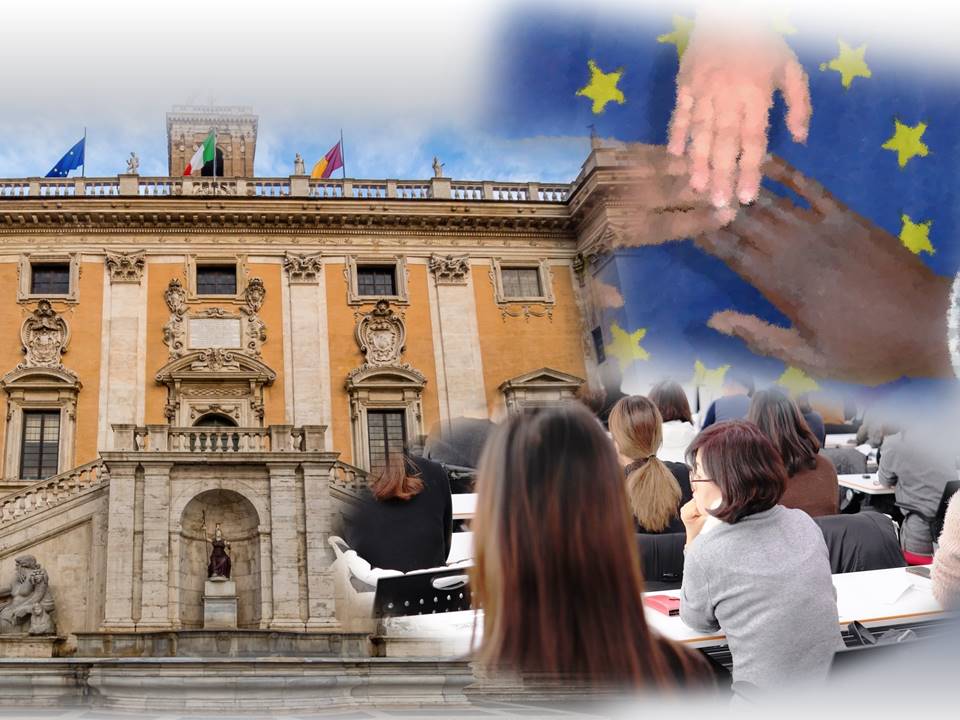
That’s quite true, and easily shown through facts! “Your elders shall have dreams, and your young people shall have visions” (Joel 3,1). When teachers offer stimuli, present ideals and reveal prospectives, young people are able to respond with enthusiasm, perspicacity and creativity. This is the case of the students of the Augusto College in Rome and their teacher Maria Paola Aloi (who supports Together for Europe).
While involved in a project regarding active citizenship in the European Union, they have identified and carefully analyzed several hot issues with the aim of putting forward solutions. Listening to a piece of classical music, the young people saw in it the metaphor of harmony in diversity in a European context, which is a shared symphony. Through a play about a girl on a boat moving toward the unknown, they censured the on-going terrible tragedies on our seas.
While delving into the myth of Europe, they recognized the roots of a culture that, in its DNA, has hospitality and the welcoming of those travelling or migrating. Using an imaginary videogame entitled ‘The Game’, they facilitated a reflection about the migrants moving along the Baltic Route. They have shown great clearness of mind when they wrote a fictitious letter to David M. Sassoli, the President of the European Parliament, in which they outlined a strategic plan regarding the ‘humanitarian corridor’ based on: Prevention, Rescue, and Welcome.
These initiatives were among those held in other colleges on May 10 to celebrate the Feast of Europe. Then they were shared on June 3 during a meeting on the platform Meet; taking part were members of the Italian network of Together for Europe (8 Italian cities; 6 Movements that adhere to Together for Europe). Irene Loffredo (Focolare), a young woman from Pozzuoli (Naples), spoke on behalf of a group that provides voluntary service at a local prison. The group is made up of members of diverse Movements and Churches. Their endeavour brought about enhanced humanization and changes. Aldo Bernabei (Followers of St Catherine) expounded the plans of the EU regarding the Erasmus project and the European Corps of Solidarity: the latter will see about 270,000 young people involved in activities of solidarity in the next few years.
We now hope to be able to propose this initiative to schools in other cities; we intend to contact teachers and to propose twinning of classes. Moreover, we will offer the help of those involved in this experience.
The European Offices in Milan and Rome were informed about this initiative. They jointly expressed their congratulations for the great commitment and care shown in the various projects that were carried out.
Dolores Librale and Ada Maria Guazzo
Photo: Pixabay

by Ada Guazzo | 15 Jun 2021 | 2021 Europe Day, Experiences, reflections and interviews, Italy, News
During a zoom conference to mark the 2021 Europe Day, Prof Luigino Bruni put forward a novel perspective regarding the relationship between ecology and economy.
Luigino Bruni is Professor of Political Economy at LUMSA, Rome, and also teaches at the University Institute Sophia in Loppiano (Florence). Moreover, he is the Scientific Director of The Economy of Francesco and President of the School of Civil Economy.
He analysed the European economy starting from its Christian roots. He then reflected upon several positive impulses that can be derived from the pandemic tragedy. He underlined the present involvement of young people which is providing new hope and a stimulus for personal commitment that combines the love of the Earth to that of Mankind.
Quite interesting was his interpretation of the quotation from Joel, 2, 28: “If the old people are still able to dream (to believe in a better world), then the young people will prophesize (they will undertake great projects)”.
Here is the transcript of the speech 09 05 2021 TfE Prof. L. Bruni – integral ecology, economy of solidarity
You can also see the video on youtube (in Italian). Click here>>
Photo: L. Bruni https://www.edc-online.org / nature: K. Brand
by TogetherforEurope | 12 Jun 2021 | 2021 Europe Day, Austria, Experiences, reflections and interviews, News
Europe turns 71. What can we conclude when we see that the European States, and the entire world, are struggling due to the consequences of the Pandemic?
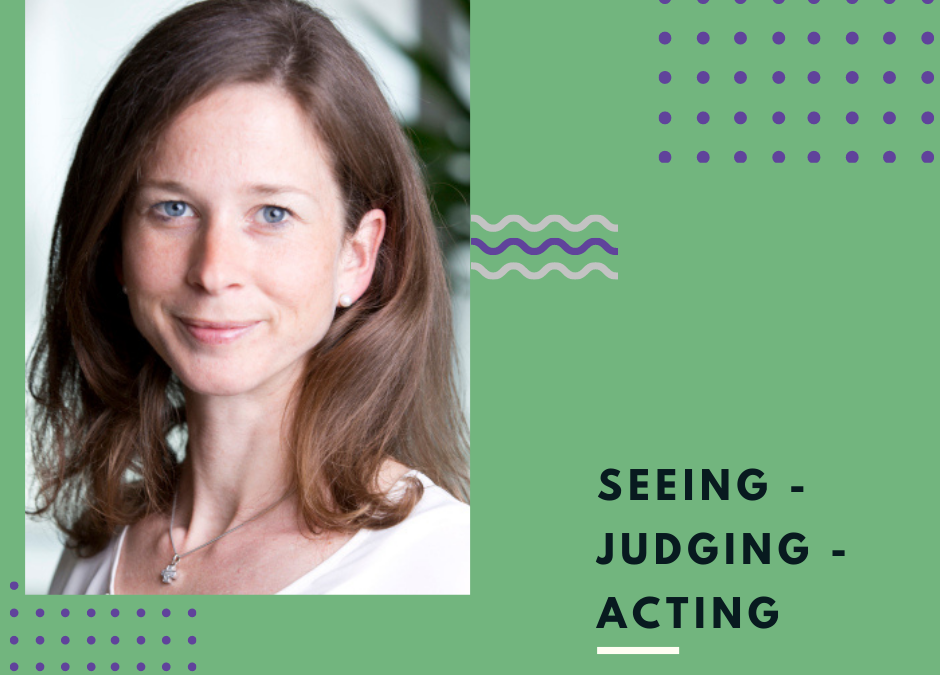
This was the introductory question with which the Austrian professor, Dr. Petra Steinmair-Pösel, started her contribution during the Zoom conference. The conference was based in Graz and was held to mark Europe Day 2021. She quoted the Schumann Declaration (May 9, 1950): “World peace cannot be preserved without creative efforts that are as great as the threat”. According to the Professor, these words are still valid today and thus the question is: what creative efforts ought to be done by our generation?
Dr Steinmair- Pösel proposed the three steps: seeing – judging – acting. “Seeing” today’s great challenges: the pandemic, the fear of the others and therefore the building of defence walls. “Judging”: what does Europe need today? Here the Professor spoke about the need of dialogue, which is able to change life. And lastly, “Acting”, which means: to dialogue while keeping an interior silence, respecting the others and being open to learn from them.
According to Dr Steimair-Pösel, dialogue is the personal and cultural bases that allows us to seek together new solutions in a creative way; this entails nurturing mutual trust and working together. In this way we will create the conditions for “a discussion that unites us all”.
Here the transcription of her talk (translation from German) 2021 05 08 TfE Austria -Steinmair-Poesel – A conversation that brings us togehter
Photo: https://petrasteinmairpoesel.wordpress.com